

Key takeaways
- Diabetic eye disease can harm the retina, lens and optic nerve, often with no early symptoms.
- A dilated eye check at diagnosis of type 2 diabetes, then every year, catches most problems in time.
- Sudden vision loss, a shower of floaters or a painful red eye needs same-day care.
Up to 98% of blindness from diabetic eye disease can be prevented with timely treatment, say Indian guidelines.
The short answer: diabetes can damage almost every part of the eye. The biggest threat is retinopathy, which is silent at first. A yearly diabetic eye check, good control of sugar, blood pressure and cholesterol, and fast action on warning signs protect your sight.
This guide is the hub for everything Meerawell has published on diabetes and the eyes. Each section is short and links to a deeper article.
Jump to:
- How diabetes affects your eyes
- The diabetic eye check schedule
- Blurred vision when sugar swings
- Diabetic retinopathy
- Macular oedema
- Cataract and glaucoma
- GLP-1 medicines and your eyes
- Food, blood pressure and cholesterol
- When to see an eye doctor urgently
1. How Diabetes Affects Your Eyes
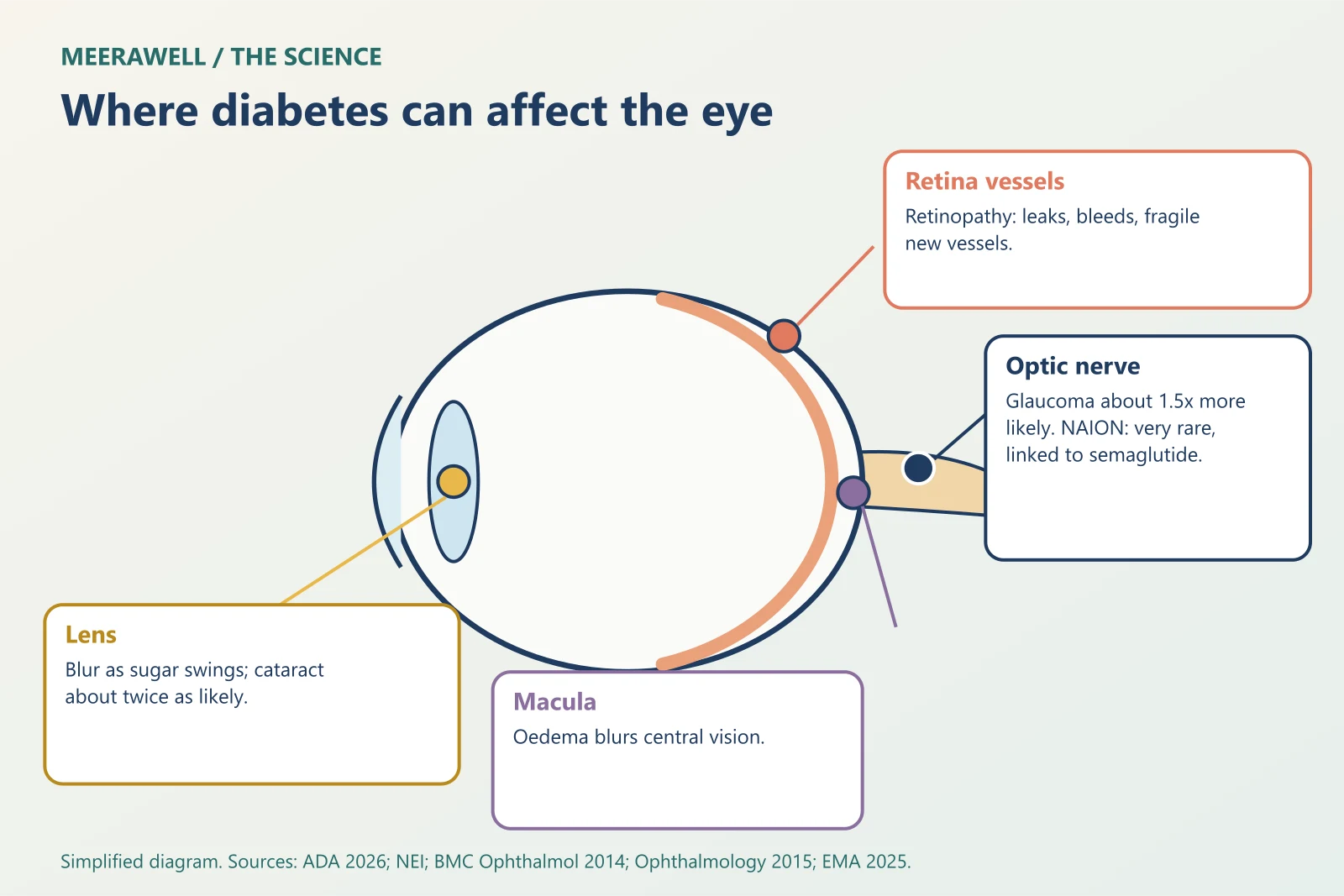
Your eye is a camera made of living tissue. Light passes through the clear front window, the cornea. The lens then focuses it onto the retina, a thin layer of nerve cells at the back. The optic nerve carries the picture to the brain.
Diabetes can affect each of these parts:
- The retina: high blood sugar damages its tiny blood vessels. This is diabetic retinopathy.
- The macula: the centre of the retina, used for reading and faces, can swell with fluid. This is macular oedema.
- The lens: it can change shape when sugar levels swing, and it tends to cloud earlier. Clouding is a cataract.
- The optic nerve: glaucoma, which damages this nerve, is more common with diabetes.
Together, these are known as diabetic eye disease.
The American Diabetes Association’s 2026 standards note that glaucoma and cataracts occur earlier and more often in people with diabetes.
This matters in India. The ICMR-INDIAB survey found diabetes in 11.4% of adults. Among people with diabetes aged 40 and over, SMART-India found that about 1 in 5 had vision impairment and 2.4% were blind. Not all of that was caused by diabetes, but much of it was preventable.
Most of these problems start quietly. That is why a diabetic eye check looks inside the eye, not just at how well you read a chart. Our routine eye check-up guide explains what a full exam includes.
2. The Diabetic Eye Check Schedule
A dilated eye exam means drops widen your pupils, so the doctor can see the whole retina. It is painless, though your vision may stay blurry for a while afterwards.
A full diabetic eye check usually includes a vision test, eye pressure measurement, a look at the front of the eye, and a dilated view of the retina. Many clinics also take retinal photographs for your record.
Two guidelines agree on the basics: the AIOS and VRSI screening guidelines for India and the American Diabetes Association.
| Who | First diabetic eye check | After that |
|---|---|---|
| Type 2 diabetes | At diagnosis | Every year |
| Type 1 diabetes | Within 5 years of onset | Every year |
| Pre-existing diabetes and pregnancy | Before pregnancy or in the first trimester | As advised, through pregnancy and after |
| Gestational diabetes only | Not needed during pregnancy | Routine care |
| Retinopathy found | — | Every few months to yearly, by stage |
The ADA says that if several yearly checks show no retinopathy and your sugar is at goal, every one to two years may be enough. The Indian guidelines still advise yearly checks until local risk tools are proven.
Retinal photos, read remotely or by approved artificial intelligence, are an accepted way to screen. But an unclear photo, or any sign of damage, must lead to a full exam by an eye doctor.
Why check every year when you feel fine? Because damage can reach a sight-threatening stage before you notice anything. Our guide to diabetic retinopathy symptoms and the eye check covers the full schedule.
3. Blurred Vision When Your Sugar Swings
Many people notice blurry vision soon after diabetes is diagnosed. Others notice it when they start a new medicine and their sugar falls quickly.
This blur often comes from the lens, not the retina. Changes in blood sugar can alter the shape of the lens, so its focus shifts. The American Academy of Ophthalmology says this kind of blur is usually temporary. With some newer medicines, it often settles within three or four months.
What this means for you:
- Don’t rush to buy new glasses. A prescription measured while your sugar is swinging may be wrong a few weeks later.
- Tell your eye doctor if your sugar control has recently changed.
- Get blur checked if it affects one eye only, comes on suddenly, or keeps getting worse. Those patterns point to other causes.
- Book a diabetic eye check if blur lasts beyond a few months.
Blur in both eyes that comes and goes with sugar levels is common and usually harmless. But blur is also a symptom of macular oedema and cataract. So persistent blur needs a proper diabetic eye check, not just a new pair of glasses.
Blur can also have everyday causes, such as long hours on screens. Our article on blurry distance vision after computer work explains those.
4. Diabetic Retinopathy: The Silent Threat
Diabetic retinopathy is the most important diabetic eye disease. Years of high blood sugar damage the small vessels of the retina, explains the US National Eye Institute. The vessels leak, bleed or close off. The eye may then grow fragile new vessels, which can bleed into the gel inside the eye.
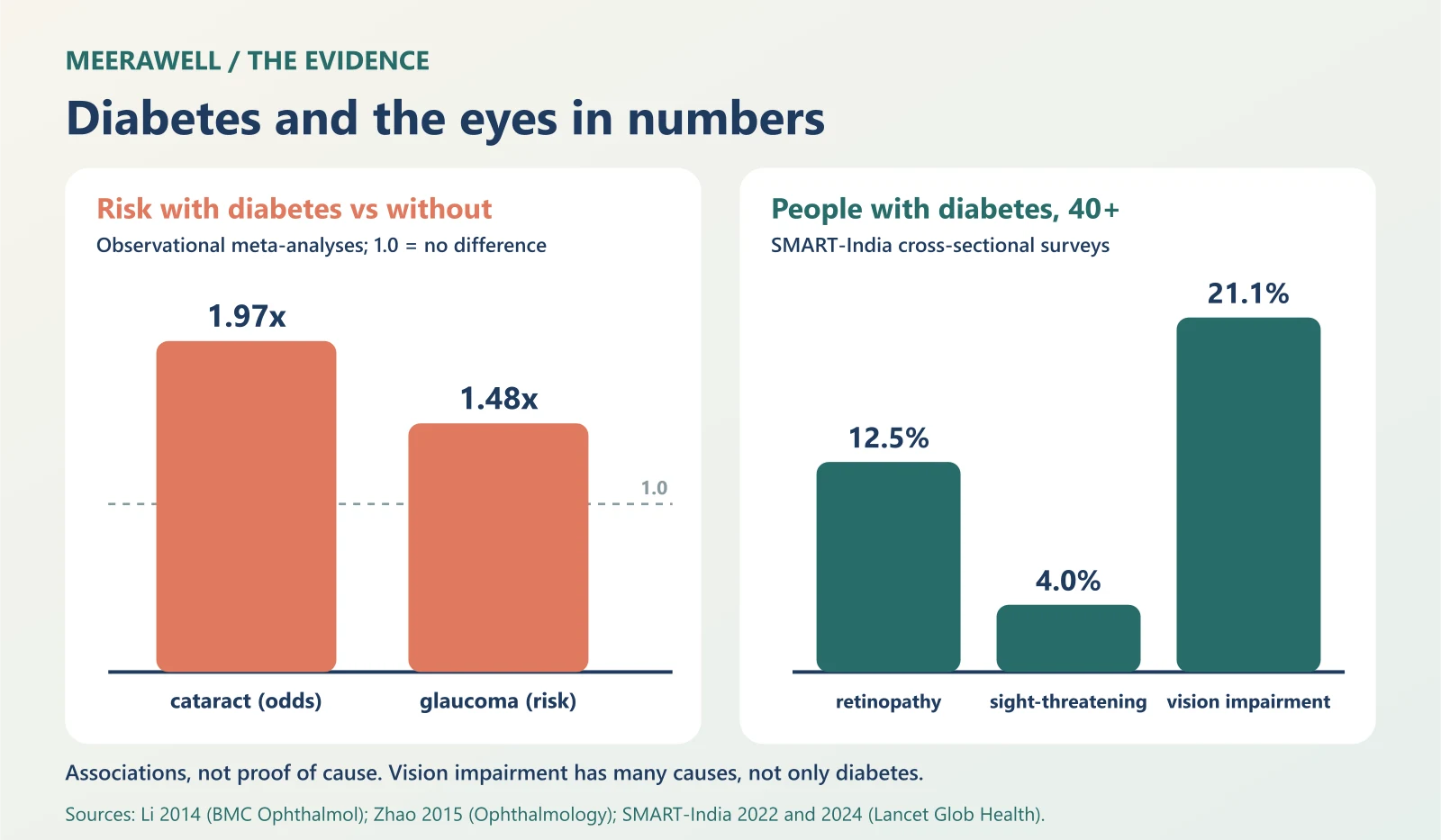
It is common in India. In the nationwide SMART-India study, 12.5% of people with diabetes aged 40 and over had retinopathy. About 4% had the sight-threatening kind. Even 8% of people who didn’t know they had diabetes already had eye damage.
Early stages usually cause no symptoms. Some people notice reading or distance vision that comes and goes. Later, you may see dark floating spots, blurred vision or sudden vision loss. By then, treatment is harder.
The good news is that treatment works well when it is on time. Laser treatment or injections into the eye can prevent most severe vision loss. That is why the yearly diabetic eye check matters so much.
The risk rises with longer diabetes, higher blood sugar and high blood pressure. Doctors grade retinopathy in stages, from mild to proliferative, and the stage sets how often you are seen.
Our diabetic retinopathy guide explains the stages, the “4-2-1 rule” and the warning signs in detail.
5. Macular Oedema: When Central Vision Blurs
The macula is a small area at the centre of the retina. It gives you the sharp vision you need for reading, faces and fine work.
In diabetic macular oedema, leaking vessels let fluid build up in the macula. The National Eye Institute says about 1 in 15 people with diabetes will develop it over time. It can happen at any stage of retinopathy.
Signs include:
- blurred or washed-out central vision
- trouble reading, even with your glasses
- difficulty recognising faces
Macular oedema is treatable. The ADA lists injections of anti-VEGF medicines as the first-line treatment for most eyes where the oedema affects the centre and the vision. Laser and steroid treatments are options when injections are not enough or not suitable.
These treatments work best before vision has fallen far. The ADA advises prompt referral to an experienced eye doctor for any level of macular oedema.
Macular oedema is one reason “my vision is fine” is not proof of a healthy eye. A diabetic eye check can find mild oedema before you notice any change. Read more in our diabetic retinopathy guide.
6. Cataract and Glaucoma Come Earlier
Retinopathy gets most of the attention, but diabetes raises other risks too.
Cataract. A cataract is clouding of the eye’s lens. It makes vision hazy and lights glary. A meta-analysis of eight studies found that people with type 2 diabetes had about twice the odds of cataract. Cataract surgery is common and effective. Indian guidelines advise a dilated retina check before cataract surgery in people with diabetes. A 2025 meta-analysis found a slightly higher risk of serious infection after cataract surgery with diabetes, though it stayed rare: about 0.26% versus 0.24%. Antibiotics used at surgery lower this risk.
Glaucoma. Glaucoma slowly damages the optic nerve, usually without pain. Side vision goes first, so people often notice it late. A meta-analysis of 47 studies found that people with diabetes had about 1.5 times the risk of glaucoma. Longer diabetes and higher fasting sugar were linked to higher risk.
Both studies were observational. They show a link, not proof that diabetes alone causes these problems.
What this means: your diabetic eye check should include more than the retina. A full exam also looks at the lens, measures eye pressure and checks the optic nerve. If you are not sure your check covers these, ask. Our routine eye check-up guide lists what a complete exam should include.
7. Ozempic, Mounjaro and Other GLP-1 Medicines
GLP-1 medicines such as semaglutide (Ozempic, Wegovy) and the related tirzepatide (Mounjaro) are used for diabetes and weight loss. A few eye effects are worth knowing.
- Early worsening of retinopathy. When sugar falls fast, existing retinopathy can briefly get worse. The ADA notes a risk of mild worsening with some GLP-1 medicines in trials. It advises checking retinopathy status when these medicines are stepped up.
- Temporary blur. As above, sugar changes can shift the lens focus for a few months.
- NAION. This is a rare stroke of the optic nerve. Europe’s drug regulator calls it a very rare side effect of semaglutide, affecting up to 1 in 10,000 people. The evidence comes from observational studies.
The practical steps are simple. If you have diabetes, have a diabetic eye check before or soon after starting. Tell your eye doctor about the medicine. Never stop it on your own; discuss any concern with your prescriber. Treat sudden vision loss in one eye as an emergency.
Tirzepatide works differently, but a 2025 real-world study found a similar early pattern. New proliferative retinopathy occurred in 1.1% of users versus 0.5% of similar non-users, mostly in people who already had retinopathy. Eye specialists advise shared decisions about these medicines, especially for people who have had NAION before.
Our full guide to semaglutide eye side effects explains the numbers and which checks to do first.
8. Protecting Your Eyes Every Day
The ADA’s first two eye recommendations are not about the eye at all. They ask people with diabetes to reach their sugar, blood pressure and cholesterol goals, because this lowers the risk of retinopathy and slows it down.
- Blood sugar. Steady control protects the retina over years. Food choices matter, and some “healthier” sweeteners are not what they seem. Our guide to jaggery vs sugar for diabetes looks at one common myth.
- Blood pressure. High blood pressure adds to retinal damage. The ADA notes that very strict targets (systolic below 120) give no extra benefit for the eyes, so follow the goal your doctor sets. Home readings with a validated cuff help. Smartwatch alerts can prompt a check but cannot replace a cuff, as our Apple Watch hypertension guide explains.
- Cholesterol. The ADA notes that statins are linked to fewer sight-threatening complications in type 2 diabetes. Fenofibrate may slow retinopathy in some people with abnormal blood fats. These are prescription decisions for your doctor.
- Aspirin. If your doctor prescribes aspirin for your heart, retinopathy is not a reason to avoid it, says the ADA.
Do not wait for symptoms to see an eye doctor. Your yearly diabetic eye check is part of diabetes care, just like your HbA1c test.
Did you know? Some eye screening now uses artificial intelligence. The ADA accepts approved AI systems that read retinal photos to screen for diabetic eye disease. A person still needs a full exam if the photo shows damage or cannot be read.
9. When to See an Ophthalmologist Urgently
Most diabetic eye care is planned: a yearly check and treatment when needed. But some symptoms mean you should go the same day.
These signs can point to bleeding inside the eye, a detached retina, NAION or a sudden rise in eye pressure. Each can cause lasting damage if treatment is delayed. Use the red-flag list below, and keep it somewhere easy to find.
If you are pregnant and have diabetes, report any new vision change quickly. The ADA advises closer eye monitoring through pregnancy and up to a year after, depending on your retinopathy.
Keep a note of the date of your last diabetic eye check and any retinopathy stage you were told. Bring it to every visit, and to any new doctor.
If you are unsure whether a symptom is urgent, call your eye clinic and describe it. A short call is better than waiting for your next yearly visit.
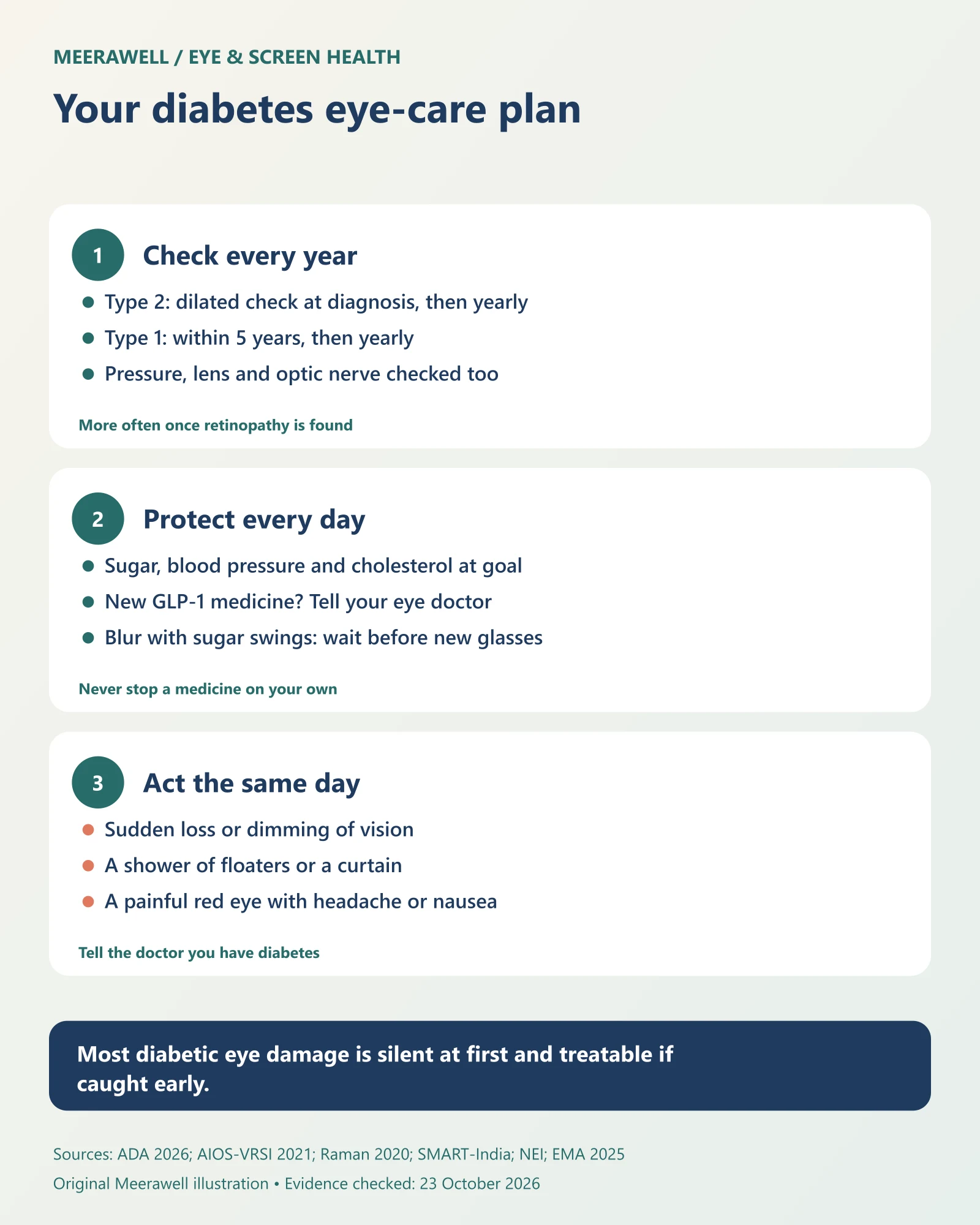
When to see an eye doctor the same day
- sudden loss or dimming of vision in one or both eyes
- a sudden shower of dark floating spots or streaks
- a curtain or shadow across part of your vision
- a painful red eye, especially with headache or nausea
- blurred central vision that does not clear
Tell the doctor you have diabetes and list your medicines.
Frequently asked questions
Can diabetes cause eye problems even with good sugar control?
Yes. Good control lowers the risk but does not remove it, especially after many years of diabetes. That is why a yearly diabetic eye check is advised for everyone with diabetes.
Is blurry vision a sign of diabetes?
It can be. Blurred vision that comes and goes is common when blood sugar is high or changing. It is not specific to diabetes, so get your sugar and your eyes checked.
Which doctor checks the eyes in diabetes?
An ophthalmologist examines the retina, lens, eye pressure and optic nerve. Retinal photo screening can be done elsewhere, but any damage needs an ophthalmologist’s review.
Next step
Start with the basics of a diabetic eye check: what a full exam includes.
Sources and evidence
Evidence checked on 23 October 2026. General education, not a diagnosis. Some diabetic eye evidence cited here is observational. Follow your own doctor’s advice.
- American Diabetes Association: Standards of Care in Diabetes 2026, section 12 (Diabetes Care)
- AIOS and VRSI, 2021: diabetic retinopathy screening guidelines in India
- Raman et al., 2020: diabetic retinopathy guidelines for India, a synopsis
- SMART-India, 2022: prevalence of diabetic retinopathy in India (Lancet Glob Health)
- SMART-India, 2024: vision impairment in people with diabetes (Lancet Glob Health)
- US National Eye Institute: diabetic retinopathy
- Li et al., 2014: risk of cataract in type 2 diabetes, meta-analysis (BMC Ophthalmol)
- Zhao et al., 2015: diabetes and the risk of glaucoma, meta-analysis (Ophthalmology)
- ICMR-INDIAB, 2023: metabolic disease report of India (Lancet Diabetes Endocrinol)
- European Medicines Agency: PRAC highlights, June 2025 (semaglutide and NAION)