

Key takeaways
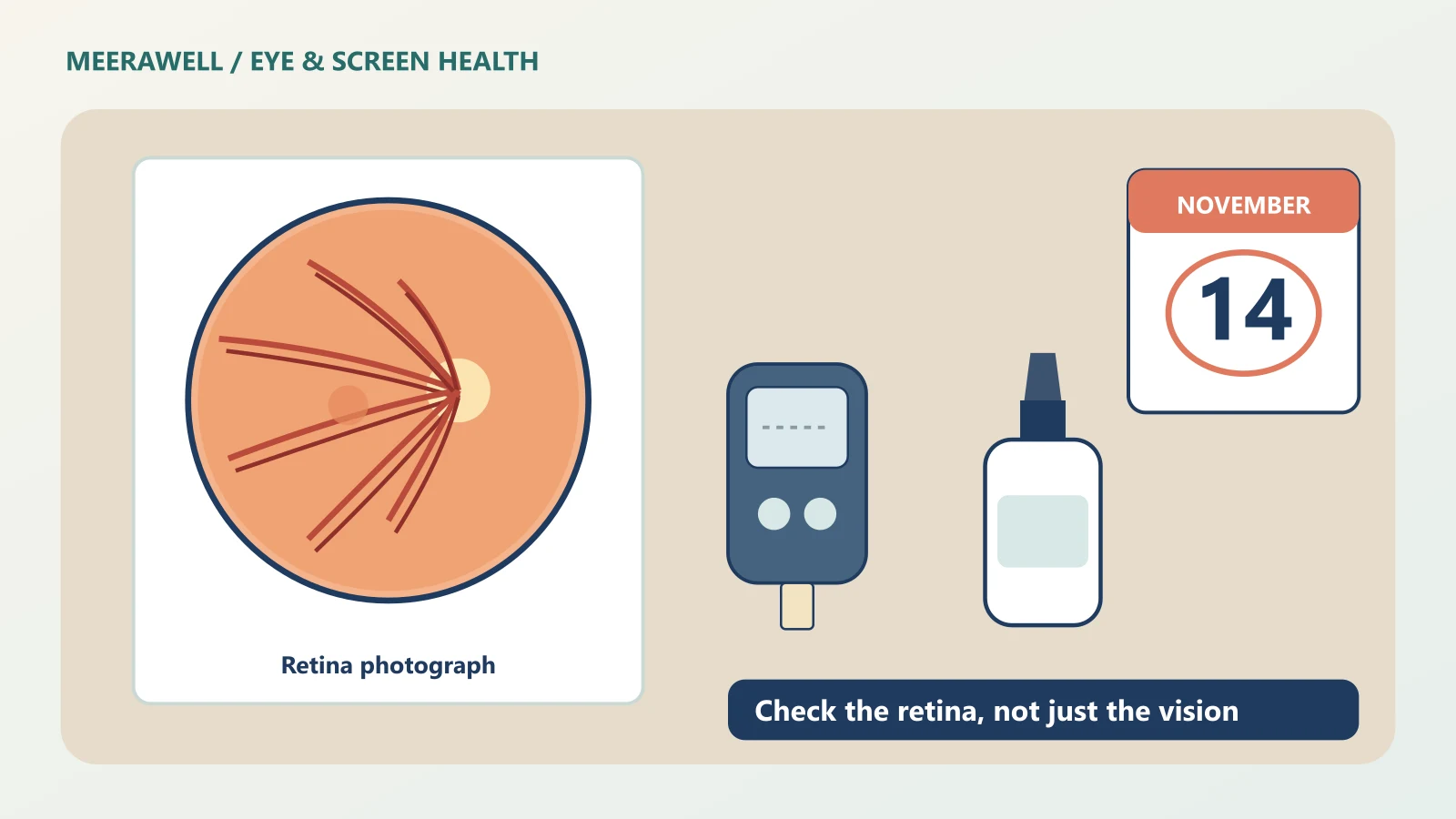
- Diabetic retinopathy usually has no symptoms early on, so “my vision is fine” tells you little about your retina.
- With type 2 diabetes, get a dilated eye check at diagnosis and every year after.
- Timely laser or injection treatment can prevent most blindness.
Indian guidelines say up to 98% of blindness from diabetic eye disease can be prevented by timely treatment.
The short answer: diabetic retinopathy is damage to the tiny blood vessels at the back of the eye. It can threaten sight while your vision still feels normal. A yearly dilated eye check, plus good sugar and blood pressure control, catches it early.
The World Diabetes Day theme for 2026–27 is early action on diabetes. For your eyes, that means checking before you notice a problem.
1. What Diabetic Retinopathy Does Inside the Eye
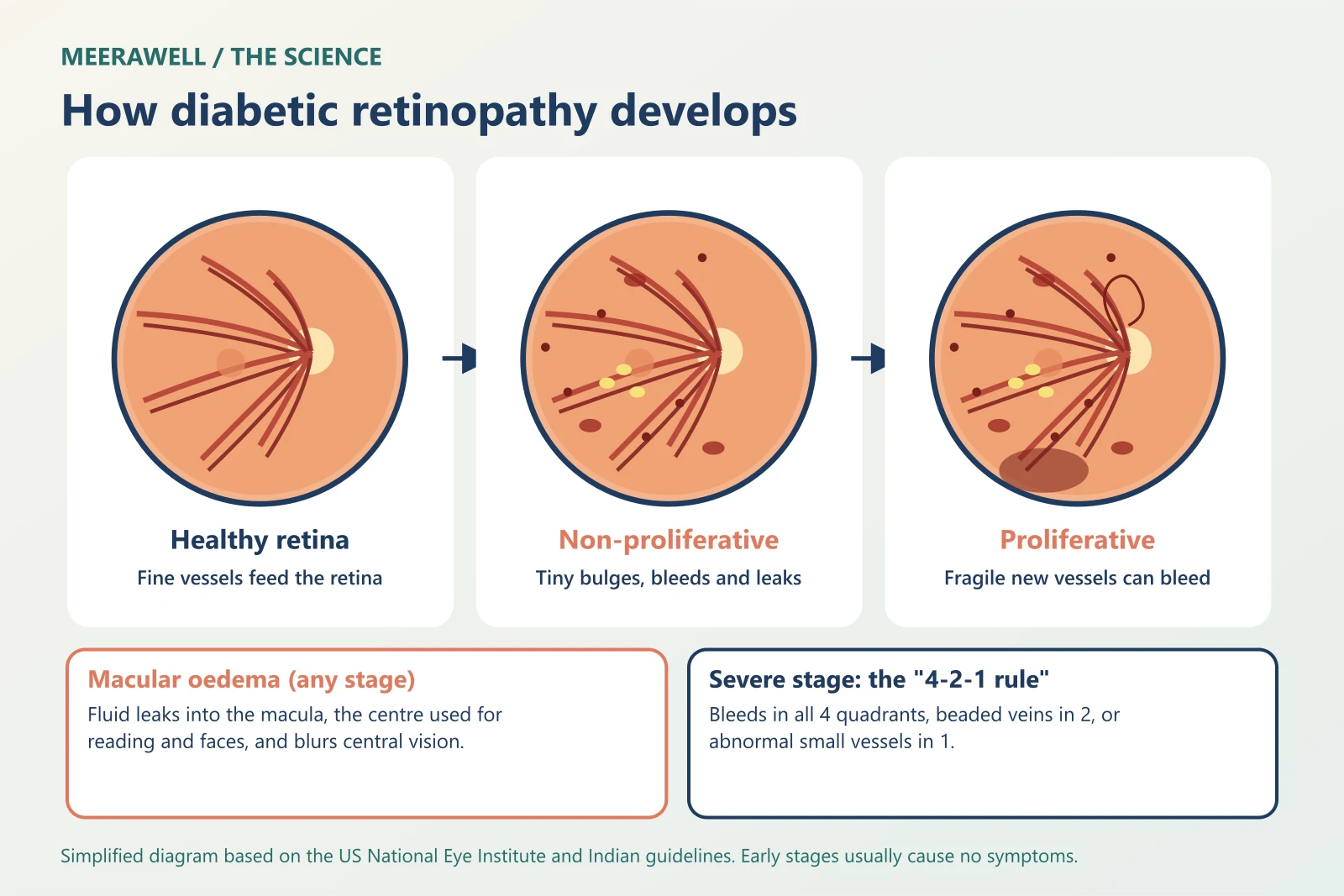
The retina is the light-sensing layer at the back of the eye. Years of high blood sugar damage its fine blood vessels, explains the US National Eye Institute. They leak, bleed or get blocked.
The eye then grows new, fragile vessels. These can bleed into the gel inside the eye, causing dark floating spots. If fluid leaks into the macula, the centre used for reading and faces, central vision blurs. This is called macular oedema.
Risk rises with longer diabetes, higher blood sugar and high blood pressure. Good control of sugar and blood pressure lowers the risk of it getting worse.
2. Diabetic Retinopathy Stages, and Why “Fine” Isn’t Enough
Early stages usually cause no symptoms. Floaters, blur and sudden vision loss come later. Your eye doctor grades the stage, and the stage sets your next visit:
| Stage | What the doctor sees | Next check (AIOS–VRSI 2021) |
|---|---|---|
| None | Normal retina | Every year |
| Mild | A few tiny bulges or bleeds | Every year |
| Moderate | More bleeds and fatty deposits | Every 6 months |
| Severe (“4-2-1”) | Bleeds in 4 quadrants, beaded veins in 2, or abnormal vessels in 1 | Every 3 months |
| Proliferative | New fragile vessels | Every 3 months; laser or injections |
The 4-2-1 definition comes from standard grading criteria.
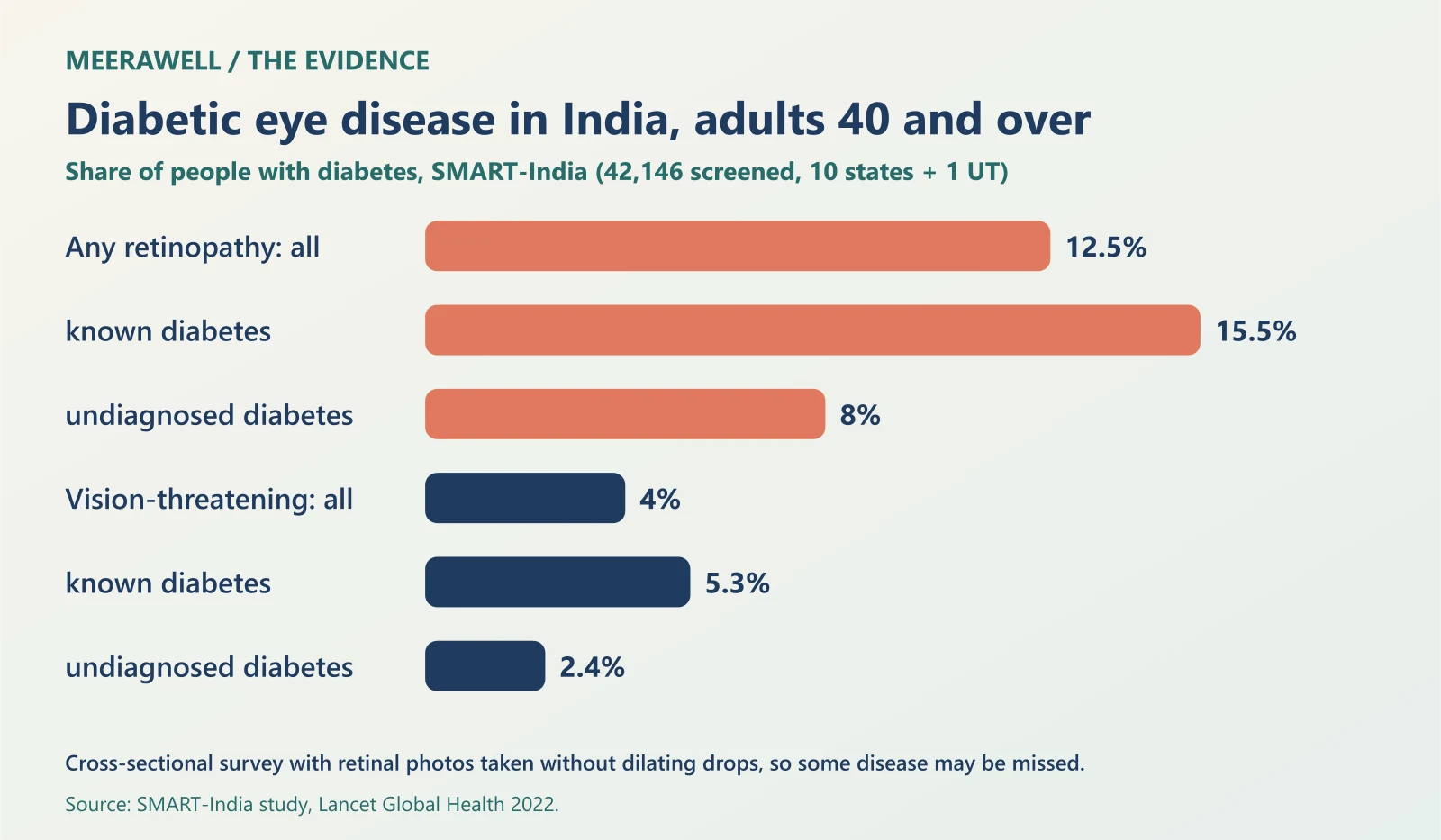
In the SMART-India study, 12.5% of people with diabetes aged 40 and over had retinopathy. About 4% had the sight-threatening kind. Strikingly, 8% of people who didn’t know they had diabetes already had eye damage. This was a one-time survey using photos without dilating drops, so some disease may have been missed.
Did you know? Some diabetic eye screening in India uses retinal photos taken without drops, graded remotely or by artificial intelligence. If the photo is unclear, often because of small pupils or cataract, the drops come out after all.
3. The Diabetic Retinopathy Eye-Check Schedule
These steps follow the AIOS–VRSI guidelines for India:
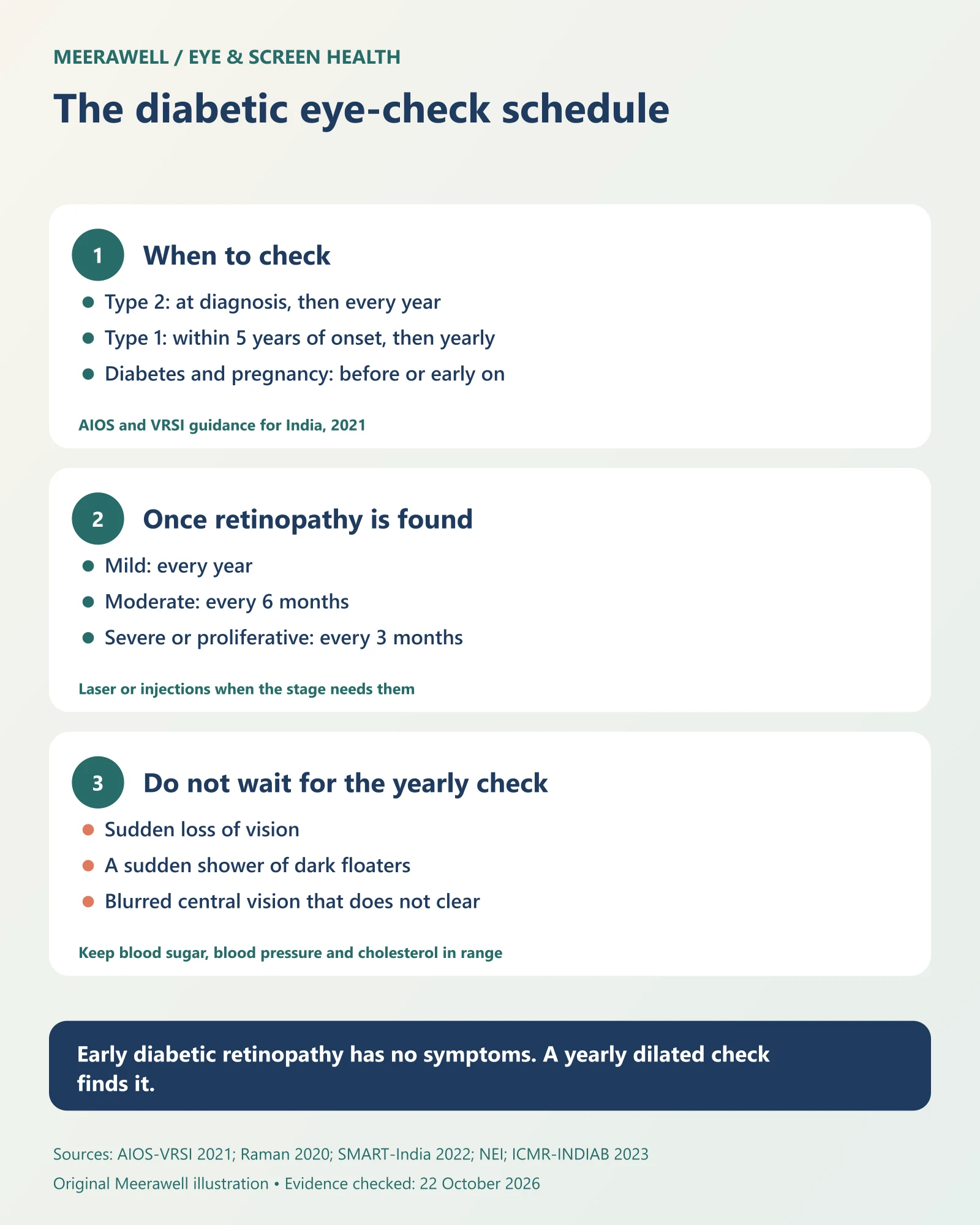
- Type 2 diabetes: a dilated eye check at diagnosis, then every year.
- Type 1 diabetes: the first check within five years of onset, then yearly.
- Pregnancy with diabetes: a check before conception or early in pregnancy. Gestational diabetes alone needs no eye check.
- Once retinopathy is found: checks every few months to yearly, by stage.
- New diabetes medicines: if you start semaglutide with existing retinopathy, read our semaglutide eye guide.
Between checks, aim for the sugar, blood pressure and cholesterol goals your doctor sets. Our jaggery vs sugar guide tackles one food myth.
When to see an eye doctor urgently
Don’t wait for your yearly check if you notice:
- sudden loss of vision
- a sudden shower of dark floating spots
- blurred central vision that does not clear
- new reading trouble during pregnancy
Frequently asked questions
How often should a person with diabetes get an eye test?
With type 2 diabetes, at diagnosis and then yearly. With type 1, within five years of onset, then yearly. Once retinopathy is found, more often.
Can diabetic retinopathy be reversed?
Good sugar and blood pressure control lowers the risk of it worsening. Injections can slow or partly reverse some changes, and laser shrinks leaking vessels. Early treatment works best.
What is the 4-2-1 rule in diabetic retinopathy?
It marks the severe stage: bleeds in all 4 quadrants, beaded veins in 2, or abnormal small vessels in 1. Any one needs close follow-up.
Next step
A diabetic eye check is more than a glasses test. See what a full exam includes.
Sources and evidence
Evidence checked on 22 October 2026. General education, not a diagnosis. Follow your eye doctor’s schedule if it differs.
- AIOS and VRSI, 2021: diabetic retinopathy screening guidelines in India
- Raman et al., 2020: diabetic retinopathy guidelines for India, a synopsis
- SMART-India, 2022: prevalence of diabetic retinopathy in India (Lancet Glob Health)
- US National Eye Institute: diabetic retinopathy
- Severe NPDR grading criteria, nonmydriatic imaging study (Indian J Ophthalmol)
- World Diabetes Day 2026–27: early action on diabetes