

Key takeaways
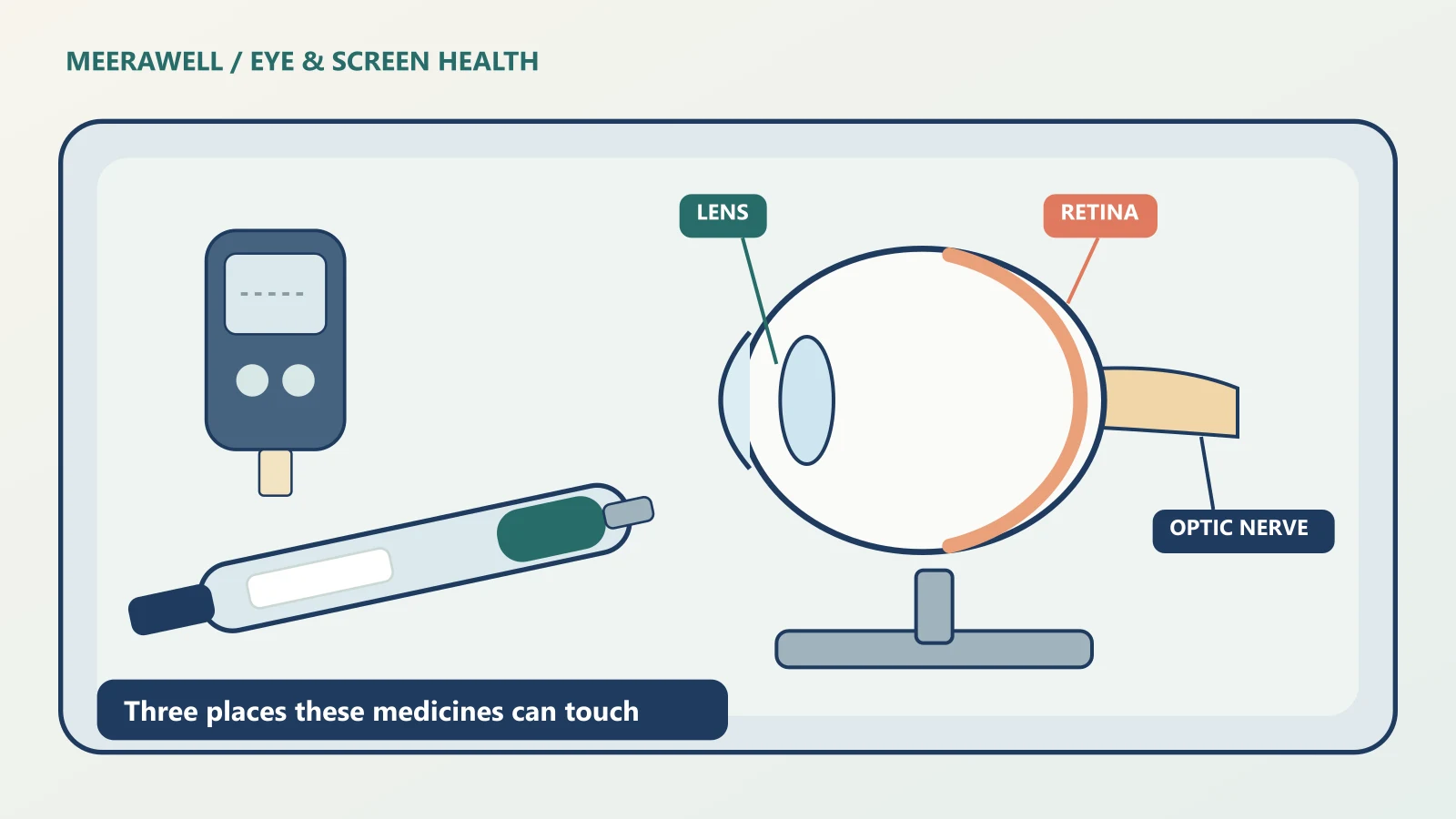
- Semaglutide eye side effects come in three kinds: brief blur, early worsening of diabetic eye damage, and a very rare optic nerve stroke.
- Regulators say the nerve stroke may affect up to 1 in 10,000 people.
- With diabetes, get a retina check at the start. Never stop the medicine on your own.
Semaglutide (Ozempic, Wegovy, Rybelsus) and tirzepatide (Mounjaro) treat diabetes and help weight loss.
The short answer: most semaglutide eye side effects are brief blur or nothing at all. Two real risks exist. Eye damage from diabetes can briefly get worse. And a rare stroke of the optic nerve can occur. Know the warning signs and get the right eye check early.
In India, cheaper generic semaglutide went on sale on 20 March 2026, says a Natco Pharma filing. So more people are now asking about the eyes.
1. The Three Semaglutide Eye Side Effects
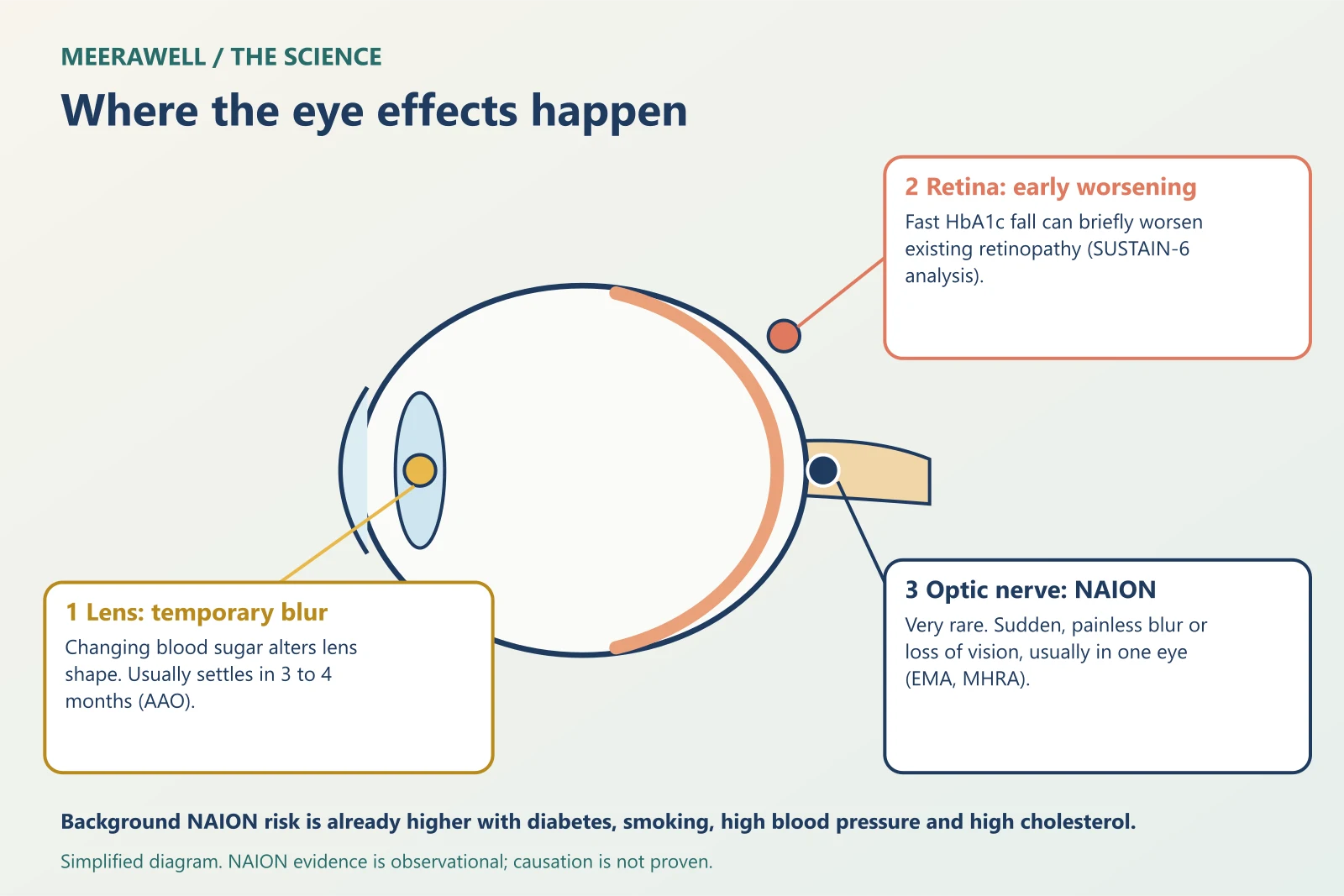
Brief blur. As blood sugar changes, the eye’s lens changes shape, so focus shifts. The American Academy of Ophthalmology says this usually settles in three or four months.
Early worsening of retinopathy. Retinopathy is damage to the tiny blood vessels at the back of the eye. When blood sugar falls fast, existing damage can briefly get worse. Doctors saw the same thing years ago with insulin.
NAION. This is a kind of stroke at the front of the optic nerve, the cable from eye to brain. Blood flow drops, and vision in one eye suddenly blurs or dims, often without pain. Diabetes, smoking, high blood pressure and high cholesterol already raise the risk.
2. How Big Are the Risks?
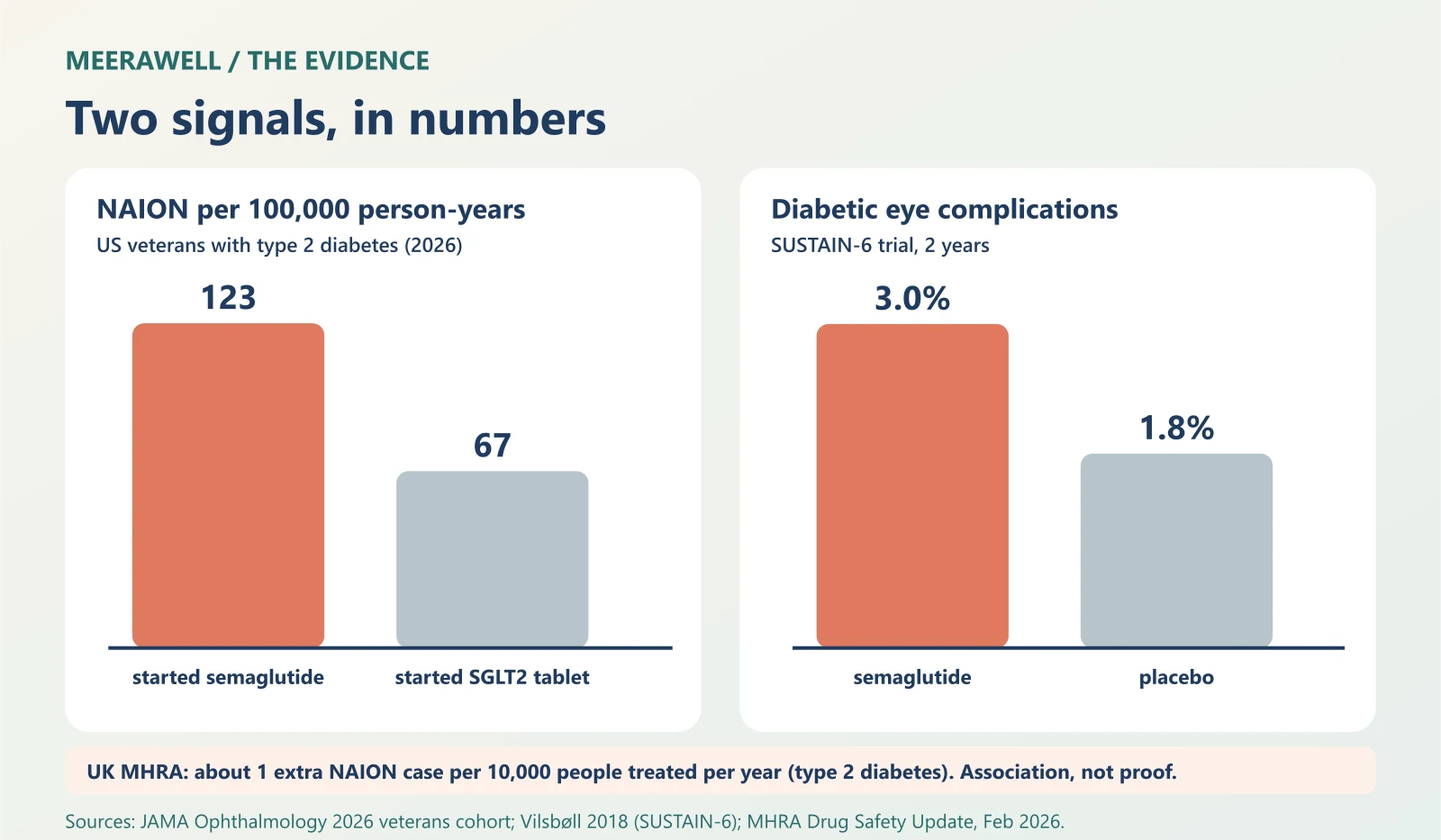
NAION. In June 2025, Europe’s drug regulator called NAION a very rare side effect of semaglutide. That means up to 1 in 10,000 people. The UK regulator estimates one extra case for every 10,000 people with type 2 diabetes treated each year.
A study of 102,361 US veterans found 123 cases per 100,000 people a year on semaglutide. The figure was 67 on another diabetes tablet. These are observational studies. They show a link, not proof. Eye specialists in 2026 called the risk small and advised shared decisions with your doctors.
Retinopathy. In the SUSTAIN-6 trial, diabetic eye problems hit 3.0% of people on semaglutide vs 1.8% on placebo. Most extra cases were in people who already had eye damage, used insulin and saw a big early sugar drop. A 2025 study of tirzepatide showed a similar pattern.
Did you know? From 2018 to August 2025, the UK received only three reports of NAION with semaglutide. Over a similar time, about 10.2 million packs were handed out. Rare harms can hide until large studies look for them.
3. Semaglutide Eye Side Effects: Which Checks to Do First
| Your situation | Eye check |
|---|---|
| Diabetes with known eye damage | Dilated retina check before starting, then as your eye doctor advises |
| Diabetes, no check in the past year | Dilated retina check before or soon after starting |
| Weight loss only, no diabetes | Routine eye checks |
| Past NAION | Talk to your doctors before starting |
Also:
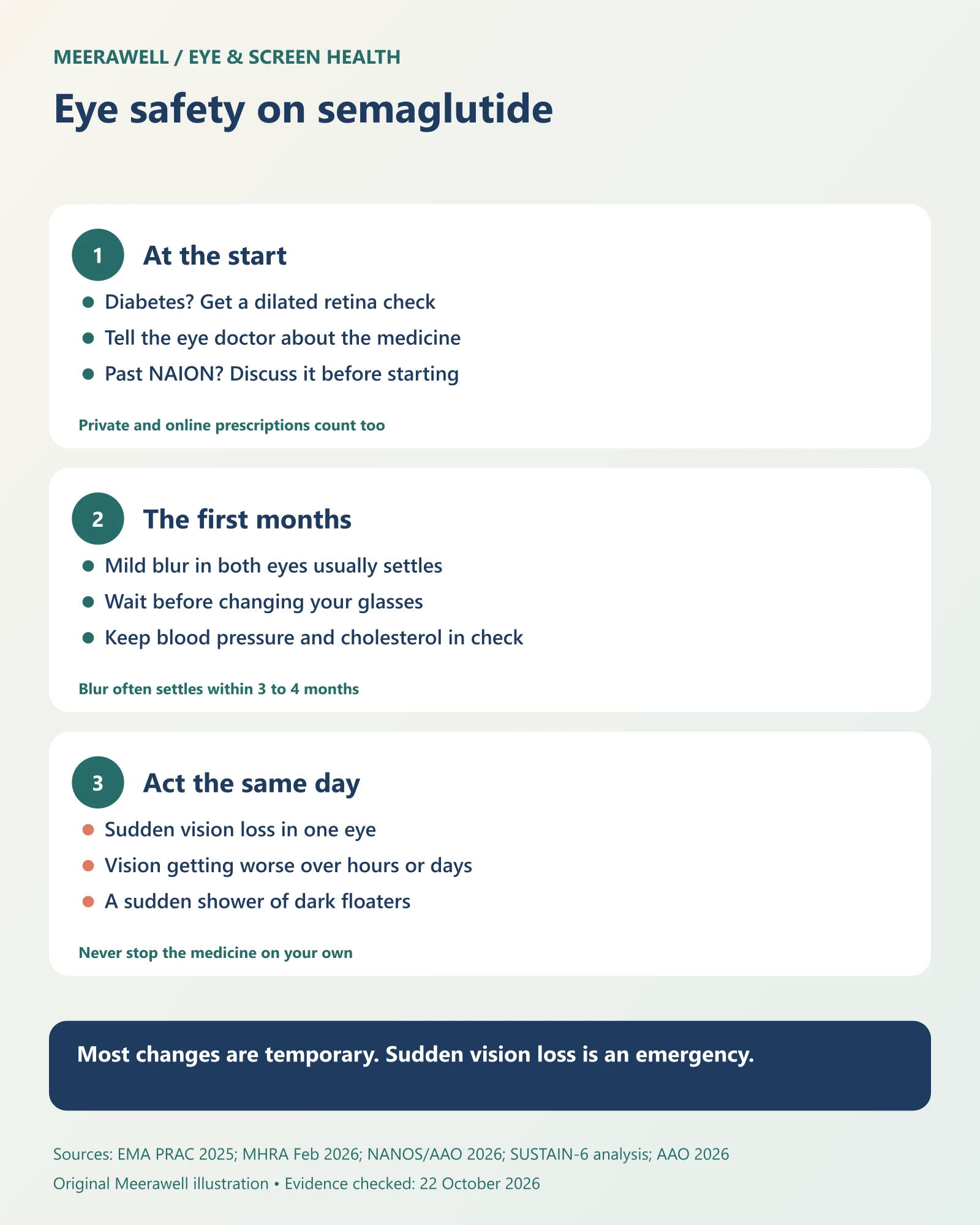
- Tell your eye doctor you take the medicine, even if it was prescribed online. Our routine eye check-up guide explains the exam.
- Wait for blur to settle before buying new glasses.
- Keep blood pressure and cholesterol in check. Our jaggery vs sugar guide busts one food myth.
- Never stop or change the dose yourself. Leave that to your prescriber.
When to get urgent eye care
Go to an eye emergency the same day for:
- sudden loss or dimming of vision in one eye, even without pain
- vision getting worse over hours or days
- a sudden shower of dark floating spots
Tell the doctor you take this medicine.
Frequently asked questions
Does blurry vision from Ozempic go away?
Usually, yes. Blur from changing blood sugar often settles within three or four months. If blur is sudden, in one eye, or worsening, get checked.
Should I have an eye test before Mounjaro or Ozempic?
If you have diabetes, yes. A dilated retina check shows whether you need closer watching. Without diabetes, routine care is enough unless you have had NAION.
Can semaglutide cause permanent vision loss?
NAION can leave lasting vision loss in one eye, but it is very rare. Most semaglutide eye side effects are brief or manageable.
Next step
A dilated retina check is the simplest way to catch semaglutide eye side effects early.
Sources and evidence
Evidence checked on 22 October 2026. General education, not a diagnosis. Research on semaglutide eye side effects is mostly observational. Never stop a medicine without your doctor.
- European Medicines Agency: PRAC highlights, June 2025
- MHRA Drug Safety Update, 5 February 2026: semaglutide and NAION
- US veterans cohort, 2026: NAION in semaglutide users (JAMA Ophthalmol)
- NANOS and AAO, 2026: consensus on GLP-1 medicines and NAION (Ophthalmology)
- Vilsbøll et al., 2018: semaglutide and retinopathy in SUSTAIN (Diabetes Obes Metab)
- Tirzepatide and early worsening of retinopathy, 2025 (Diabetologia)
- American Academy of Ophthalmology: can Ozempic affect eye health? (2026)
- Natco Pharma: generic semaglutide launch filing, 20 March 2026