

Key takeaways
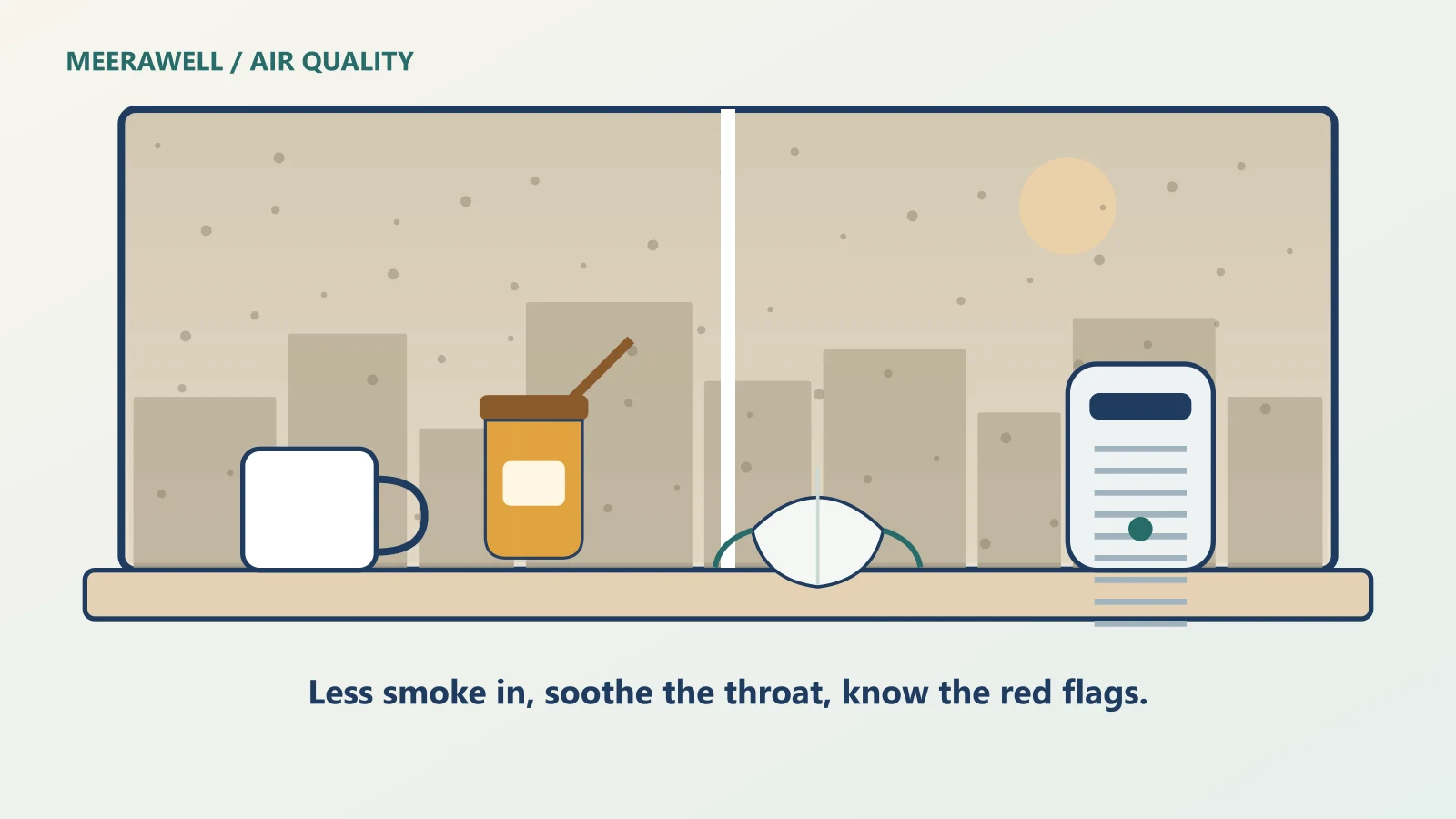
- A pollution cough is your airways reacting to irritant particles and gases. It usually eases as exposure falls.
- What helps: less exposure, a fitted N95 outside, warm fluids, and honey for over-ones. Steam and cough syrups do not.
- See a doctor for breathlessness, chest pain, blood, fever, or a cough over two weeks.
On Delhi’s smoggiest January days in 2025, young people and parents reported significantly more itchy eyes and breathing difficulties than on cleaner March days (survey).
The short answer: a pollution cough is mostly irritation, not infection. Cut what you breathe in, soothe your throat, and know the warning signs. Antibiotics, steam and most cough syrups do not treat the cause.
1. The Science: How Smog Triggers a Pollution Cough
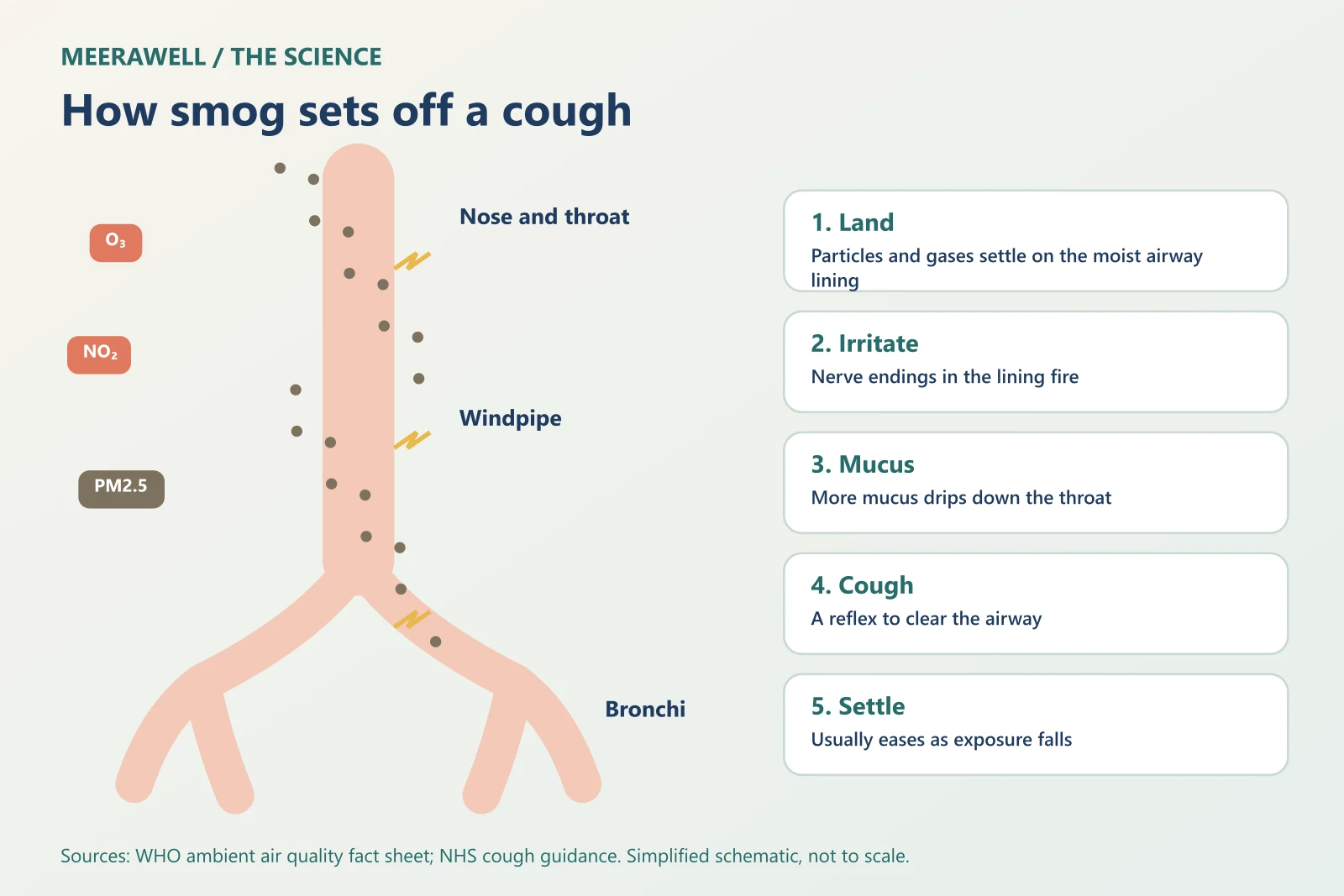
Fine particles and gases such as ozone land on the moist lining of your nose, throat and airways. Nerve endings there fire, and you cough to clear the airway. The lining also makes more mucus, which drips down the throat and keeps the tickle going.
PM2.5 particles are small enough to reach deep into the lungs. The WHO-air-quality-and-health) estimates outdoor air pollution caused 4.2 million early deaths worldwide in 2019, including from chronic lung disease and chest infections.
So a cough on a smoggy day is a protective reflex. It becomes a worry when it lingers, or when the lungs themselves are struggling.
2. Pollution Cough Remedies: What Helps and What Doesn’t
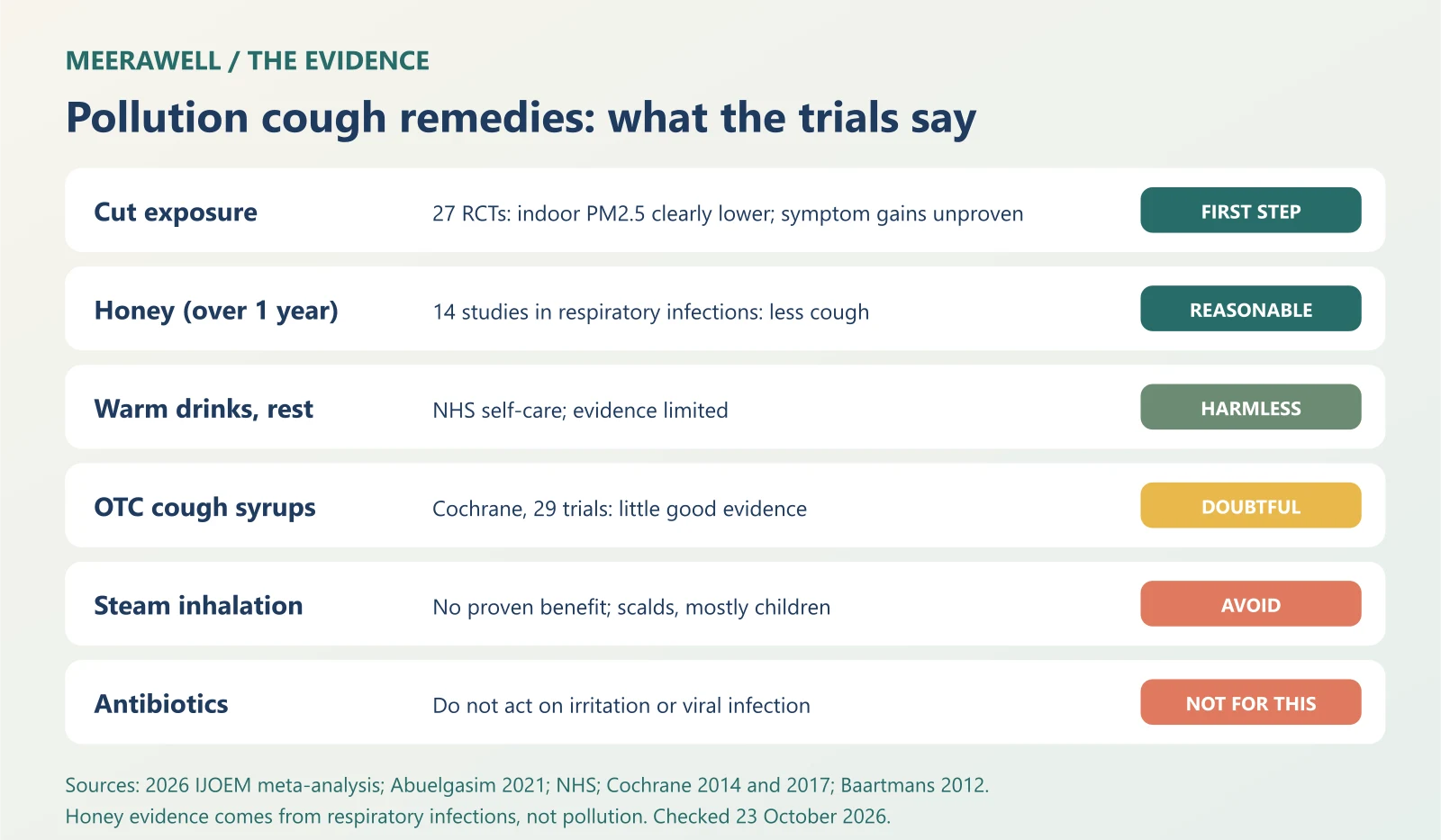
| Remedy | What the evidence says | Verdict |
|---|---|---|
| Cutting exposure | Purifiers and respirators cut indoor PM2.5 in 27 trials | First step |
| Honey | Less cough in respiratory infections (14 studies) | Fine for over-ones |
| Steam inhalation | No proven benefit; scalds, mostly children | Avoid |
| Cough syrups | Little good evidence in 29 trials | Never under 2 |
| Antibiotics | Do not act on irritation or viruses | Only if a doctor diagnoses infection |
Exposure. A 2026 meta-analysis found purifiers and respirators clearly lowered indoor particles. It found no significant change in symptoms or lung function. That is an absence of proof, not proof of no benefit.
Honey. Its evidence comes from respiratory infections, not pollution. It is unsafe for babies under one (NHS).
Steam. A Dutch burns-centre study called steam inhalation dangerous; most people burned were children.
Syrups. India’s DGHS advised in October 2025 that cough and cold medicines should not be given to children under two, and are generally not recommended under five. It says most children’s coughs settle on their own, with fluids and rest as the first step. A Cochrane review found little good evidence for them at any age.
Did you know? London’s Great Smog lasted from 5 to 9 December 1952. About 4,000 deaths were known to have resulted, says the Met Office.
3. Pollution Cough at Home: A Practical Plan
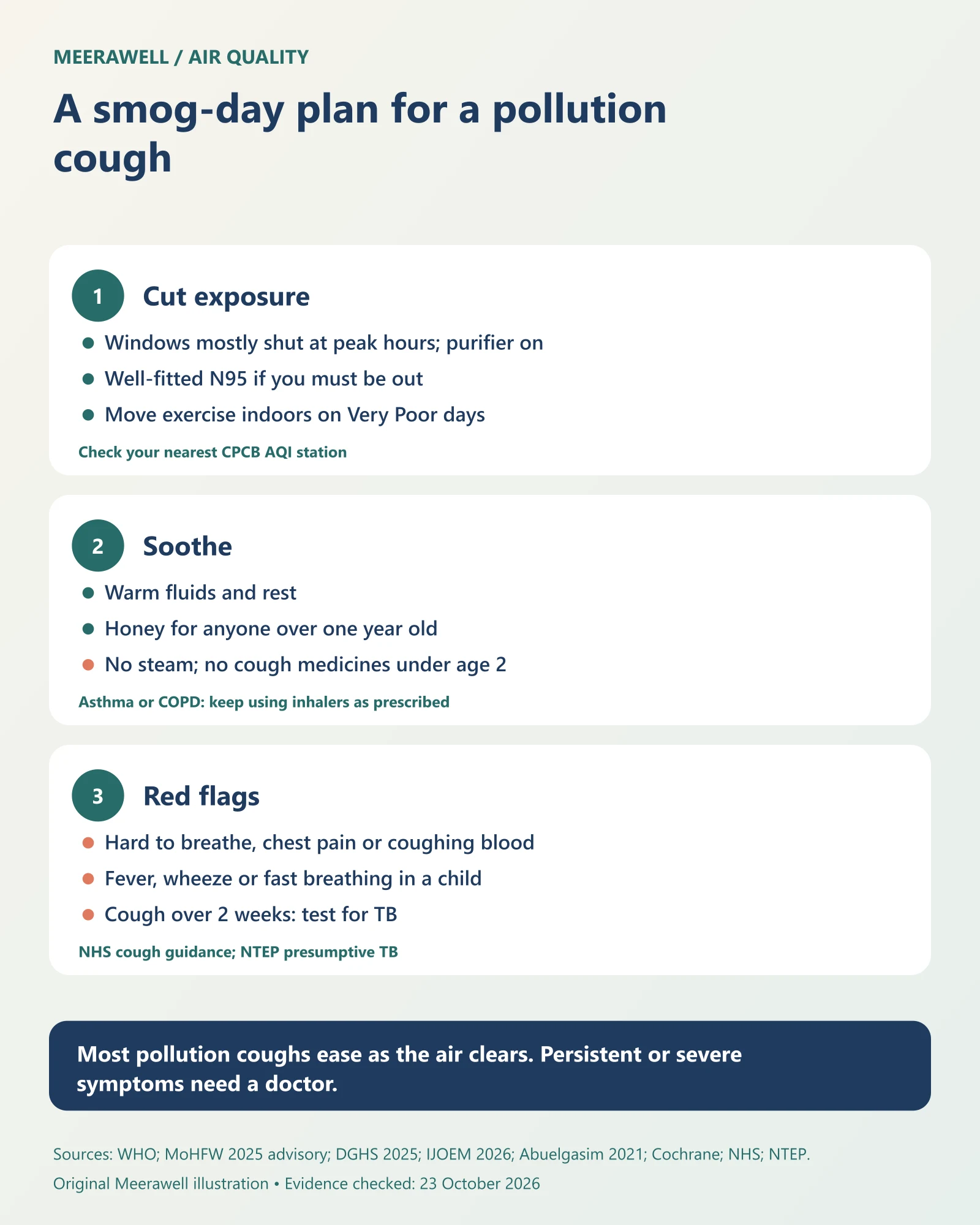
- Cut exposure. On Poor or worse AQI days, keep windows mostly shut at peak hours and run a purifier. See air purifier vs humidifier.
- Wear a fitted N95 or N99 outside. India’s 2025 air-pollution advisory says cloth, paper masks and handkerchiefs do not work.
- Move exercise indoors. See exercising when the AQI is high.
- Soothe your throat with warm fluids, and honey for anyone over one.
- Keep using prescribed inhalers as your doctor directed.
The same advisory says that if cough, wheezing or chest tightness starts when the AQI is above 200, you should slow down and see the nearest doctor.
When to see a doctor
See a doctor for breathlessness, chest pain, wheeze or coughing blood, and cut exertion. Fever suggests infection. India’s TB programme says a cough over two weeks needs a TB test.
Frequently asked questions
Can pollution cause a sore throat?
Yes. Particles and gases irritate the throat lining as well as the lungs. See a doctor if a sore throat does not improve after a week or comes with a high fever.
What is the best home remedy for a pollution cough?
Cut exposure first: stay indoors with a purifier on bad days. Warm fluids and honey can soothe anyone over one. Skip steam, which can scald.
How do I treat pollution cough in kids?
Keep them indoors on bad days and clean the air in their room. Never give cough and cold medicines under two. Fast or noisy breathing, fever or drowsiness need a doctor.
Next step
A pollution cough season does not mean no exercise. Learn when to move indoors.
Sources and evidence
Evidence checked on 23 October 2026. General education, not a diagnosis. Respiratory illness is outside the author’s specialty; this guide is source-led.
- 2026 survey: air pollution and young people in Delhi and Dhaka (PLOS Glob Public Health)
- WHO: ambient air quality and health-air-quality-and-health)
- MoHFW / NCDC, 1 November 2025: health advisory on air pollution
- DGHS, 3 October 2025: cough syrups in children (circulated by ESIC)
- 2026 meta-analysis: personal protective measures (Indian J Occup Environ Med)
- Abuelgasim et al., 2021: honey for respiratory infections (BMJ Evid Based Med)
- Baartmans et al., 2012: scalds from steam inhalation (Br J Gen Pract)
- Cochrane review, 2014: over-the-counter medicines for cough
- NTEP: presumptive TB
- NHS: cough