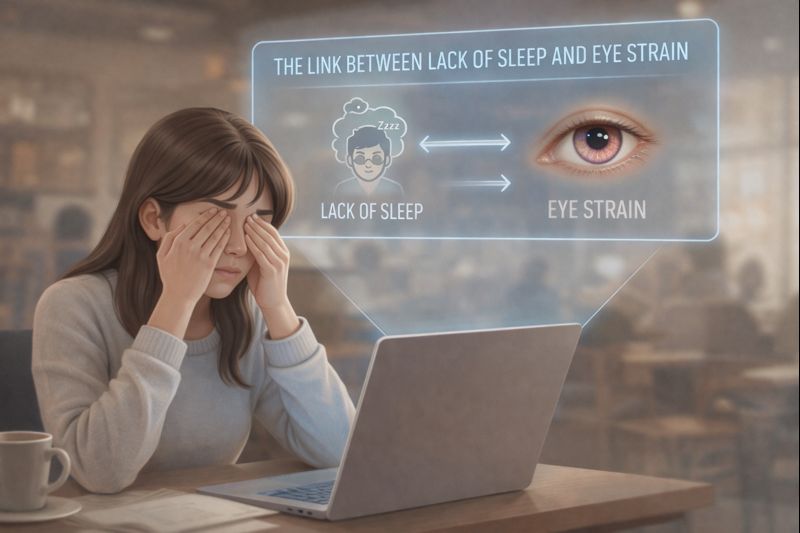

Contact lenses that feel dry during computer work may reflect a combination of lens-related factors, screen habits and the environment. Persistent discomfort deserves a contact-lens review. Remove lenses if your eyes become irritated, and seek urgent advice for redness, pain, light sensitivity or reduced vision rather than trying to work through it.
The lenses are comfortable on your commute. By the afternoon meeting you are blinking repeatedly and counting the minutes until you can take them out. Buying a different brand without checking the cause may leave the problem unresolved.
Why screen work can change lens comfort
Concentrated visual tasks can affect blinking and comfort. Lens fit, material, replacement schedule and the ocular surface also matter. In a study of digital display use, researchers compared tasks with and without contact lenses and artificial tears. Symptoms and clinical signs did not always change together. That distinction matters: comfort is important, but a symptom alone cannot tell you whether your eye surface is healthy. Read the primary study.
Review the whole wearing day
Count lens wear from insertion to removal, including the commute, office hours and evening phone use. A workday routine may quietly extend into a much longer wearing period. The appropriate schedule should come from your prescribing professional, not an online universal limit.
Bring the packaging or lens name, replacement frequency, care solution and any drops to your review. Also mention air blowing at your desk and whether the problem occurs on days you wear glasses. These details help the clinician evaluate a repeatable pattern.
A practical workday checklist
Contact-lens hygiene remains important even when symptoms seem related to screen work. Water exposure and inappropriate wear can introduce risks that a screen break cannot address. CDC contact-lens prevention guidance
Which drops can be used with lenses?
Check compatibility with the specific lens and follow the product and clinician instructions. Do not assume every lubricating drop can be used while lenses are in place. Ask whether the lenses must be removed and when they may be reinserted. Avoid choosing a redness-removing product simply to make an uncomfortable eye look normal.
Your clinician may recommend changing lens wear, treating an underlying surface condition or using glasses while symptoms are assessed. Specialist lenses are medical options for selected situations, not a default purchase for an uncomfortable afternoon. Cleveland Clinic guidance on contacts and dry eyes
When discomfort becomes urgent
Remove contact lenses and obtain urgent eye-care advice if an eye is red or painful, vision becomes reduced, or light is unusually uncomfortable. Do not put lenses back in while waiting for advice. A red eye in a contact-lens wearer can indicate infection and deserves more caution than ordinary end-of-day tiredness. NHS red-eye guidance
Questions for your appointment
- Is the fit and prescription still appropriate for my work?
- Does my ocular surface need treatment?
- What wearing schedule should I follow?
- Which drops are compatible with these lenses?
- What symptoms mean I should stop wearing them and call?
Quick answers
Are daily lenses always the answer?
No. Replacement schedule is only one factor. Suitability depends on the eye, prescription, fit, care and symptoms.
Must I abandon contact lenses permanently?
Not necessarily. The first step is to identify the reason for discomfort and a safe plan with your clinician.
For general screen-related symptoms, see our guide to computer vision syndrome. If discomfort is particularly office-specific, review airflow and workstation conditions as well.
This article provides general educational information and does not replace an individual examination. No product has been personally tested for this article. About Meerawell