
Illustrated checks and private printable notes to help you observe your day and prepare useful questions. These are general observation aids, not diagnostic tests or personalised treatment plans.
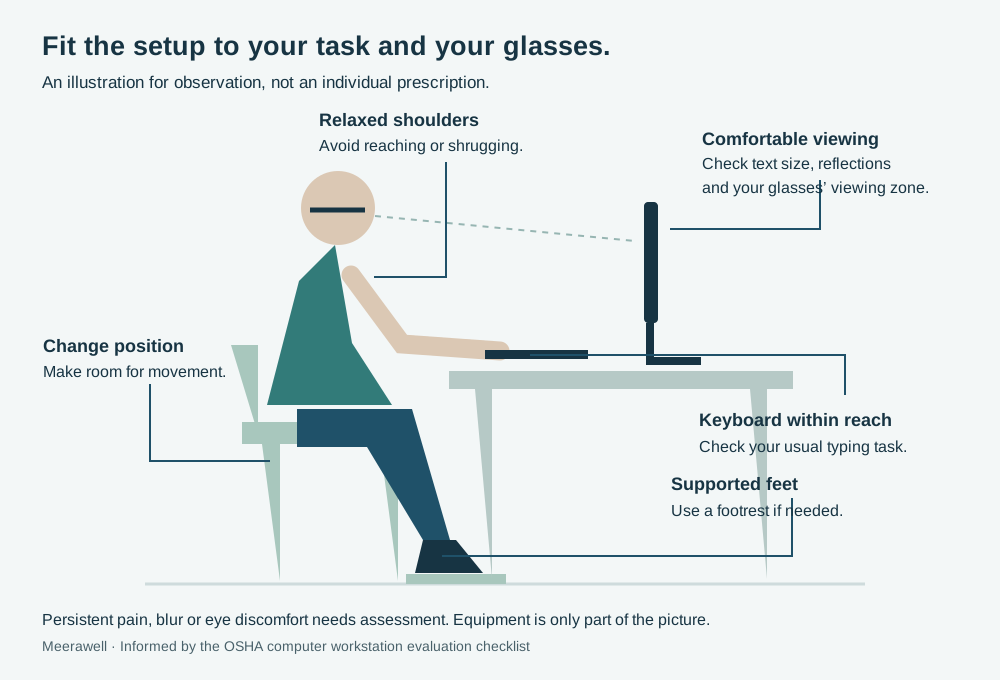
An illustrated workstation check
Fit the setup to your task and your glasses. Observe comfortable viewing, relaxed shoulders, keyboard reach, supported feet and room for movement. If an adjustment makes symptoms worse, stop and reassess.
Observe your eye and screen day
Check text readability, reflections, direct airflow and opportunities to interrupt long close work. Note when discomfort recurs. These observations do not identify a cause or decide whether drops, glasses or treatment are appropriate.
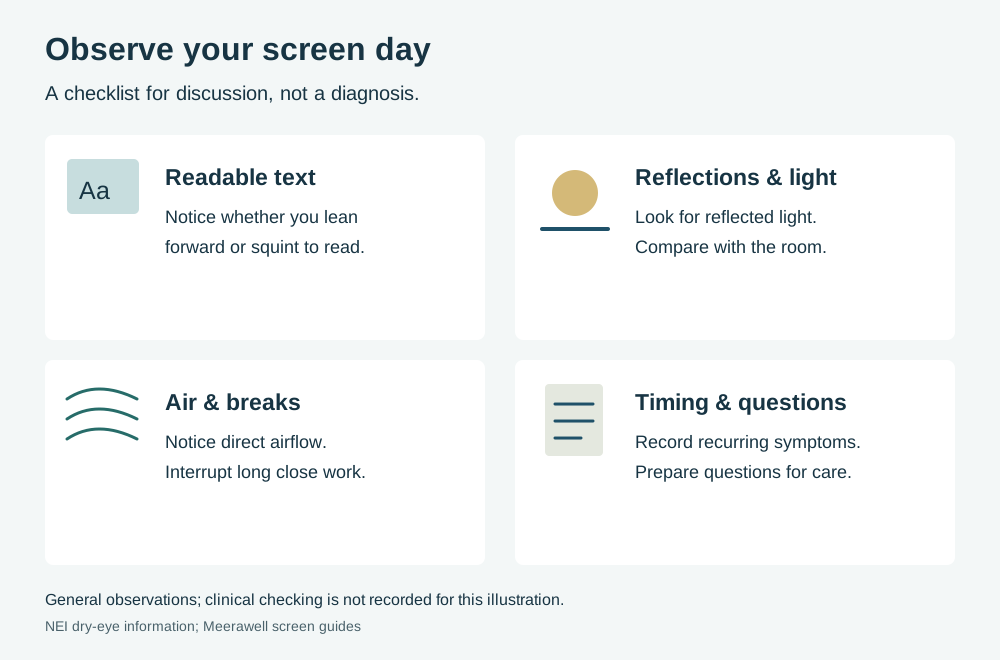
Source context: National Eye Institute dry-eye information · Read the computer vision syndrome guide
Your bedroom, after the lights go down
A room can feel calm in the afternoon and behave differently at night: a gap in the curtains, a corridor light, traffic outside, or bedding that feels too warm. Walk through your own room at the time you usually go to bed.
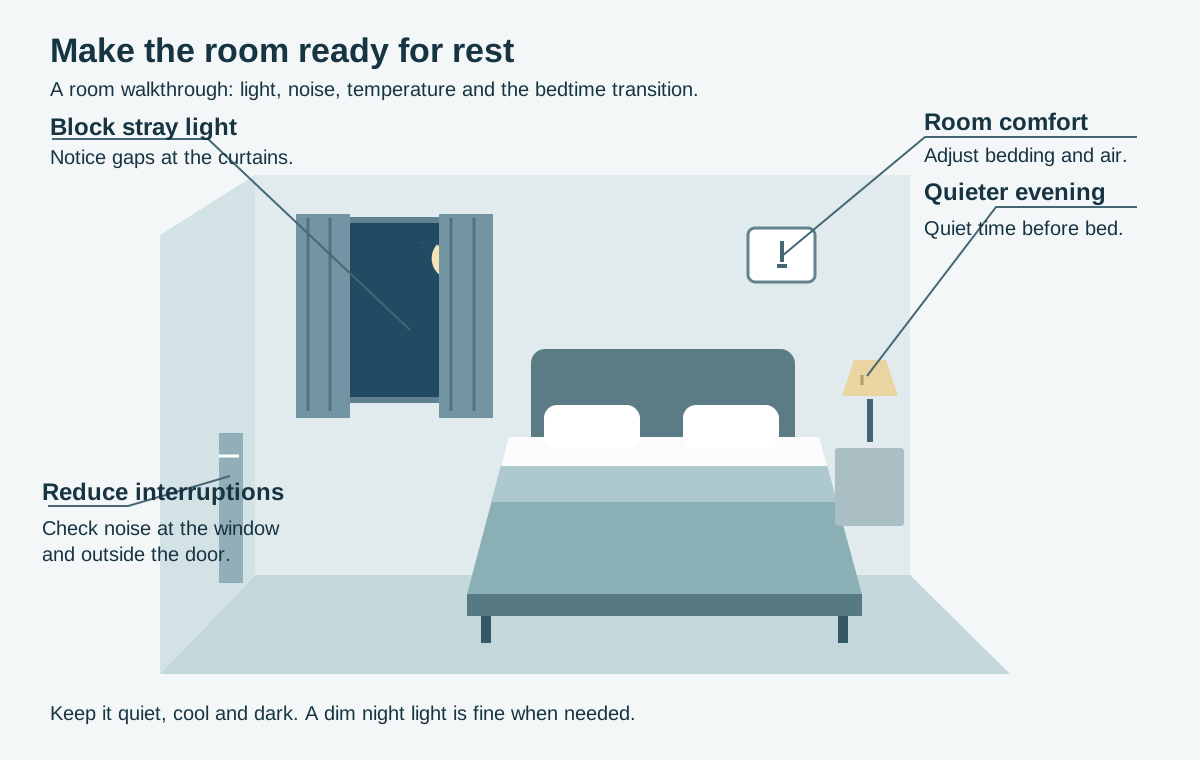
Look from the pillow
Where does light enter? Check the window, door and small indicator lights. Keep a dim night light if you need one to move safely.
Listen for interruptions
What reaches the bed from the street, corridor or another room? Note the source and one practical way to reduce it.
Check comfort
A cool room is the general aim. Notice whether bedding and room conditions feel comfortable; this guide does not prescribe a temperature.
Make the transition
Leave space for a quieter evening. Try reducing bright light and demanding tasks during the hour before bed.
Source: NHLBI healthy sleep habits. The illustration is a general guide, not an assessment of a sleep condition.
Find room for sleep in your actual day
Your morning usually has a fixed demand: work, a commute or a school run. Start there. Work backwards to see what evening space you can protect, then compare that plan with how the week really goes.
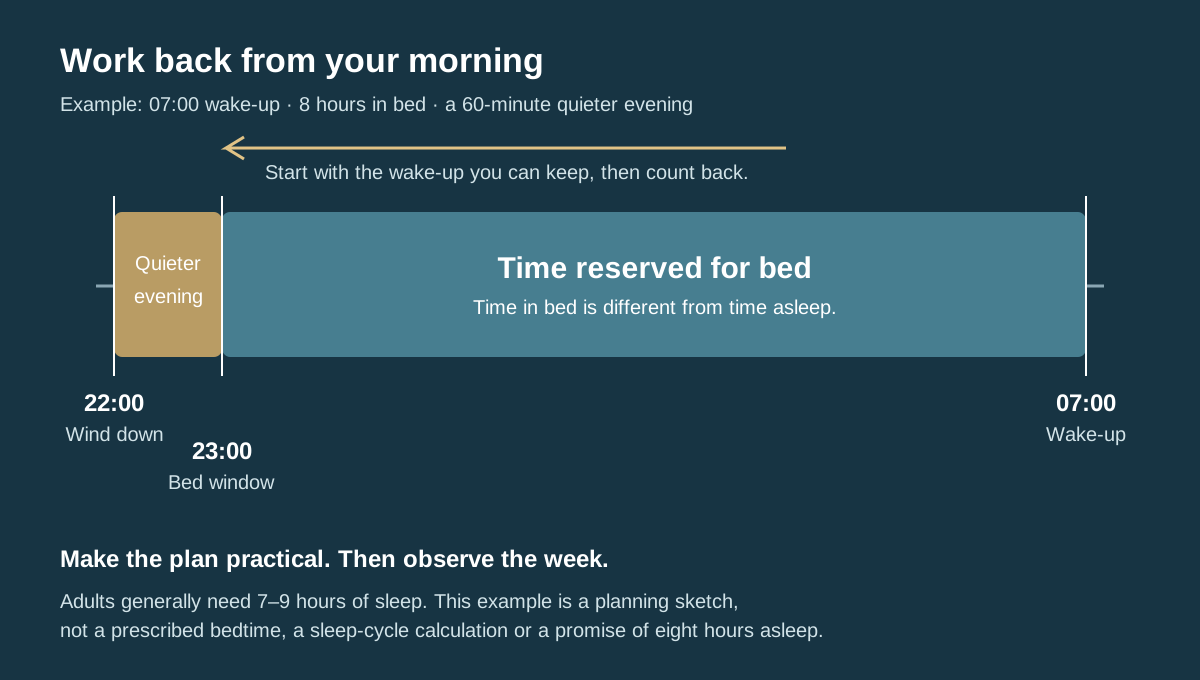
Sketch your evening window
This local calculator works backwards. It does not choose a chronotype or a medically ideal bedtime.
Time in bed includes time spent awake. Adults generally need 7–9 hours of actual sleep; individual needs vary. A short window may leave too little time once settling and night waking are included. Change the plan if it is impractical, and use the diary to observe rather than force sleep.
Your choices stay on this page. Nothing is submitted or saved.
Read the week, not one difficult night
Keep a record of when you went to bed, when you woke, roughly how long you were awake and how alert you felt the next day. Use that pattern to ask better questions. Shift work and persistent sleep problems may need a different plan with professional help.
Print the sleep plan and seven-day diary
Sources: NHLBI adult sleep duration and healthy sleep habits. Persistent tiredness, significant daytime sleepiness, loud snoring or reported breathing pauses deserve assessment. Do not drive when sleepy.
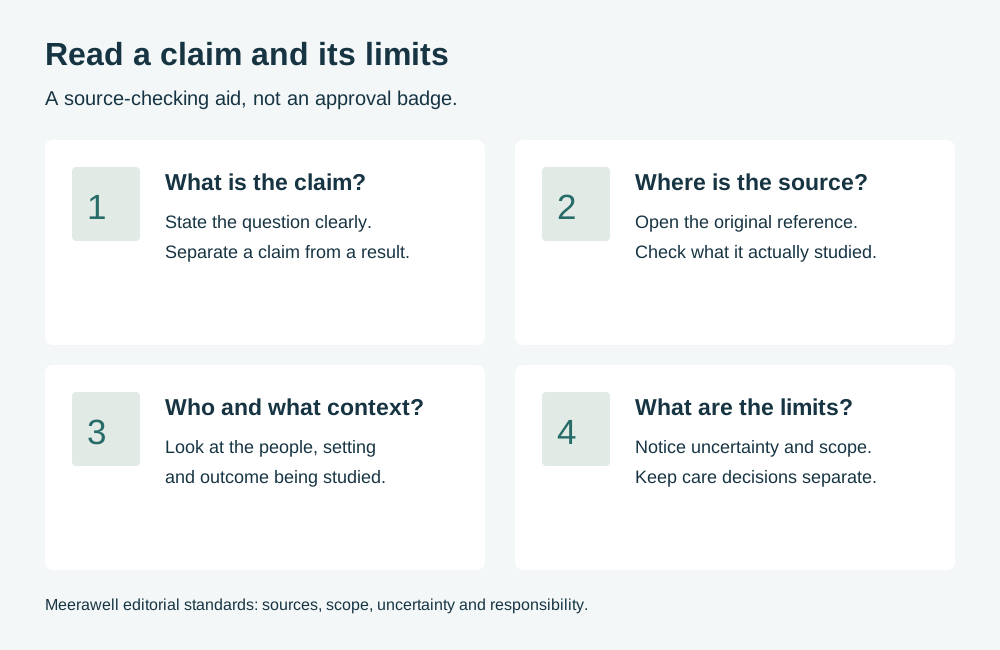
Read a claim and its limits
Start with the question, open the original source, check the people and setting studied, and notice the limits. A source link is not a clinical approval badge.
Prefer a page you can keep?
Print a blank sheet and record observations by hand. No form submission, storage or analytics is used on these sheets. Keep them with you for a care discussion; do not email medical histories to Meerawell.