

Key takeaways
- Most eye floaters are harmless shadows cast by clumps in the eye’s gel, often as it pulls away from the retina with age.
- New floaters, a sudden shower of them, flashes, or a shadow across your vision need a same-day eye examination.
- Old floaters that have not changed rarely need treatment.
The short answer: long-standing eye floaters are usually harmless. New floaters, a sudden increase, new flashes or a spreading shadow need a dilated eye examination by an ophthalmologist the same day. About 1 in 7 people with sudden symptoms has a retinal tear.
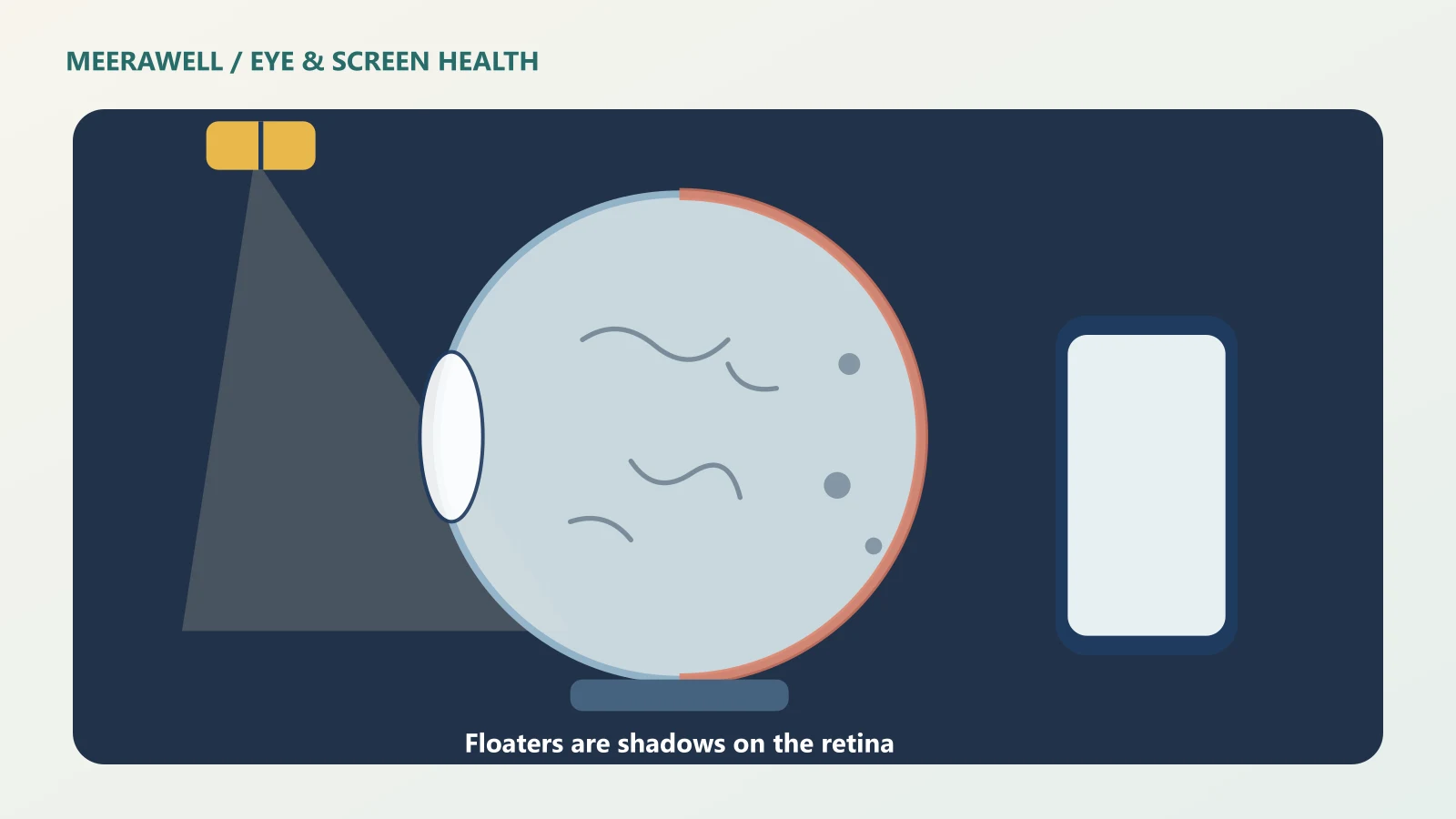
A grey cobweb drifts across your phone screen. You blink, and it floats back. Most of the time, this is ageing gel inside the eye. Sometimes it is not.
1. What Eye Floaters Are
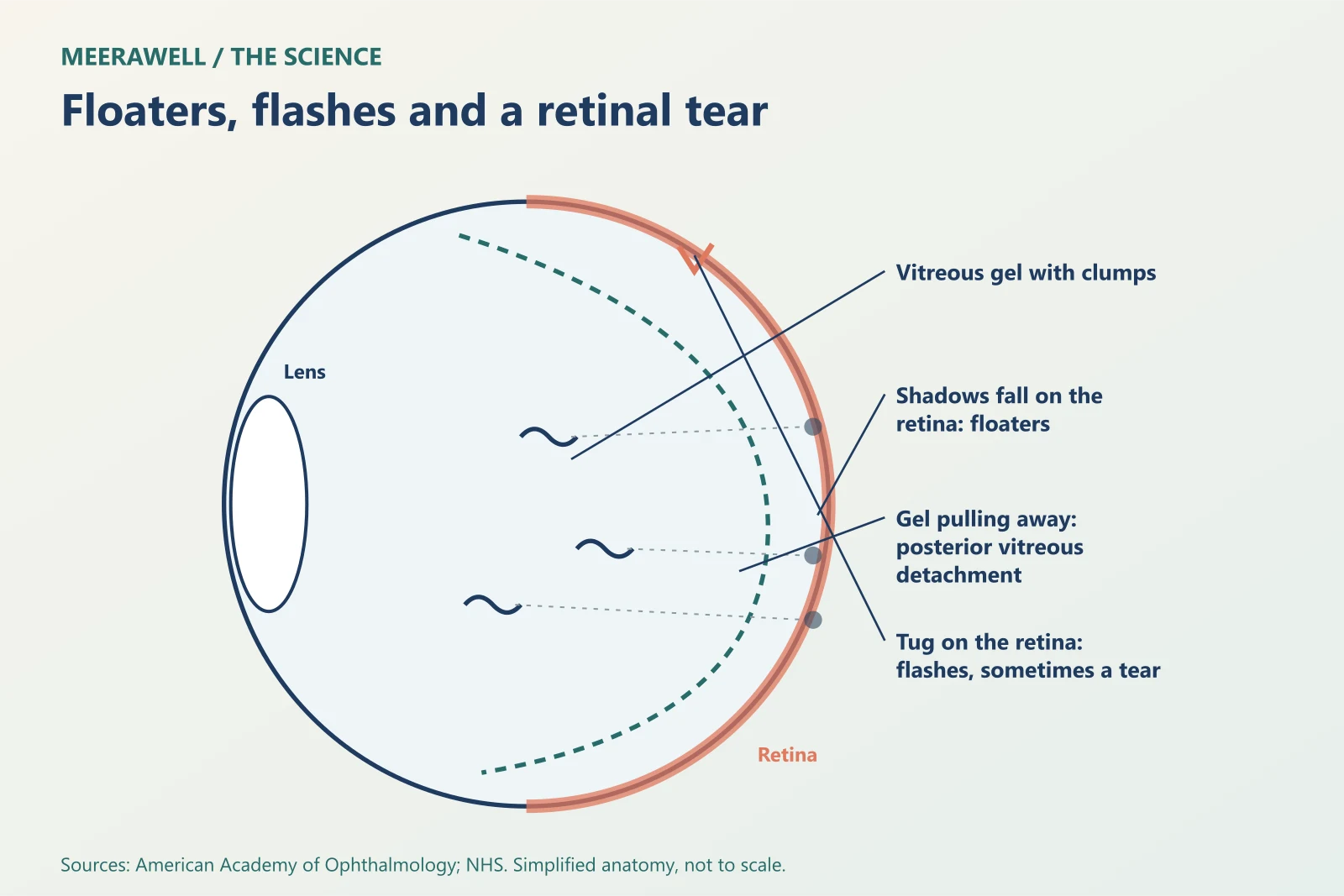
The back of your eye is filled with clear gel, the vitreous. With age it liquefies and its fibres clump. What you see, the American Academy of Ophthalmology explains, are the shadows these clumps cast on the retina.
The gel may then pull away from the retina. This is posterior vitreous detachment (PVD). Where the gel sticks firmly, the tug causes flashes of light, and occasionally a tear. A tear can let fluid lift the retina off, a retinal detachment that can permanently harm vision.
Eye floaters and PVD are more likely if you are short-sighted, have had cataract surgery, or have had inflammation inside the eye.
Did you know? Floaters were once called muscae volitantes, “flying flies”. In 1823 the physiologist Jan Purkinje identified them as specks in the vitreous.
2. Harmless or Emergency? Read the Pattern
The NHS says floaters are usually harmless when they are old, not getting worse and not affecting vision. With eye floaters, change is what matters.
| What you notice | What to do |
|---|---|
| The same few floaters for months or years | Mention them at your next routine check |
| Floaters or flashes for the first time | Same-day dilated eye examination |
| A sudden shower of new dots or cobwebs | Same-day dilated eye examination |
| A shadow or curtain spreading from one side | Emergency: go now |
| New floaters after eye surgery or injury | Urgent examination |
A JAMA review of 17 studies found a retinal tear in 14% of people who saw an eye doctor for sudden floaters or flashes.
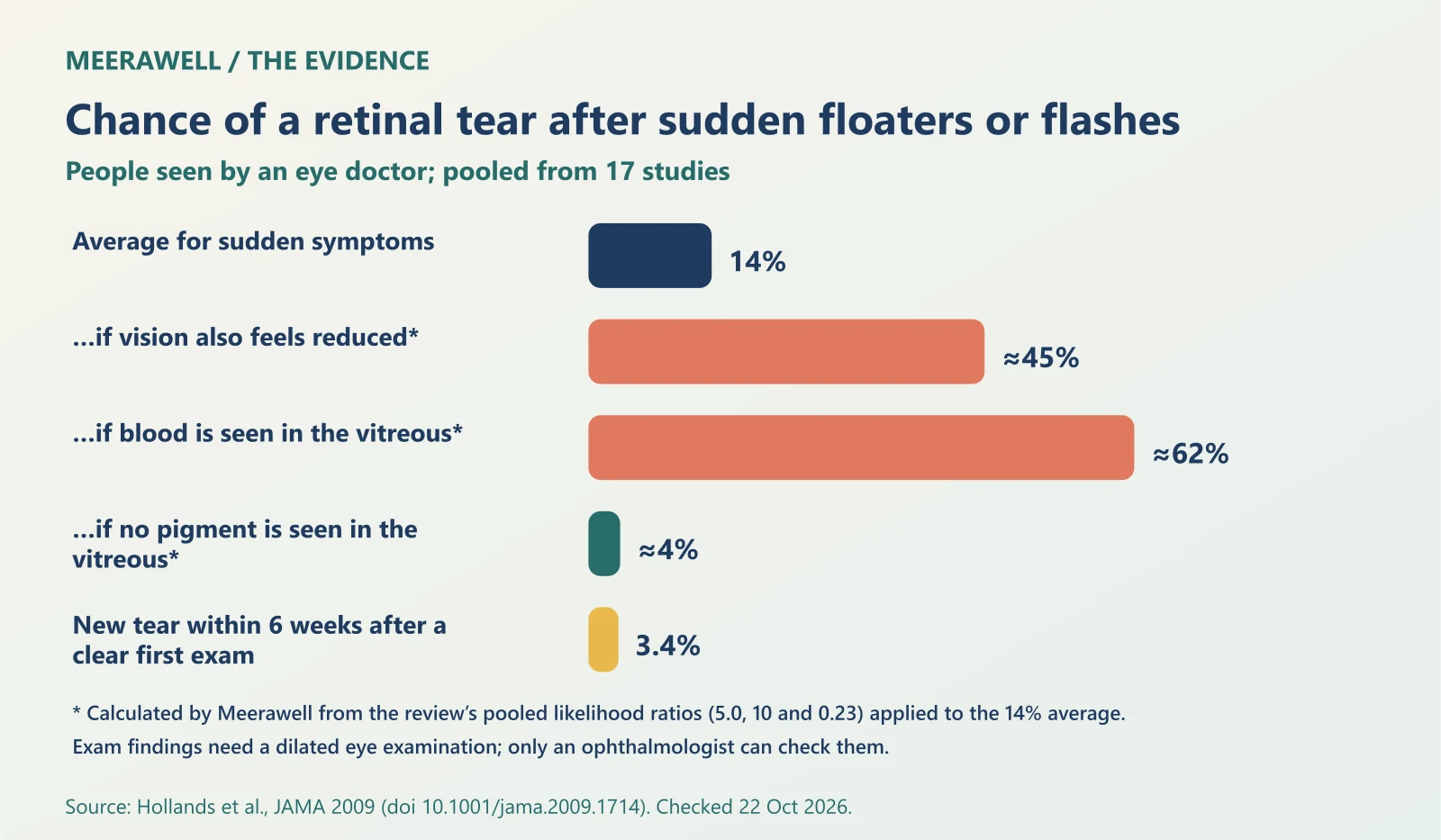
Reduced vision raised the odds of a tear about fivefold. Even after a clear first examination, 3.4% developed a tear within six weeks. These figures describe people already referred to eye doctors, not everyone with floaters.
Short sight raises the risk. In a US insurance-database study, people with high myopia had 39 times the detachment rate of people without myopia.
3. What to Do About Eye Floaters
- New floaters or flashes: see an ophthalmologist today. An optical shop cannot rule out a tear. Do not drive after dilating drops.
- A curtain or shadow: go to an eye hospital now.
- After a clear examination: keep the follow-up visit, and return the same day if things change.
- Old, stable floaters: mention them at your routine eye check-up.
Most floaters fade from notice over months. Severe ones can be treated with surgery or laser, but both carry risks. In a small sham-controlled trial of 52 people with one floater type, 53% improved after laser, against none after sham. Drops and supplements have no proven role.
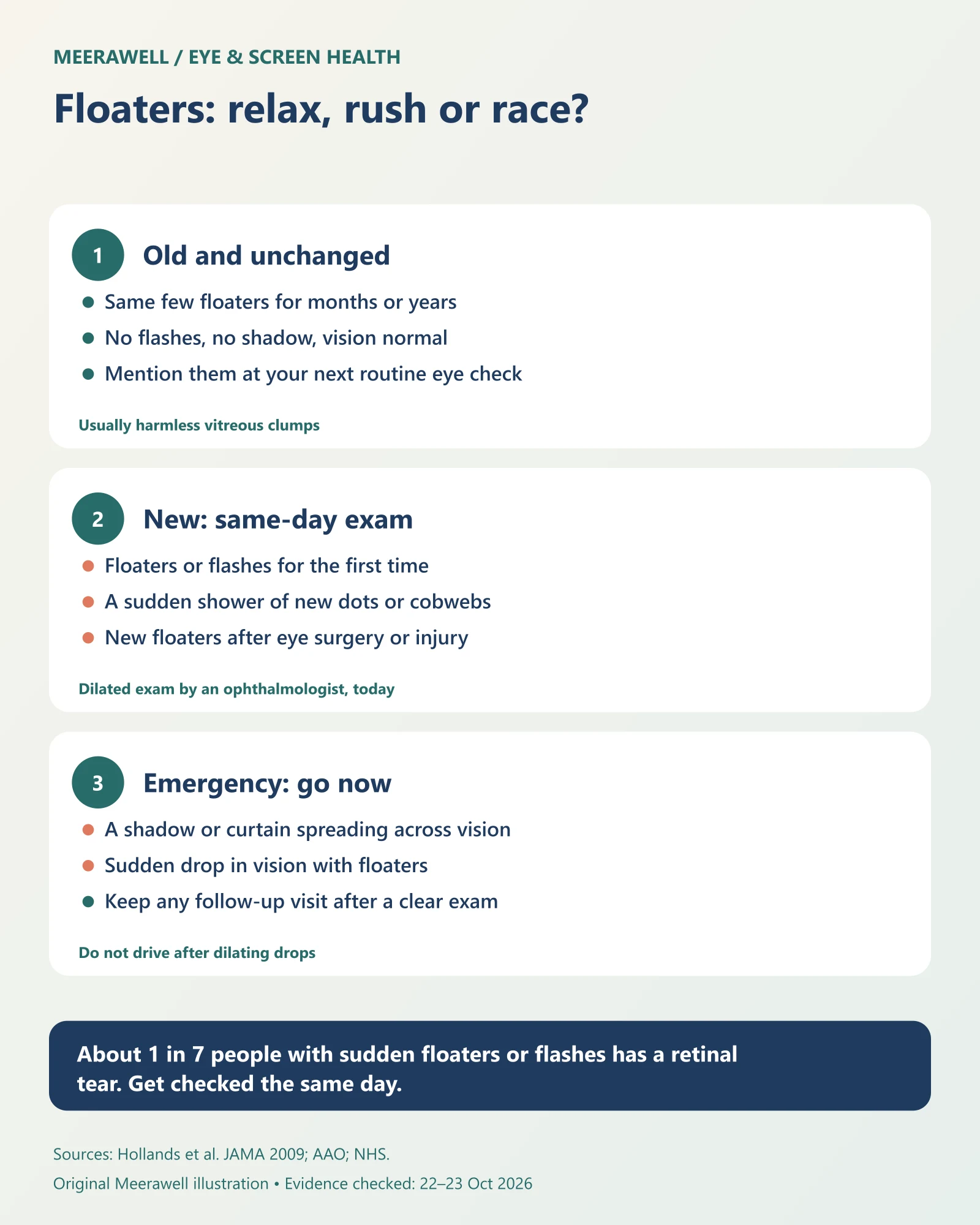
The Verdict: old eye floaters are a nuisance. New or sudden eye floaters are a same-day problem until an examination says otherwise.
When to see an eye doctor urgently
Same-day dilated examination for first-time or sudden floaters, flashes, a shower of dots, a shadow or curtain, reduced vision, eye pain, or floaters after surgery or injury.
Frequently asked questions
When should I worry about eye floaters?
When they are new, suddenly increase, or come with flashes, a shadow, blurred vision or pain. Get a same-day dilated examination. Floaters unchanged for months are usually harmless.
Can eye floaters go away on their own?
They rarely vanish completely, but most become much less noticeable over weeks to months. A sudden change still needs an examination.
Are eye floaters after cataract surgery normal?
New floaters are common after cataract surgery, but they can signal a tear, bleeding or infection. Get an urgent check with your eye surgeon.
Next step
See what a full eye examination includes, from dilating drops to a retinal check.
Sources and evidence
Evidence checked on 22–23 October 2026. General education, not a diagnosis. New symptoms need an ophthalmologist, not an article.
- Hollands et al., 2009: acute-onset floaters and flashes and retinal tear risk (JAMA)
- American Academy of Ophthalmology: what are floaters and flashes?
- NHS: floaters and flashes in the eyes
- Ludwig et al., 2023: retinal detachment in myopes, US cohort (Sci Rep)
- Shah and Heier, 2017: YAG vitreolysis vs sham, randomised trial (JAMA Ophthalmol)
- Plange, 1990: muscae volitantes from early observations to Purkinje (Gesnerus)