

Key takeaways
- Apple Watch hypertension notifications look for signs of long-term high blood pressure over 30 days. They never show a number and are not a diagnosis.
- In Apple’s study, the alert caught 41% of people with hypertension. No alert does not mean your blood pressure is fine.
- In India (22 October 2026) it works on Series 9 or later and Ultra 2 or later.
Only 37% of the 188.3 million Indian adults with hypertension have been diagnosed, says the WHO.
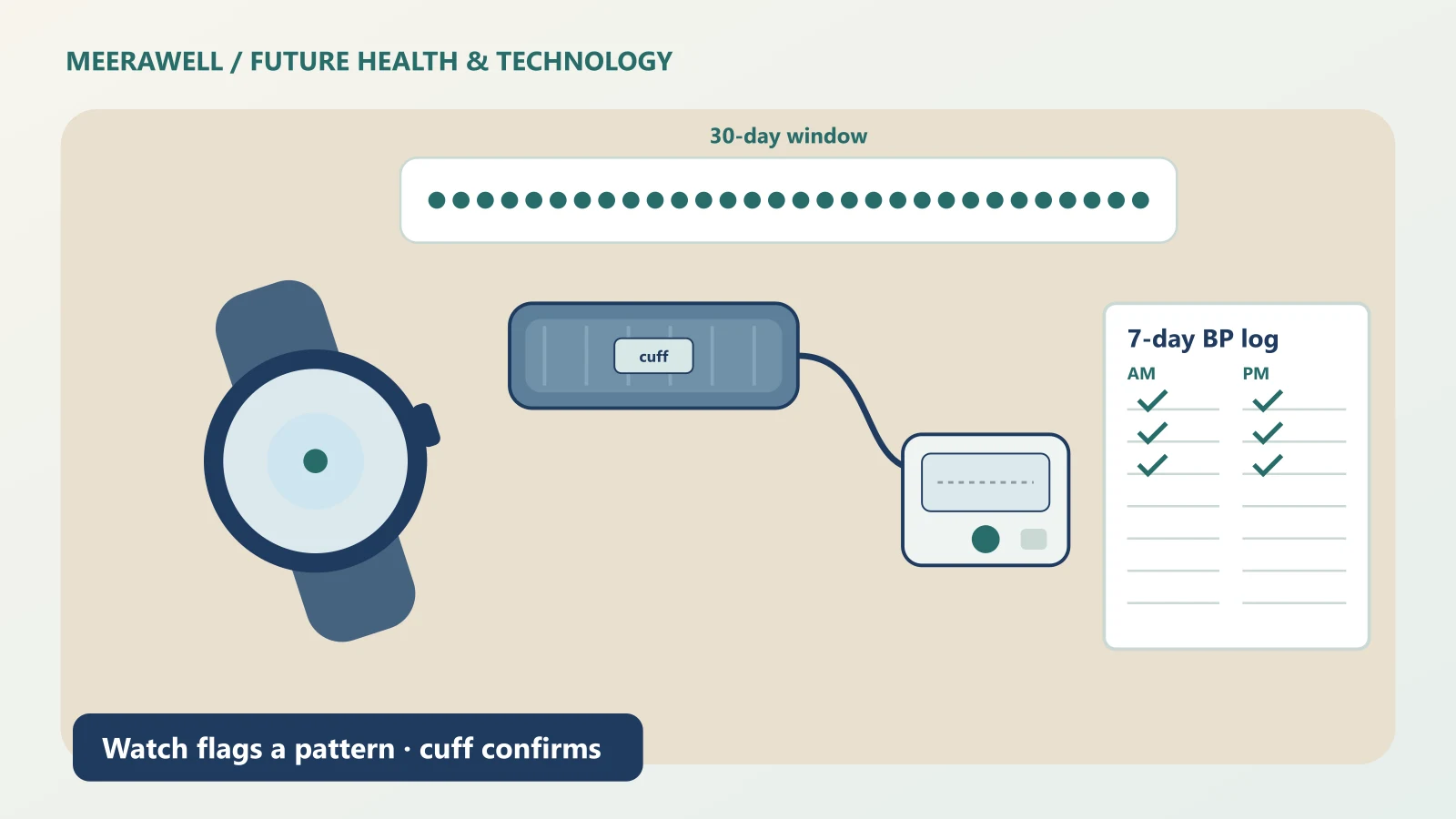
The short answer: an Apple Watch hypertension notification is a prompt to measure, not a measurement. Check it with a validated upper-arm cuff. Never treat a quiet watch as an all-clear.
Apple switched the feature on in India on 3 December 2025. High blood pressure rarely causes symptoms, so a watch that flags it sounds useful. Here is what it can and can’t do.
1. How Apple Watch Hypertension Notifications Work
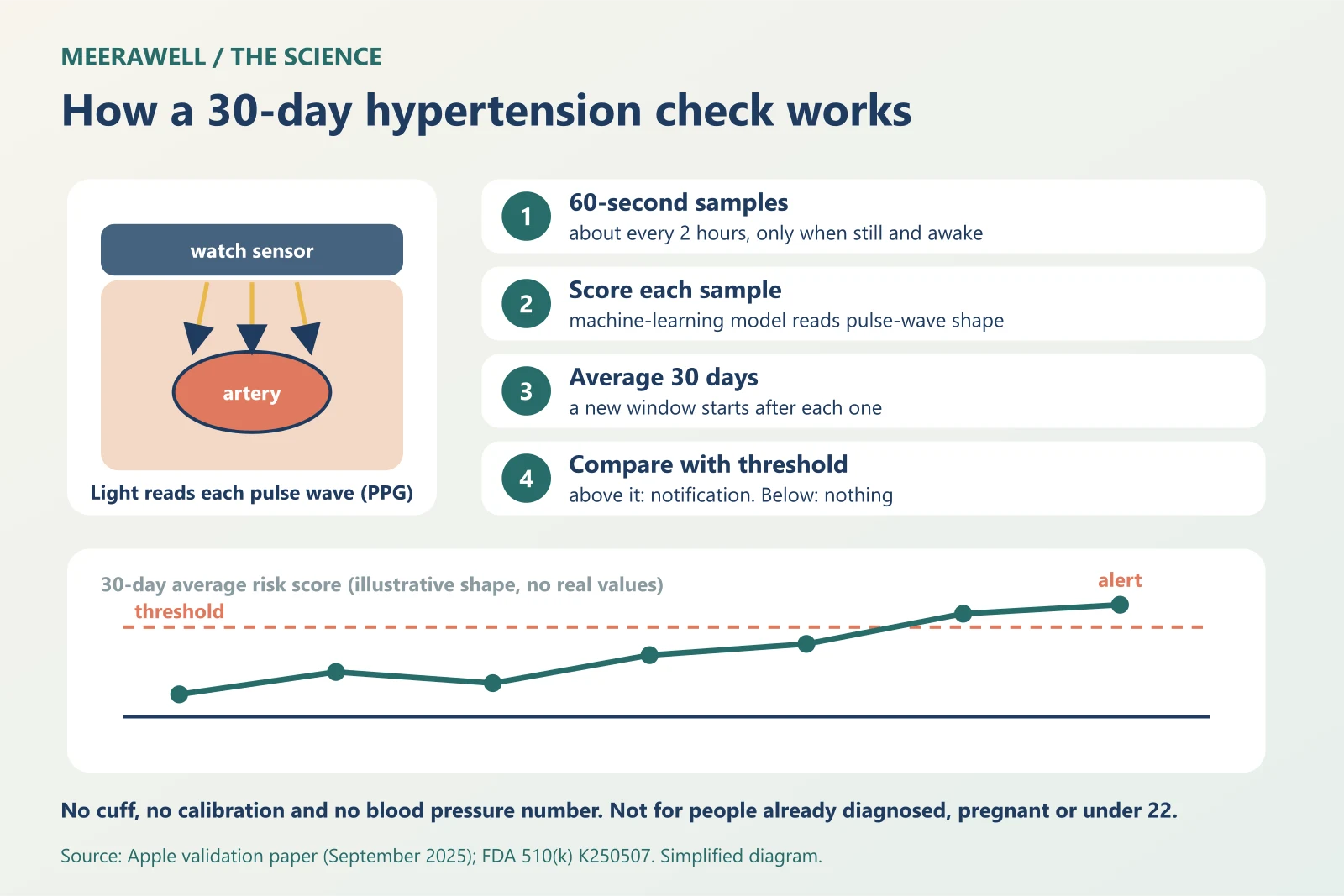
The watch does not squeeze your wrist. Its optical heart sensor shines light into the skin and reads tiny changes in blood flow with each heartbeat.
According to Apple’s validation paper, it takes 60-second readings about every two hours, only when you are still and awake. A computer model scores each one. The scores are averaged over 30 days. If the average crosses a set line, you get an alert.
So there is no blood pressure number, and the first alert takes at least a month. The European Society of Hypertension does not recommend cuffless devices for diagnosing high blood pressure.
2. How Accurate Are Apple Watch Hypertension Alerts?
Apple tested the feature on 2,229 adults, and 1,863 gave enough data. They wore the watch for 30 days and checked their blood pressure twice a day with an upper-arm cuff. The US FDA cleared the feature in September 2025.
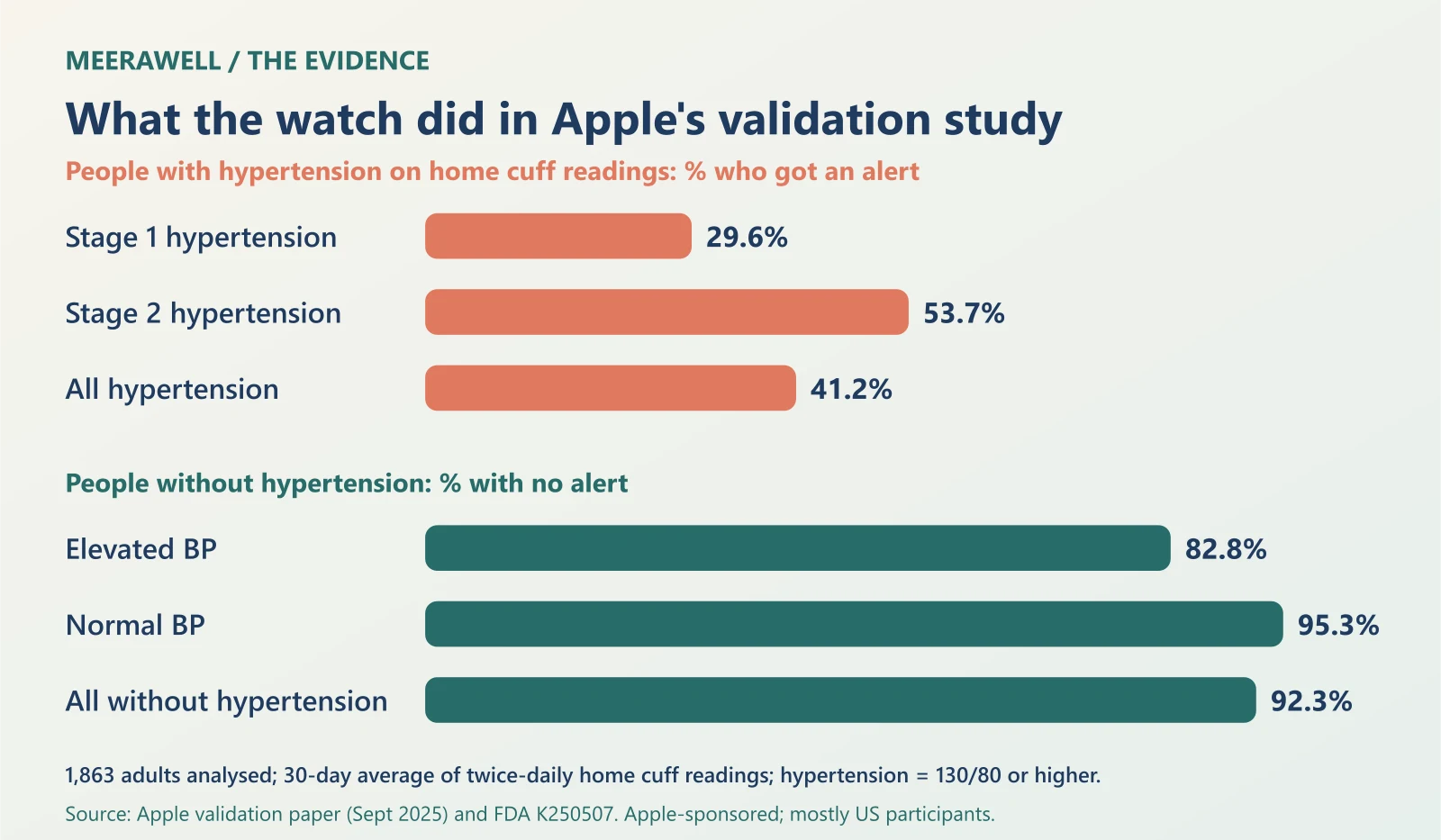
The watch alerted 54% of people with stage 2 hypertension, but only 30% with stage 1. It stayed silent for 92% of people without hypertension. About 7 in 10 people who got an alert really had high blood pressure.
A 2026 analysis in JAMA applied these figures to US adults. With no alert, 21% still had hypertension. In people aged 60 and over, it was 34%.
The limits: the study was run by Apple, mostly in the US, and only about 10% of people were Asian. No Indian study exists yet. The watch missed more cases in younger and slimmer people.
Did you know? The first part of the Apple Watch hypertension model never saw a blood pressure reading. It learned the shapes of pulse signals on its own. Only later steps were matched to cuff readings.
3. What to Do After an Apple Watch Hypertension Alert
You need a Series 9 or later, or Ultra 2 or later, and an iPhone 11 or later. You must be 22 or older, not pregnant and not already diagnosed. Apple’s India support page lists these rules. Apple’s availability page notes the feature may not yet work on Series 12 or Ultra 4 in India.
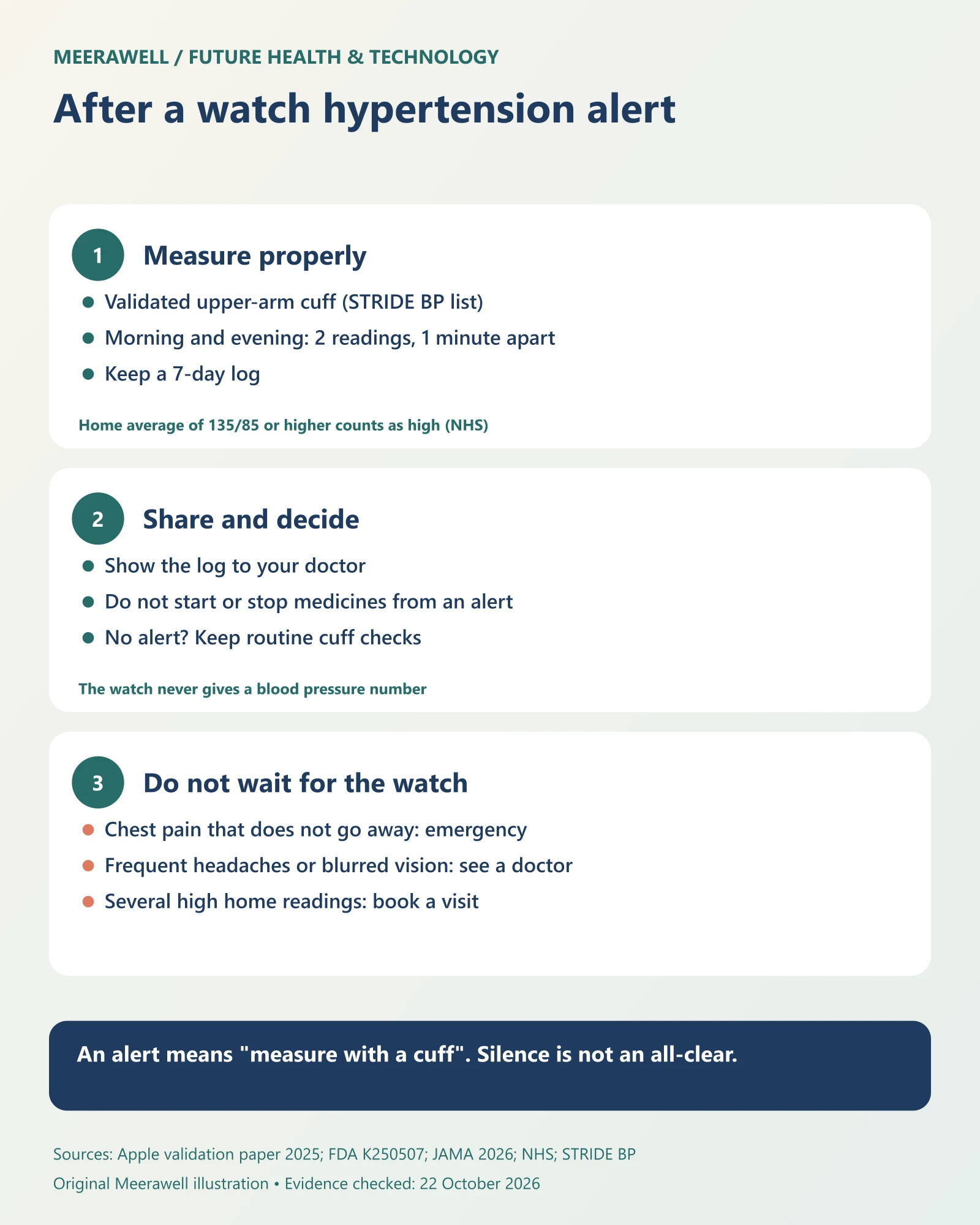
After an alert, do not start or stop any medicine. Instead:
- Use a validated upper-arm cuff from the STRIDE BP list.
- Measure morning and evening for seven days. The NHS advises two readings, one minute apart.
- Know the home limit: an average of 135/85 or higher is high.
- Show the log to your doctor.
No alert? Keep having routine cuff checks. High blood pressure can also harm the retina, which a routine eye check-up can catch.
When to see a doctor urgently
The Apple Watch hypertension feature cannot detect a heart attack or stroke. Do not wait for an alert if you have:
- chest pain that does not go away: call emergency services
- frequent headaches or blurred vision
- several high home readings in a row
Frequently asked questions
Does Apple Watch measure blood pressure?
No. It reads pulse signals over 30 days and alerts you if they suggest hypertension. It never shows a number, so you still need a cuff.
Is the Apple Watch hypertension feature available in India?
Yes, since 3 December 2025, on Series 9 or later and Ultra 2 or later. On 22 October 2026, Apple said Series 12 and Ultra 4 may not have it yet.
I got an Apple Watch hypertension alert. Do I have high blood pressure?
Possibly. In Apple’s study, about 7 in 10 people alerted had hypertension. Confirm with a week of cuff readings and a doctor’s review.
Next step
Wearables spot patterns but don’t give verdicts. Read sleep and HRV scores with the same care.
Sources and evidence
Evidence checked on 22 October 2026. General education, not a diagnosis. Availability can change.
- Apple Support (India): Hypertension notifications on your Apple Watch
- Apple: Hypertension Notification Feature validation paper (September 2025)
- Apple India: watchOS feature availability
- US FDA 510(k) summary K250507
- Cohen et al., 2026: smartwatch hypertension alerts for screening (JAMA)
- WHO: hypertension country profile, India (2023)
- Stergiou et al., 2022: cuffless blood pressure devices, ESH statement
- NHS: blood pressure test
- STRIDE BP: validated blood pressure monitors