
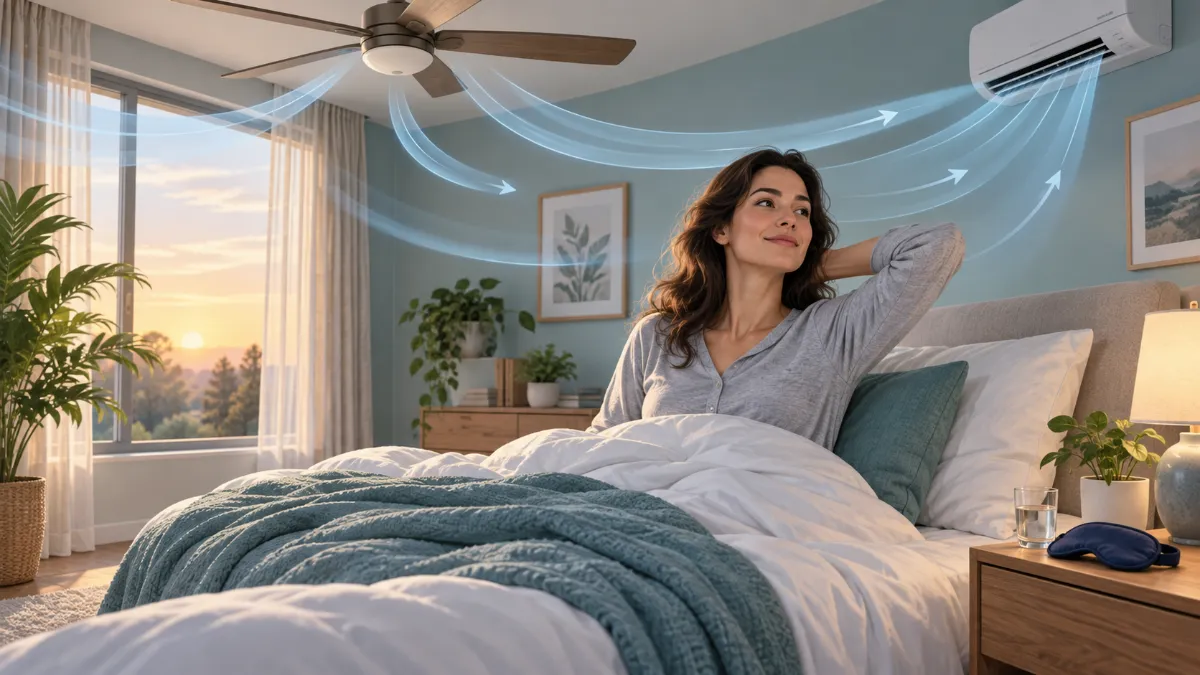
Air blowing towards your face overnight can contribute to dry, uncomfortable eyes, but a fan or AC is not the only explanation for morning symptoms. Eyelid closure, ocular-surface conditions and other problems may be involved. Recurrent morning pain or blur deserves an eye examination.
You slept for a full night, yet opening your eyes feels gritty. Because the ceiling fan was running, it seems an obvious culprit. It may be part of the picture, but changing the room should not replace an assessment when symptoms keep returning.
How overnight airflow can matter
Direct airflow can encourage moisture loss. Cleveland Clinic discusses tear evaporation, dryness and ceiling-fan use among possible contributors to morning eye discomfort. It also describes other causes, including corneal problems. The important point is that the same time of day can be associated with different diagnoses. Read Cleveland Clinic’s explanation.
Can eyes stay partly open during sleep?
Some people do not fully close their eyelids while sleeping. This can expose the eye surface and contribute to discomfort. Morning symptoms alone do not establish that this is happening. Ohio State describes incomplete closure and the need for appropriate evaluation and management. Do not start taping your eyelids or using pressure on the eyes based on an internet checklist. Ohio State guidance
A bedroom-airflow check
↗ Avoid a direct stream at the face
Comfortable cooling
No pressure on the eyes
Practical changes to consider
- Redirect direct airflow if possible. Adjust a fan position or suitable AC setting while maintaining comfortable cooling.
- Check the sleeping environment. Keep bedding and fan surfaces clean according to ordinary household and appliance instructions.
- Note whether symptoms are one-sided. Repeated pain in one eye is a reason to seek examination, not simply change sleeping side.
- Follow existing treatment instructions. Ask your clinician before adding an eye ointment, mask or device. Some products blur vision or are unsuitable in particular situations.
- Discuss equipment-related leaks. If you use prescribed breathing equipment, report air blowing towards the eyes to the treating team; do not stop necessary treatment on your own.
Keep a short morning record
| Observation | Notes |
|---|---|
| One eye or both; gritty, burning or sharp pain? | ________________ |
| Blurred vision or sensitivity to light? | ________________ |
| Fan/AC direction and any recent change | ________________ |
| Contact-lens wear or eye treatment | ________________ |
| Repeated symptoms despite changing airflow | ________________ |
This record is useful for describing the problem. It cannot distinguish dryness from a corneal injury or another eye condition.
When to seek care promptly
Seek urgent assessment for significant eye pain, a painful red eye, marked light sensitivity or reduced vision. Sharp pain when first opening an eye, particularly if recurrent, also deserves clinical assessment. Do not assume pain is harmless because it improves later in the day. Sudden loss of vision requires emergency attention.
Quick answers
Must I stop using a fan?
Not necessarily. Comfortable cooling can be important in hot weather. Reduce direct airflow and evaluate the pattern without assuming every fan user will develop a problem.
Will sleeping longer fix morning dryness?
More time asleep does not identify the cause. The eye surface and eyelid closure may need assessment even when sleep duration is adequate.
Should I use a heated mask overnight?
Do not improvise overnight heating. Use any recommended treatment only as instructed by your clinician and the device manufacturer.
For the separate question of insufficient sleep and eye discomfort, see our sleep and eye-strain article.
This article provides general educational information and does not replace an individual examination. No product has been personally tested for this article. About Meerawell