
Key takeaways
- Noise cancelling headphones can help you hear at a lower playback volume in noisy surroundings. The benefit depends on whether you actually turn the volume down.
- ANC is not a general substitute for rated earplugs or earmuffs in hazardous noise. Check the exact product’s protective rating and intended use.
- Volume and duration both matter. Calls, music, games and loud environments all contribute to your exposure.
- Ringing, muffled hearing or difficulty following speech deserve attention. Sudden hearing loss needs urgent assessment.
The Metro Volume Creep
At home, the podcast is clear at a modest volume.
On the metro, the carriage hum swallows the words. You tap the volume button. Then again.
By the time you reach the office, the same setting feels surprisingly loud in a quiet room.
Here is the short answer: noise cancelling headphones may help break that pattern by reducing background noise, so you can keep playback quieter. They do not make loud listening harmless. For hearing safety, the useful question is how much sound reaches your ears, for how long, across the day.
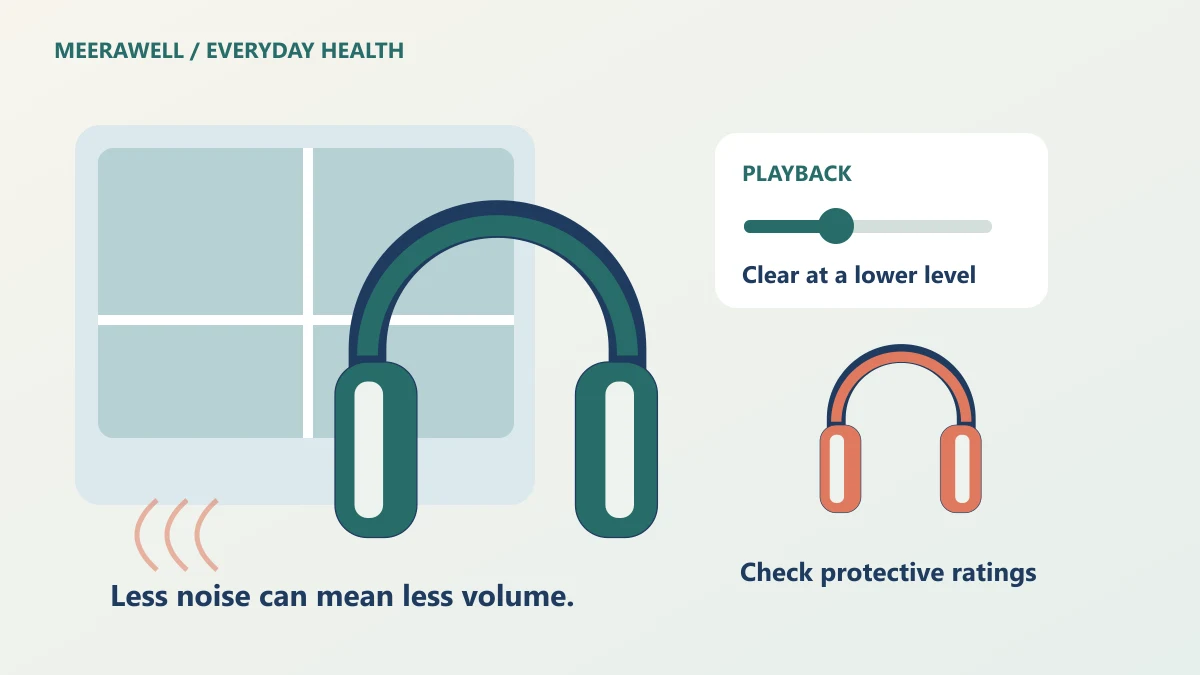
1. Quiet Around You Does Not Mean Quiet Playback
Active noise cancellation, usually shortened to ANC, uses microphones and electronic processing to reduce some incoming sound. Passive isolation comes from the physical fit of the cups or tips.
Both can make listening more comfortable. Performance varies with the device, fit and the kind of noise around you.
The WHO safe-listening guidance recommends well-fitted noise-cancelling headphones because they can reduce the need to raise volume in noisy settings.
The key word is “need.” If you leave the music at the same loud setting after switching ANC on, you may have improved clarity without making a meaningful reduction in playback exposure.
Try this in a safe, quiet place: start low, turn ANC on if useful, and choose a level at which speech or music is clear without being forceful. Do not test the maximum.
2. Noise Cancelling Headphones and Hearing Protectors Have Different Jobs
For a commute or an office, consumer ANC can be useful. For hazardous workplace noise, power tools or fireworks, use appropriate hearing protection and reduce exposure.
WHO’s noisy-workplace advice includes earplugs or earmuffs, moving away from noise sources and taking breaks somewhere quieter.
Some specialized products combine electronics with protective features. That does not give every consumer headphone the same status. Look for the exact model’s protection rating, instructions and intended environment.
| Situation | Useful first step | What ANC cannot establish |
|---|---|---|
| Metro podcast | Improve fit; use ANC; lower playback | That your listening level is safe |
| Long office calls | Keep speech clear at a modest level; take quiet breaks | That hours of loud calls are harmless |
| Power tools or noisy work | Use suitable rated protection and exposure controls | That consumer headphones replace protection |
| Traffic or platform announcements | Preserve awareness and choose a safe place to listen | That blocking more sound is always the best choice |
For travel, being able to hear an announcement or warning matters too. Choose the setting for the situation, and remove the headphones when attention to your surroundings is essential.
3. The Listening-Time Table That Changes the Decision
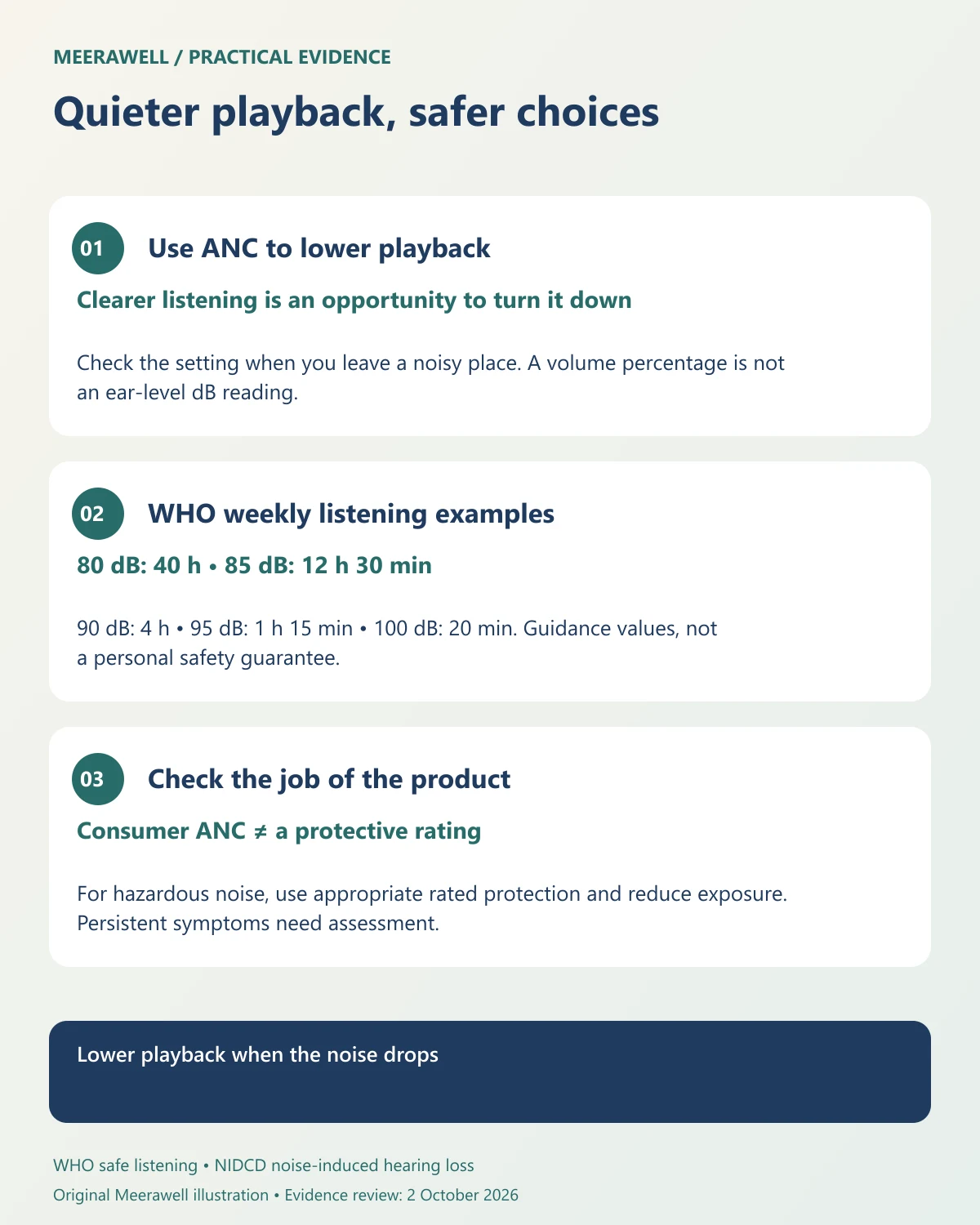
WHO gives these weekly listening examples:
| Average listening level | Weekly time in WHO’s guidance |
|---|---|
| 80 dB | 40 hours |
| 85 dB | 12 hours 30 minutes |
| 90 dB | 4 hours |
| 95 dB | 1 hour 15 minutes |
| 100 dB | 20 minutes |
These are guidance values, not a guarantee against injury or a quota to use up. At higher sound levels, the available time falls sharply. Keep exposure lower where possible.
Your phone’s volume percentage does not directly tell you the decibel level at your ear. Headphones, source material and device combinations differ. A reported exposure estimate can help, especially with a supported headphone combination, but it still has measurement limits.
4. Check the Whole Day, Not Just the Playlist
Consider an illustrative workday: a podcast during the commute, several calls, background music during focused work and a film at night.
Each seems ordinary by itself. Together, they can leave very little time without amplified sound.
Make a small listening log for a few days. Note the activity, duration, whether the surroundings were noisy and whether you had to raise the volume. If your device reports headphone exposure, look at its trend rather than one isolated reading.
Then choose the change with the least friction:
- Use a quieter room for calls when available.
- Improve the fit instead of compensating with more volume.
- Turn playback down when moving from a noisy place into a quiet one.
- Take breaks without replacing music with another loud audio source.
- Enable the device’s exposure warnings or volume limit if it offers them.
You do not need constant background sound to work. A quiet interval can be the easiest part of the plan.
5. What the Ear Does with Too Much Sound
The US National Institute on Deafness and Other Communication Disorders explains that loud sound can damage the inner ear’s sensory structures. Noise-related hearing loss may develop gradually, and people may not notice early changes.
This is why comfort is an incomplete test. A familiar loud setting can feel normal without being a sensible long-duration choice.
NIDCD also describes ringing and muffled hearing after noise exposure. Symptoms settling does not establish that the exposure was harmless.
If you repeatedly need higher volume, struggle with speech in noise, or notice persistent ringing, arrange a hearing assessment. A sudden reduction in hearing, especially in one ear, needs urgent medical attention rather than a wait to see whether a different headphone helps.
6. What About White Noise at Night?
The same exposure principle applies: level and duration matter. “White noise” is a description of sound, not a safety rating.
If you use background sound, keep it quiet and consider a speaker positioned away from your ears rather than loud overnight headphone playback. A timer may reduce unnecessary exposure. Do not assume an all-night track is safe simply because it feels relaxing.
For persistent difficulty sleeping, investigate the routine and symptoms as well. Our tired-after-sleep guide covers reasons a new gadget may not answer the problem.
Frequently asked questions
Are noise cancelling headphones safer than ordinary headphones?
They can help if reduced background noise lets you lower playback. There is no automatic safety advantage when the sound delivered to the ear remains equally loud for equally long.
Is 60% volume always safe?
WHO gives below 60% as a practical listening suggestion, but a percentage is not a calibrated decibel measurement. Duration and your actual device/headphone combination still matter.
Can I use ANC headphones as ear defenders?
Do not assume that. Use an appropriately rated product for hazardous noise and follow its instructions. Consumer ANC marketing is not proof of protective performance.
Does ringing after a journey mean permanent damage?
Ringing has several possible causes. Reduce exposure and arrange assessment if it persists or recurs. Sudden hearing loss requires urgent attention.
Next step
On your next commute, use fit and noise cancellation to lower playback. Check the setting again when you enter a quiet room.
Sources and evidence
Sources checked on 2 October 2026. The listening table reproduces WHO guidance; no headphone model was tested or certified by Meerawell.