Key takeaways
- A high protein vegetarian breakfast can be built from familiar Indian foods without a protein powder. Give the meal a substantial pulse, dairy or soy component.
- Count the ingredients you actually use. Fifty grams of dry moong dal is different from 50 g of cooked dal or soaked batter.
- The examples below separate measured pulse estimates from dairy label calculations. Homemade recipes vary; the numbers are not laboratory-tested meal totals.
- Keep fruit or vegetables, adequate food and enjoyment in the meal. Protein is one part of breakfast, not the only score that matters.
The Chilla That Lost Its Protein
An online recipe promises 20 g of protein in two chillas.
You make two smaller ones, thin the batter with water and skip the paneer filling. The plate looks much like the photograph. The ingredients are different.
Has breakfast still delivered 20 g? The photograph cannot tell you.
Here is the short answer: for a high protein vegetarian breakfast, choose a real protein ingredient and check its portion. Moong, besan, paneer, curd and soy foods can all help. The number belongs to the ingredients, not to the recipe name, the diameter of the chilla or the word “healthy.”
1. Start with an Ingredient, Then Build the Plate
Instead of replacing every breakfast you enjoy, ask which ingredient is doing most of the protein work.
In a moong chilla, it is the dal. In paneer bhurji, it is the paneer. In a curd bowl, it is the amount and type of curd, plus whatever you add.
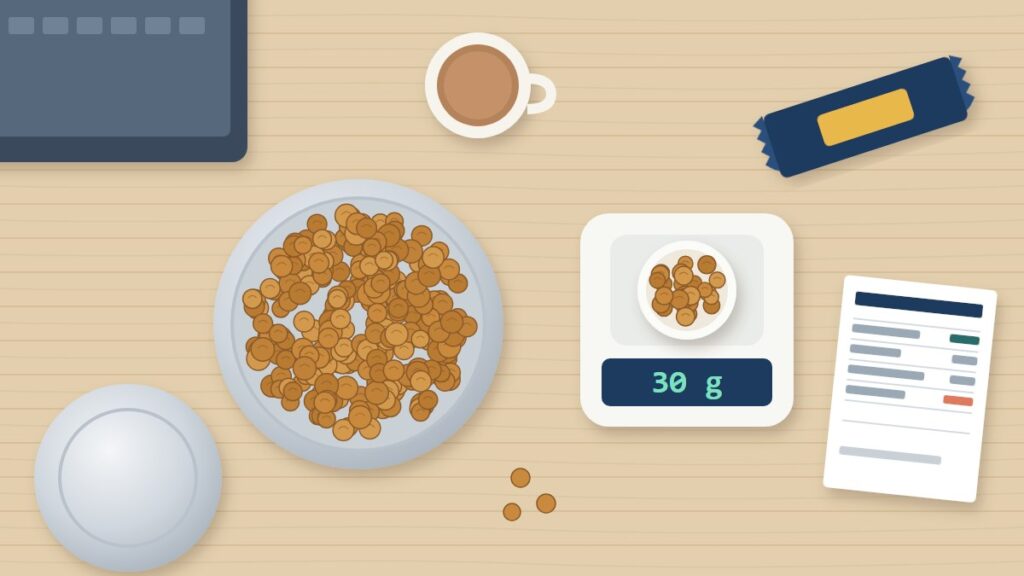
Poha, roti and idli do contain some protein. They can still belong in breakfast. Adding a few decorative peanuts, however, does not tell you that the meal meets a particular protein target.
Choose your anchor first. Add the cereal, vegetables or fruit you like. Then make the portion convenient enough to repeat on a weekday.
2. The Dry-Weight Trap
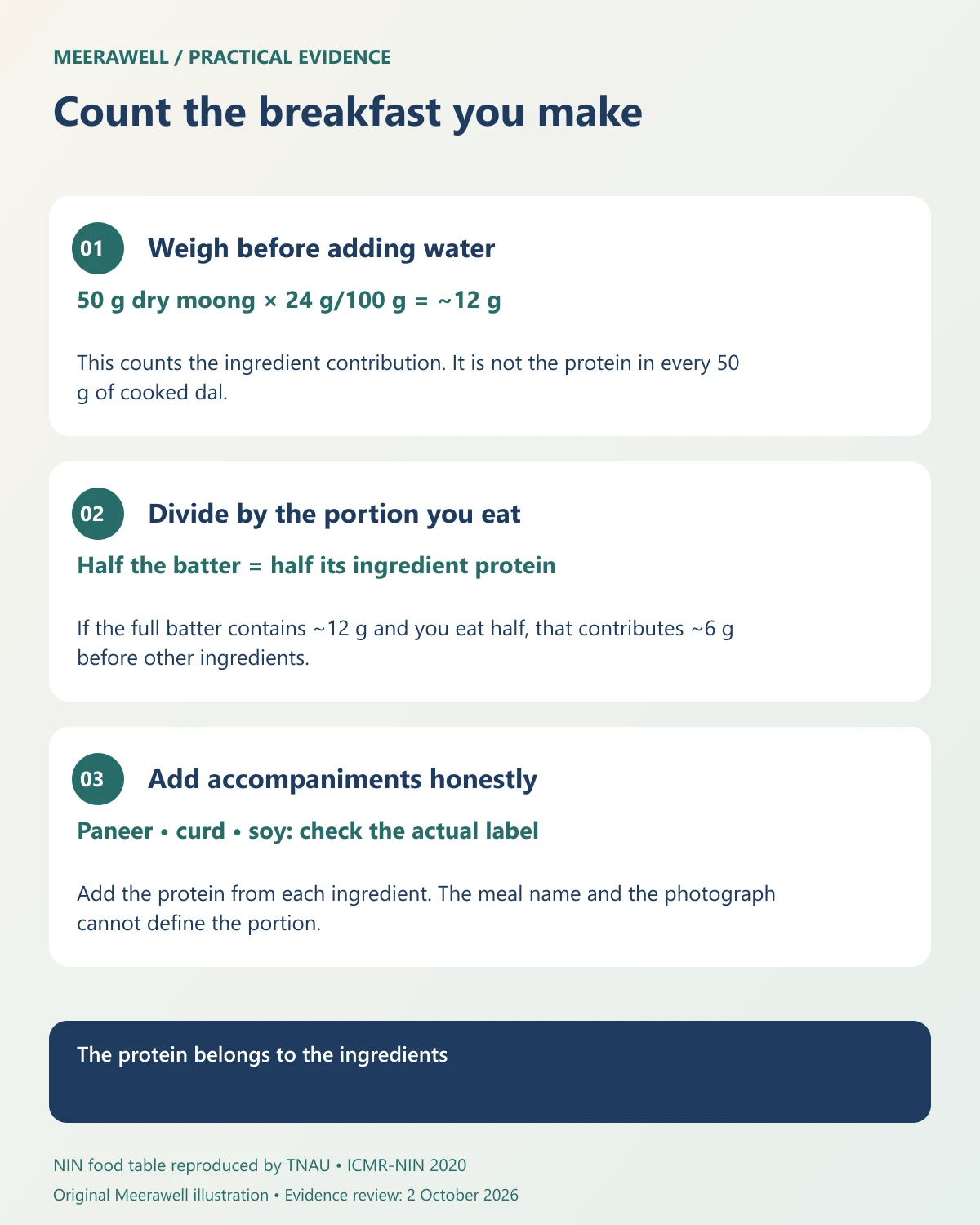
The NIN food table reproduced by TNAU lists approximately 24 g protein per 100 g green gram dal, 21 g for Bengal gram dal, 25 g for lentils and 22 g for roasted Bengal gram. These are food-table values, not analyses of your finished recipe.
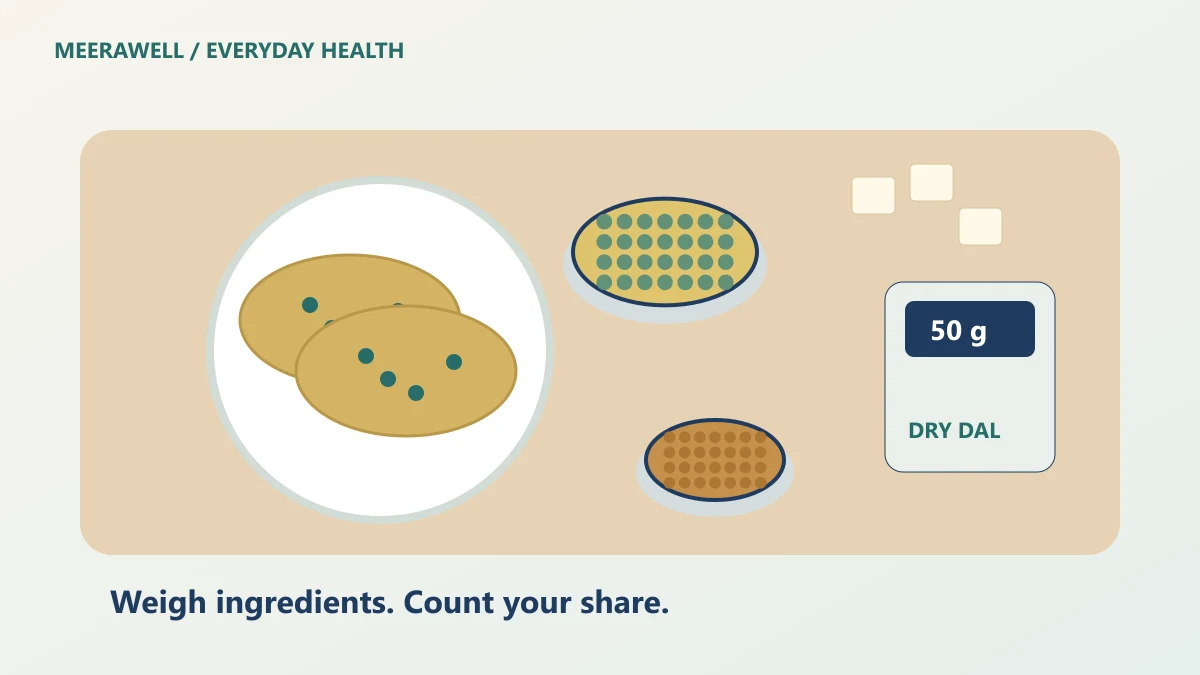
For dry pulses, weigh before soaking. Water adds weight to soaked or cooked food. It does not add protein.
Ingredient protein estimate = protein per 100 g × ingredient weight ÷ 100.
Thus, 50 g dry moong dal gives an estimate of 12 g protein in the ingredient. If that batter makes four chillas and you eat two, you have eaten about half the ingredient contribution: roughly 6 g, before counting other ingredients.
This is why “two chillas” is not a reproducible nutrition measurement. The batch and your share of it matter.
3. Five High Protein Vegetarian Breakfast Portions
| Breakfast | Define your portion | Protein you can reasonably count |
|---|---|---|
| Moong chilla with vegetables | Your share uses 50 g dry moong dal | About 12 g from the dal |
| Besan chilla | Your share uses 50 g besan | Roughly 10.5 g using Bengal gram dal as a proxy; check the flour label |
| Paneer bhurji with roti | Weigh 75 g paneer | If your pack lists 18 g/100 g, paneer contributes 13.5 g |
| Plain curd with roasted chana and fruit | Weigh 30 g roasted chana; measure the curd | About 6.6 g from chana, plus protein calculated from the curd label |
| Leftover masoor dal with roti | The dal portion comes from 50 g dry lentils | About 12.5 g from lentils; add other ingredients separately |
These figures describe the stated ingredient contribution, not the whole breakfast. The paneer value is an explicit label example, not a claim about every brand. Besan varies and the dal proxy is approximate. Oil changes meal energy without adding meaningful protein; cereal and dairy accompaniments change the total.
Use the label or a suitable food table for the food you actually buy. Do not substitute a high-protein dairy product’s value for ordinary curd.
4. Make Each Option Fit a Real Morning
Moong or Besan Chilla
Prepare a manageable batch and decide your portion before cooking. Add chopped vegetables for taste and variety. A paneer filling is optional; weigh it if you include it in the protein calculation.
For moong, plan soaking and preparation around your morning. Besan is convenient when you need a batter without that step. Neither needs an elaborate topping to become a useful breakfast.
Paneer Bhurji and Roti
Keep the bhurji portion visible instead of spreading a small amount across several family servings and assuming each plate gets the whole pack’s protein.
Paneer also brings fat and energy. Choose the portion and product that suit your overall meals, rather than increasing it indefinitely to chase a breakfast number.
Curd, Chana and Fruit
This is the quickest assembly option. Keep the chana separate until eating if you prefer it crisp. Choose plain curd and read the actual panel; flavoured or strained products can have different quantities and ingredients.
For more on the snack ingredient, see our protein bar vs roasted chana comparison.
Leftover Dal and Roti
Breakfast need not be a special category of food. A familiar savoury meal can be easier than a new recipe.
Record the dry lentils used for the batch and the share served. A watery katori and a thick one cannot share a fixed protein number just because both are called dal.
5. No Dairy? Use a Different Anchor
If you avoid dairy, the pulse breakfasts still work. Tofu or an unsweetened soy drink can be alternatives, depending on what you like and can buy.
Read those labels too. A drink made from almonds, oats or coconut is not automatically equivalent to milk or soy for protein. Compare grams per serving rather than the colour of the carton.
Food allergies and tolerance also matter. Do not force a large pulse portion if it consistently causes discomfort. A smaller portion, a different preparation or dietitian guidance may make the routine more workable.
6. How Much Should Breakfast Provide?
There is no universal requirement that every breakfast contain 20 or 30 g.
The ICMR-NIN requirements note reports a healthy-adult protein RDA of 0.83 g/kg/day, based on protein quality assumptions. It also distinguishes the estimated average requirement from the RDA and notes different considerations for low-quality cereal-based diets.
That is context for the whole day, not a personalized breakfast prescription. Needs differ with age, pregnancy, activity, illness and dietary quality. If you have kidney disease or a prescribed protein restriction, follow your care team’s advice.
A high protein vegetarian breakfast should make the day’s meals easier to balance. It should not crowd out other foods or leave you buying special ingredients you will never use again.
Frequently asked questions
Is protein powder necessary for breakfast?
No. Pulses, dairy and soy foods can contribute useful protein. A supplement may have a specific role for an individual, but the recipe name alone does not establish that you need one.
Does soaking moong increase its protein?
Soaking adds water and changes the weight. It does not make the original batch acquire a large new quantity of protein. Count the dry amount used and your share of the batch.
Can I use a katori instead of a weighing scale?
Yes, after calibrating your usual portion once. Katoris and recipe thickness differ, so a scale can help establish what your regular serving contains.
Which breakfast is best for everyone?
There is no universal winner. Choose by preparation time, appetite, tolerance, cost and the rest of your diet. Keep the portion assumptions visible.
Next step
Weigh one familiar breakfast ingredient once. Keep the recipe you enjoy, and make its protein contribution clear.
Sources and evidence
Evidence reviewed on 2 October 2026 using the saved primary-source PDFs obtained for the earlier article research. Meal estimates are calculated examples; recipes were not laboratory tested. The 2004 pulse table is identified explicitly and is not presented as IFCT 2017 data.