The relationship between mind and body has long been a philosophical puzzle. It also raises an everyday sleep question: why can a full night in bed still leave you feeling unrested?
Modern sleep research helps us examine sleeping but still feeling tired without assuming that one explanation fits everyone.
You can spend seven or eight hours in bed and still wake up feeling heavy and slow. Time in bed does not always equal time asleep, and duration alone does not describe sleep quality.
This is not laziness.
This is not weakness.
And it is not always a sleep problem.
A demanding screen day can be part of the picture. It does not, by itself, explain why you remain tired despite sleep; sleep quality, medicines, mood and other health conditions may also need attention.
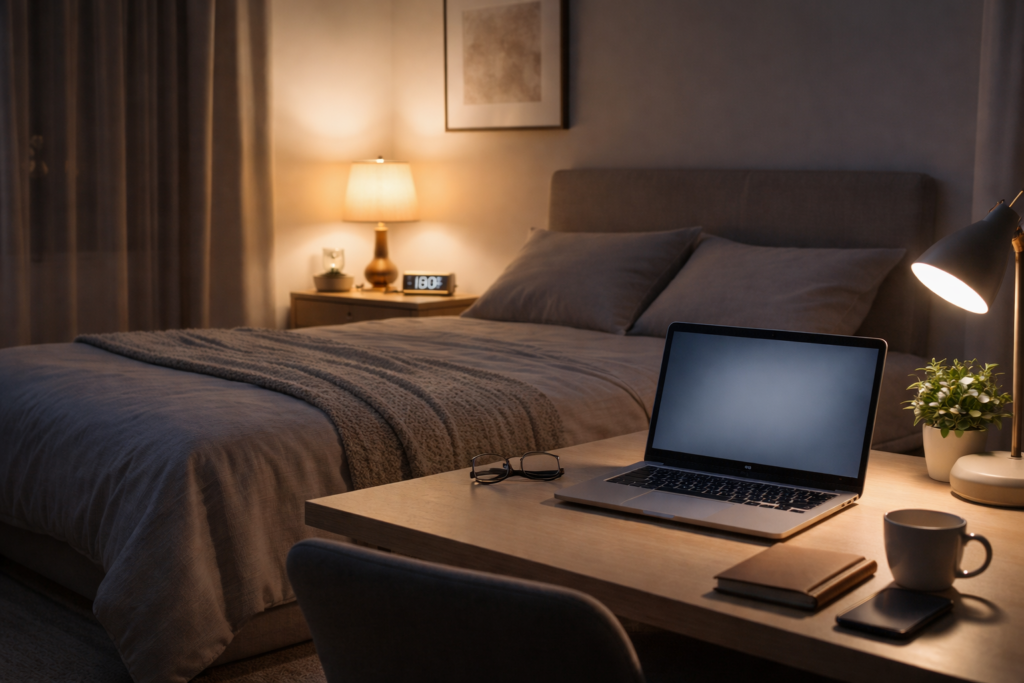
Why Sleep Does Not Always Feel Refreshing
Sleep supports many functions, including alertness, learning and physical health. It is not simply a period when the brain switches off.
Sleep cycles through different stages; brain activity changes rather than stopping. Feeling unrested does not tell us which stage was missing.
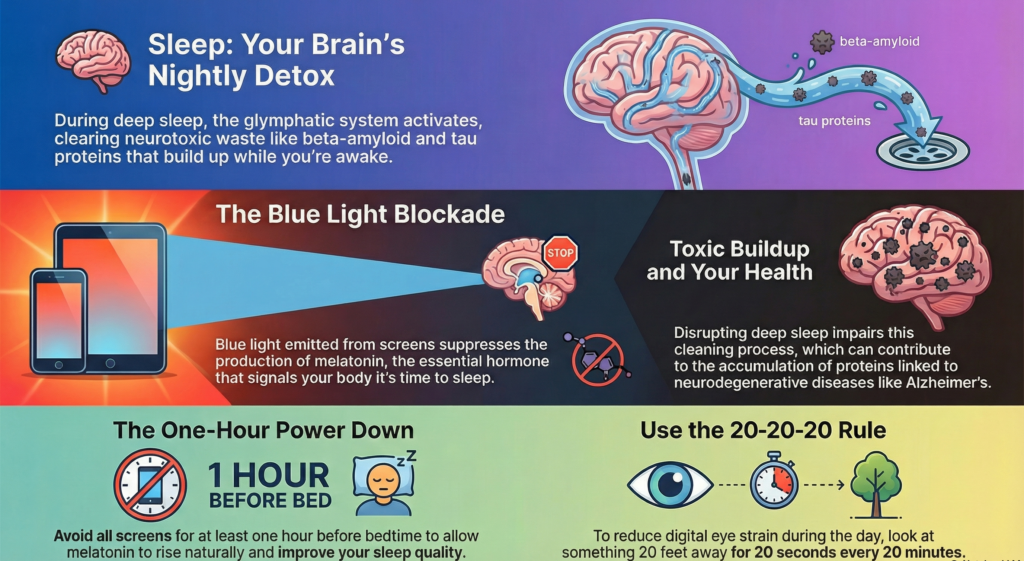
A 2013 experiment in mice linked sleep and anaesthesia with greater fluid exchange and brain metabolite clearance. It did not show that screens block this process in people who wake tired.
That distinction matters when a mechanism is used to explain a symptom.
“Sleep but still tired” is a reason to look at sleep quality and other contributors, not evidence of failed brain cleaning.
Late work or an absorbing screen activity can make it harder to wind down or reduce the time available for sleep. Neither proves that the brain keeps working abnormally after you fall asleep.
The Mental Load You May Carry from Screens
An evening screen session combines light, activity and time. Each may matter differently for different people.
Notifications, work messages and charts can keep a demanding day going. Notice whether those activities delay your bedtime or leave you feeling wound up.
If that is your pattern, you might notice:
- Sleep becomes shallow
- Dreams feel restless
- Morning tiredness increases
- Focus drops despite enough sleep
These observations can guide a change in routine. They do not measure whether the brain has “recovered.”
Sleep Duration vs Sleep Recovery
This distinction is important.
Both duration and quality matter. Sleeping longer can help when sleep has been short, but repeated tiredness despite adequate opportunity needs a wider look.
Ask how much sleep you actually get, whether it is broken, and how you function during the day—not only how long you spend in bed.
Stress can contribute to poor sleep. Tiredness does not, by itself, establish high nighttime cortisol or prove that deep sleep never occurred.
How Evening Screens Can Complicate Sleep
Late screen use can expose you to light, stimulating activities or a later bedtime.
Work messages and news can be difficult to leave behind. An evening routine is one practical place to experiment.
Useful observations are:
- whether screen use pushes bedtime later
- whether messages or videos leave you alert
- whether the room and screen remain brightly lit
- whether sleep is disrupted for other reasons
Those questions are more useful than assuming screens have prevented “brain cooling” or switched off recovery.
Symptoms That Deserve a Wider Look
Common signs include:
- Mental fatigue after sleep
- Slow thinking in the morning
- Heavy head sensation
- Poor concentration
- Emotional irritability
- Eye strain along with tiredness
These symptoms are nonspecific. They can accompany short or disrupted sleep, medicines, mood difficulties or other health conditions; they do not diagnose screen-driven brain fatigue.
If eye strain is present, it often overlaps with computer vision syndrome, which is explained in detail in our detailed article about Computer Vision Syndrome
Why Night Mode and Blue Filters Do Not Fully Solve This
Night mode changes the screen’s colour balance. That is different from treating persistent tiredness or proving better sleep.
Light, activities and the time available for sleep all matter. A warm-colour setting addresses only part of the picture.
The Night Shift trial did not find a sleep advantage across its full young-adult sample. Its findings should not become a claim that a filter always helps slightly—or never helps anyone.
For a deeper explanation, read more about Blue light sleep
“Work Mode” and “Recovery Mode” as an Analogy
It can be helpful to describe your evening as:
- work mode: tasks that keep your attention engaged
- recovery mode: a quieter wind-down routine
These are teaching labels, not two exclusive biological switches.
If work keeps expanding into bedtime, notice whether you are:
- getting less sleep than you need
- finding it difficult to disengage from tasks
- waking often or feeling sleepy in the day
The sleep-deprivation guide covers insufficient sleep. Similar symptoms despite adequate sleep can have a different explanation.
What to Try—and When to Seek Help
A quieter evening can be useful, but persistent sleep problems may need treatment. Do not stop prescribed medicine because of this guide.
Try reducing the mental load before bedtime while protecting enough time for sleep.
Practical changes to try include:
- using the hour before bed for quiet activities when practical
- Avoid decision-heavy tasks late at night
- Reduce scrolling and news consumption
- keeping evening light comfortable and the bedroom dark during sleep
- allowing a calmer transition rather than filling every pause with a screen
The aim is a sustainable routine, not a requirement to feel bored or prove that the nervous system feels safe.
Where Eye Strain Fits Into This Problem
Eye discomfort and tiredness may overlap in a long working day.
That overlap does not show that strained eyes prevent brain recovery. Pay attention to both sets of symptoms, including:
- Poor sleep quality
- Heavy head sensation
- Morning tiredness
The Calm Takeaway
If you are sleeping but still tired, do not blame discipline or effort.
Screens may be part of the picture, but there is more than one possible explanation.
Persistent daytime sleepiness, loud snoring, witnessed breathing pauses or waking gasping deserve a clinical assessment. The NHLBI sleep-apnea guide explains why these signs matter.
Protect enough sleep, try a realistic wind-down routine and seek help when tiredness persists. Do not drive when you feel drowsy.
A clearer explanation starts with the pattern of symptoms, not a promise that a digital sunset will solve every case.