The 3:00 PM Twitch
If you are searching for Magnesium Glycinate India online, it usually starts with one specific symptom: a subtle, involuntary flicker in your lower eyelid at 3:00 PM.
Or perhaps it’s a cramp in your calf at 4:00 AM that wakes you up screaming.
By the time patients come to my clinic, they are often in a state of quiet panic. They describe heart palpitations, muscle spasms, and that feeling of being “on edge.” They’ve Googled their symptoms and convinced themselves they have a neurological condition.
As a doctor, I ask them three simple questions before I even touch a stethoscope:
- “How much coffee did you drink today?”
- “Are you sleeping less than 6 hours?”
- “Are you taking Magnesium?”
The answer to the third question is almost always “No.”
That afternoon twitch can make magnesium sound like the missing piece. But twitching and feeling “tired but wired” do not diagnose magnesium deficiency; before choosing a supplement, the cause and your medical context matter.

Illustration note: The original graphic is retained for context. Its dose range and benefit labels are not a prescription or proof of treatment; use the evidence and safety limits in the text below.
1. The “Tired But Wired” Feeling Is Not a Diagnosis
“Tired but wired” describes an experience. It is not a medical diagnosis or a test for magnesium deficiency.
You know the feeling: You are physically exhausted, but when you lie in bed at 11 PM, your brain is racing. You are “Tired but Wired.”
- The Mechanism: Magnesium supports muscle and nerve function and many enzyme reactions. That role does not show that a deadline has rapidly depleted your magnesium.
- The Symptoms: Deficiency can cause muscle and nerve symptoms, but eyelid twitching, cramps and a racing heart have other possible causes. Symptoms alone do not establish low magnesium or high cortisol.
Look at your overall diet, medical conditions and medicines. Food sources include pulses, nuts, seeds, whole grains and leafy greens; drinking filtered water or coffee is not enough to diagnose deficiency.
2. The Chemistry: Magnesium Glycinate Benefits vs. Multivitamins
“But Doctor, I take a daily multivitamin. I’m covered.”
Check what your own multivitamin lists, including the form and elemental magnesium per serving. Products differ, so the label matters more than a blanket assumption about multivitamins.
- Magnesium Oxide: It is generally absorbed less well than some other forms, and can have a laxative effect. A single absorption percentage is not a universal result, nor does lower absorption make it clinically useless in every setting.
- Magnesium Glycinate: Magnesium is bound to glycine in this form. The compound’s name does not prove a brain-targeting effect, a deep-sleep mechanism or superiority for every reader.
The Evidence: A 2025 randomized trial of 155 adults reporting poor sleep tested 250 mg elemental magnesium daily for four weeks. The improvement in reported insomnia severity over placebo was small; this was not an eyelid-twitch treatment trial or proof of stress relief.
3. The Checklist: What to Discuss Before a Supplement
These observations can guide a conversation about symptoms and habits. Counting two or more does not establish a need for magnesium:
- Involuntary Muscle Twitching: Eyelids, thumbs, or calves.
- The “3 AM Wakeup”: Waking overnight has many possible explanations; it does not measure a cortisol spike.
- A Racing Heart: Recurrent palpitations need assessment. Palpitations with chest pain, breathlessness or fainting need urgent care.
- High Caffeine Intake: You consume more than 3 cups of coffee/tea per day.
- “Brain Fog”: You feel mentally clouded despite high pressure.
Choosing Magnesium Glycinate in India: Read the Label
Compare the elemental magnesium per serving, ingredient forms and serving size. Brand names are examples from the original article, not proof of purity, benefit or independent product testing. Formulations can change.
Option A: Check the Elemental Amount
- Product: Carbamide Forte Chelated Magnesium Glycinate
- What to check: Read the current pack’s serving size and elemental magnesium amount rather than choosing by a “high potency” claim.
- The Safety Check: A serving providing 440 mg elemental magnesium would exceed the US adult upper limit of 350 mg/day from supplements and medicines. That limit excludes food magnesium and is not a recommended treatment dose; higher supplemental amounts require clinical guidance.
- Verdict: Severe cramps or persistent twitching are reasons to check the cause, not automatically choose a larger dose.
Option B: Check the Blend, Not the Marketing
- Product: Wellbeing Nutrition Slow Triple Magnesium
- What to check: If a pack advertises slow release, ask what evidence supports that formulation for the outcome you want.
- The Ingredients: Check each magnesium form and the total elemental amount. A blend name or “brain” claim does not prove better sleep or targeted delivery.
- Verdict: A premium price or release technology does not establish clinical superiority. No current pack specification or hands-on comparison is claimed here.

Doctor’s Note: Dose, Timing and Combining Supplements
Read the elemental magnesium amount, not just the weight of the compound. NIH guidance gives a US adult upper limit of 350 mg/day from supplements and medicines, excluding food; a clinician may prescribe differently. It is a safety limit, not the dose every reader should take.
Timing: There is no established “45 minutes before bed” rule for treating twitching or stress. Follow the product instructions and a clinician’s advice for your reason for taking it.
The “Deep Work” Stack: The hardware/software analogy is memorable, but it does not show that combining supplements treats high cortisol or an overactive nervous system. Review sleep, caffeine, symptoms and medicines first.
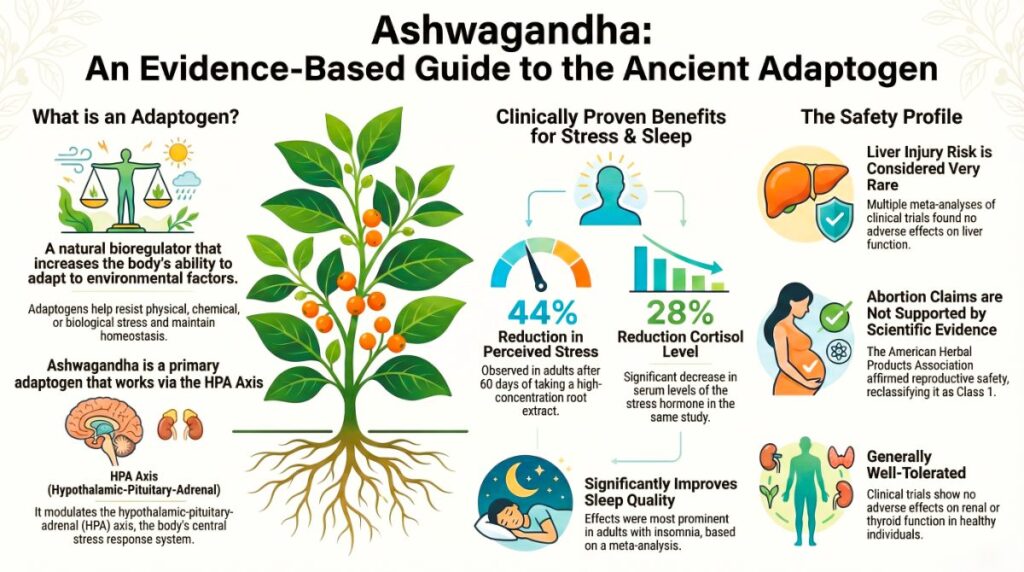
If you are also considering ashwagandha, read its separate evidence and safety limits. A claimed synergy is not established by the studies cited here; do not combine products automatically for stress.
(Medical Disclaimer: This article is for educational purposes and does not constitute medical advice. If you have kidney failure, heart block, or Myasthenia Gravis, do not take magnesium supplements without consulting your specialist.)
Meerawell’s editorial standards distinguish source checking from a recorded clinical review of an exact article version.
Before taking magnesium: Kidney disease increases the risk of magnesium buildup. A pharmacist or clinician should check medicine interactions, including some antibiotics and osteoporosis drugs; spacing instructions differ. Persistent twitching, spreading facial movements, a closing or drooping eyelid, and recurrent cramps deserve assessment. Do not self-treat palpitations as deficiency.