
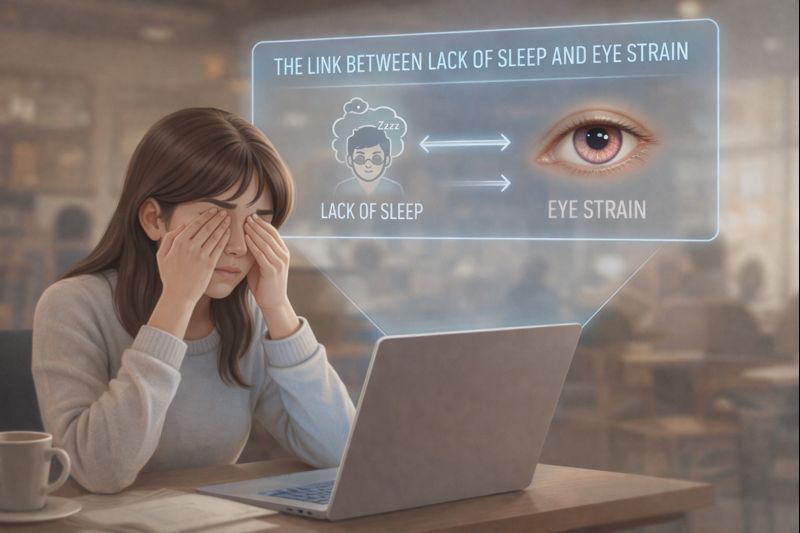
Does lack of sleep cause eye strain? Many people with tired eyes wonder if sleep, not screens, is the real problem.
Back in 1896, two researchers named Patrick and Gilbert kept people awake for days to see what would happen. They were not trying to be cruel. They were trying to solve a mystery. At that time, most scientists believed sleep was just a passive state, like a machine switching off.
What they found was surprising. Without sleep, attention collapsed and reaction times slowed sharply. Later, in the 1950s, research confirmed something even more important. Sleep is not passive at all. It is an active process where the brain and eyes repair themselves.
Today, we are living in a digital world. We stare at screens for hours every day. This has led to what doctors call Computer Vision Syndrome, also known as digital eye strain. When eyes start burning or feeling heavy, many people ask the same question: does lack of sleep cause eye strain, or is it only screen use?
But here is the real question.
Does lack of sleep cause eye strain, even if you rest your eyes?
The answer is yes. And the reason matters.
The Common Belief About Tired Eyes
Most people believe tired eyes happen only because of screens.
The logic feels simple. Use your eyes too much and they get tired. Rest them and they recover.
So people try:
- Closing their eyes during breaks
- Reducing screen brightness
- Using eye drops
- Taking short pauses during work
These steps can help for a short time. But many people notice the same problem the next day. Some even wake up with tired eyes in the morning.
That is the clue that something deeper is happening.
Why Your Eyes Need a Deep Clean (The Glymphatic System)
You may have heard of the lymphatic system, which clears waste from your body. But the brain has its own cleaning system as well.
It is called the glymphatic system. You can think of it as a garbage truck for the brain.
During deep sleep, the space between brain cells opens up. This allows fluid to wash away waste products that build up during the day, including substances like beta amyloid.
Here is the catch.
This cleaning system works only during sleep. If you lie on the couch with your eyes closed, the garbage truck does not move. Waste keeps building up. This often feels like heaviness, pressure, or fog behind the eyes.
What Is Actually Happening Inside Your Eyes
Your eyes do not work alone. They are controlled by the brain.
When you look at screens for long hours, the brain keeps the eye focusing system switched on. Small muscles inside the eye stay active. Eye movement control remains alert. Blinking slows down.
When this continues day after day, the system does not fully relax just by closing the eyes.
Closing your eyes while awake pauses visual input.
It does not reset the system.
That reset happens during sleep.
Does Lack of Sleep Cause Eye Strain More Than Screen Use?
During sleep, especially deep sleep, the brain reduces visual activity. Eye control signals slow down. The focusing system finally powers down.
This allows:
- Nerve signals to reset
- Eye muscles to relax fully
- Repair processes to activate
Without enough sleep, this reset stays incomplete. The eyes start the next day already strained.
That is why lack of sleep can cause eye strain, even when screen time feels reasonable.
Why Resting Your Eyes During the Day Often Fails
Eye rest helps dryness. It does not fix nerve fatigue.
When sleep is poor:
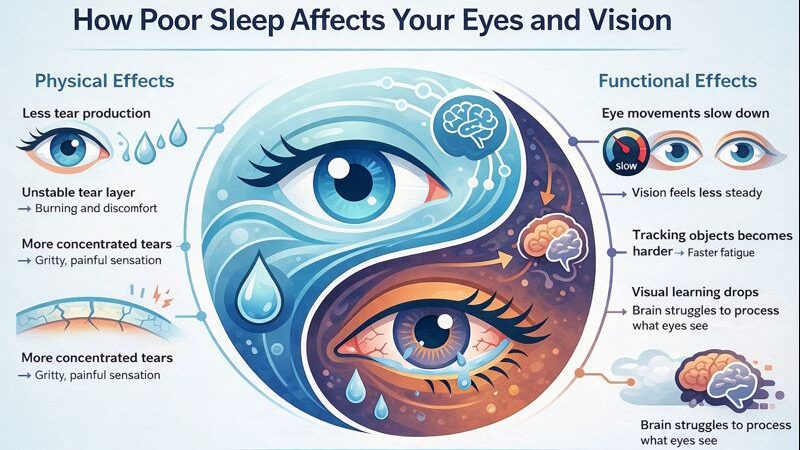
- Tear production drops
- Eye surface repair slows
- Stress hormones rise
- Eye control becomes inefficient
Eye drops and breaks may feel helpful for a short time. But they do not fix the internal imbalance caused by sleep loss.
Think of it this way.
Turning off a screen does not clean a device.
Only a proper restart does.
Sleep is that restart.
Why Your Eyes Feel Dry and Gritty After Poor Sleep
Your eyes are protected by a thin tear layer called the tear film. It keeps the surface smooth and comfortable.
When sleep is reduced:
- Tear quality changes
- Tears become irritating instead of soothing
- The eye surface becomes more sensitive
Poor sleep also pushes the body into a stress state. This reduces signals that support healthy tear production.
Eye drops can help temporarily. They cannot fully correct a tear system disrupted by poor sleep.
You can read more about this connection in our pillar guide on How Sleep Deprivation Affects the Body and Brain.
When Your Eye Focus Gets Stuck
Inside the eye is a small muscle that controls focus. It helps you look at phones and books.
Without proper sleep, this muscle struggles to relax. The result can be:
- Eye ache
- Blurred distance vision
- A feeling that the eyes are stuck in close focus
Doctors call this pseudomyopia. It usually improves once sleep and visual habits return to normal.
When Eye Movement Control Breaks Down
Your eyes make tiny movements to scan text and track motion. These movements keep vision steady.
With sleep deprivation, the brain areas controlling these movements slow down. Tracking becomes harder. The brain works more just to keep images clear.
This extra effort often shows up as:
- Headache
- Pressure behind the eyes
- Deep visual fatigue
This is also why sleep loss can worsen Computer Vision Syndrome, or digital eye strain.
What Actually Helps If Sleep Is the Cause
If sleep is driving your eye strain, focus on sleep first.
Helpful steps include:
- Fixing a regular sleep and wake time
- Reducing bright screens late at night
- Avoiding heavy thinking work before bed
- Getting morning sunlight exposure
When the brain recovers, the eyes recover with it.
For trusted external reading, the National Eye Institute explains how sleep supports eye health here: https://www.nei.nih.gov/learn-about-eye-health/healthy-vision/sleep-and-your-eyes
The Calm Takeaway
Resting your eyes is helpful.
Sleeping is essential.
If your eyes feel heavy, dry, or blurry most days, and you are asking does lack of sleep cause eye strain, the answer is often yes. They may need proper sleep.
Give your body seven to eight hours of quality sleep. Your eyes repair themselves when your brain does.
Does lack of sleep cause eye strain?
Yes. Poor sleep affects tear balance, eye muscle recovery, and nerve control. This can create eye strain even when screen time is limited.
Why do my eyes feel tired even after resting them?
Closing your eyes helps briefly, but it does not reset the brain systems that control eye movement and focus. That reset happens during sleep.
Can eye strain be caused by sleep deprivation alone?
Yes. Sleep deprivation alone can cause burning, dryness, heaviness, and blurred vision, even without heavy screen use.
Pingback: Eye Strain Treatment: Why You Need Heat, Not Drops (Doctor's Protocol)