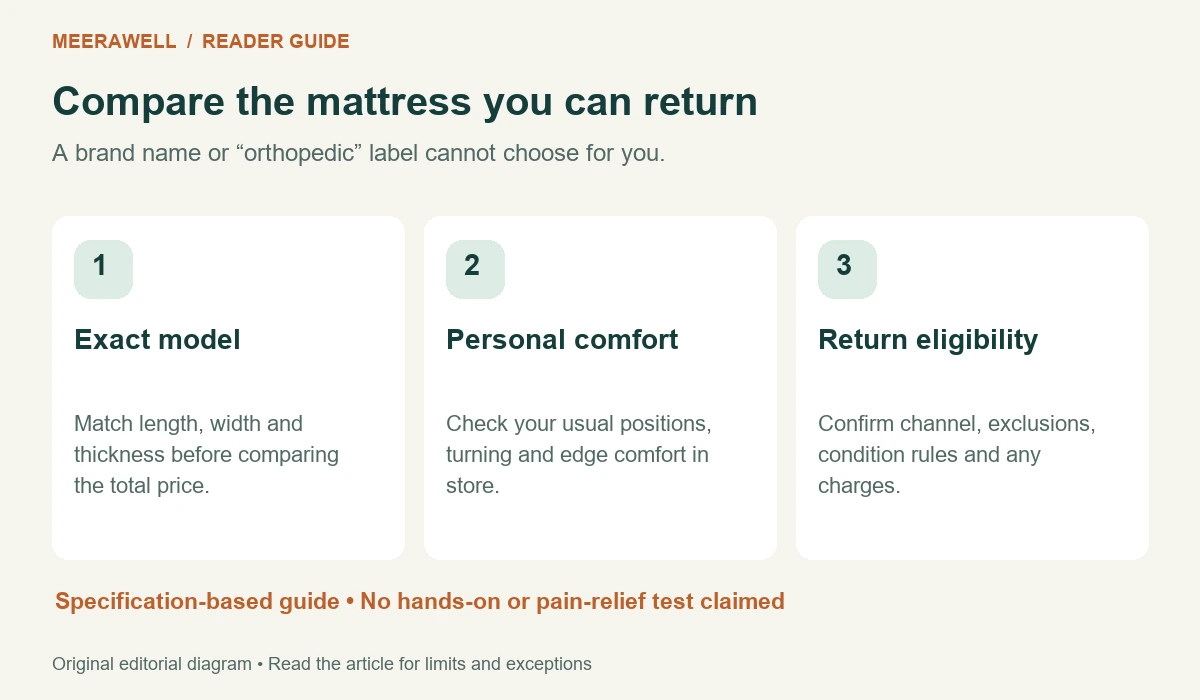
Two mattresses can both say “orthopedic” and feel very different. The useful comparison is between named models, the surface you can tolerate overnight, and the terms that let you return an unsuitable purchase.
This is a specification-based comparison, not a hands-on mattress test. It compares The Sleep Company's Smart Ortho Pro with Wakefit's ShapeSense Orthopedic Classic Memory Foam using manufacturer pages viewed on 16 October 2026. Neither product is declared a treatment for back pain.
What is actually being compared?
On a narrow screen, scroll the table sideways.| Check | Smart Ortho Pro | ShapeSense Orthopedic Classic |
|---|---|---|
| Main advertised construction | SmartGRID plus supporting foam layers | Memory foam, zoned foam and a support base |
| Current model language | Product body describes firm feel and seven-zone support | Current product selector identifies the Classic series |
| Trial advertised | 100 nights, with exclusions | 100 days, with eligibility terms |
| Warranty advertised | 10 years | 10 years |
| What this comparison cannot establish | Measured cooling, durability or relief of your pain | Measured cooling, durability or relief of your pain |
The Smart Ortho Pro page displayed a six-inch construction with one inch of SmartGRID and supporting foam layers. Its page title still referred to five zones while the visible product details described seven. Confirm the exact specification supplied with your order rather than treating every search snippet as current.
The Wakefit product page offered Essential, Classic, Infiniti and Ultra variants. This comparison concerns Classic. Do not transfer a specification or price from one series to another.
Grid versus memory foam is only the beginning
Materials influence how a mattress responds, but the complete construction matters: layer thickness, support base, cover and firmness. A brand-wide claim such as “grid is cooler” or “foam is better for backs” skips those differences.
We have not measured surface temperature, pressure distribution, edge support or motion transfer on these products. Manufacturer demonstrations and testimonials are not substituted for such measurements.
If you can visit a store, lie in your usual sleep positions rather than only pressing the mattress with your hand. Notice pressure at the shoulder and hip, how easily you turn, and whether sitting on the edge feels stable. Try it with your partner if you share the bed. A brief trial can identify an obvious mismatch, but cannot predict a whole night's comfort.
Read the return terms before deciding
The Sleep Company's 100-night policy is more specific than the banner. It asks for at least three weeks of adjustment, excludes third-party marketplace purchases and rejects returns for a size ordered incorrectly. Condition and inspection requirements apply; some charges are not refundable. The policy also lists excluded product ranges. Check your exact order's eligibility.
Wakefit's trial page and FAQs start the period at original delivery, require the mattress to retain its condition, tags and warranty card, and make the refund subject to quality checks. A replacement does not restart the clock. Pickup depends on serviceability. Its returns page says eligible trial returns are free, require the invoice and receive the full amount if the mattress is undamaged, unstained and untorn.
One practical difference: Wakefit's trial FAQ permits a wrong-size request, while The Sleep Company's policy excludes a size ordered incorrectly. Wakefit's FAQ also restricts replacements to the same SKU; confirm how that applies to your particular size issue before ordering. Confirm the exact model, custom-size eligibility, purchase channel and collection address in writing. The public pages are not a guarantee for every store or marketplace order.
What the ten-year warranties actually cover
A warranty deals with specified defects, rather than whether you like the feel. Both policies exclude comfort preferences and normal softening.
On a narrow screen, scroll the table sideways.| Warranty check | Smart Ortho Pro | Wakefit mattress policy |
|---|---|---|
| Examples of covered defects | Qualifying indentation/sagging over one inch; manufacturing defect in cover zipper | Foam undulations or splits; shrinkage, sagging or deformity over one inch |
| Important exclusions | Customer damage, unsuitable bed/base, sub-one-inch impressions, comfort preference | Cover/zipper, comfort issues, normal softening, unsuitable support and damage |
| After the first year | Repair, or prorated credit if repair is unavailable | Valid mattress claims resolved by prorated refund; replacement restricted to claims within the first year |
| Claim evidence | Invoice, description, photos/videos; possible inspection | Invoice and warranty card if issued, photos/videos; possible visit; report within seven days of the issue arising |
Read the exact Smart Ortho Pro warranty panel and Wakefit's warranty policy, including care and support conditions. The Sleep Company's warranty lists official marketplace purchases as eligible even though its trial excludes third-party retailers: trial eligibility and warranty eligibility are different questions. Policies were checked across 16–17 October 2026 and may change.
Keep the price comparison fair
Choose the same length, width and thickness before comparing final prices. “King” or “queen” alone is not enough. The product pages opened with different sizes selected, so this guide does not present their headline prices as a like-for-like bargain comparison.
Record the exact model, size, delivered total and return eligibility together. Ignore a discount percentage until those details match your needs.
If back pain is the reason for buying
An orthopedic label is not evidence that one of these named models will treat the cause of your pain. Choose for tolerable support and a workable return route; seek assessment for persistent or worsening pain rather than repeatedly buying bedding.
There is some evidence about firmness, but it cannot choose between these brands. A 2003 randomized trial assigned 313 adults with chronic nonspecific low-back pain to firm or medium-firm mattresses for 90 days. Medium-firm mattresses produced better results for pain in bed and disability. This was a defined patient group and firmness comparison, not a test of Smart Ortho Pro, ShapeSense Classic or today's retail firmness labels. It does not show that the hardest mattress is best, or that buying a mattress treats every cause of back pain.
If your concern is feeling unrefreshed despite enough time in bed, our tired-after-sleep guide discusses questions a mattress cannot answer. Our separate Sleep Company chair comparison concerns office chairs and does not establish mattress performance.