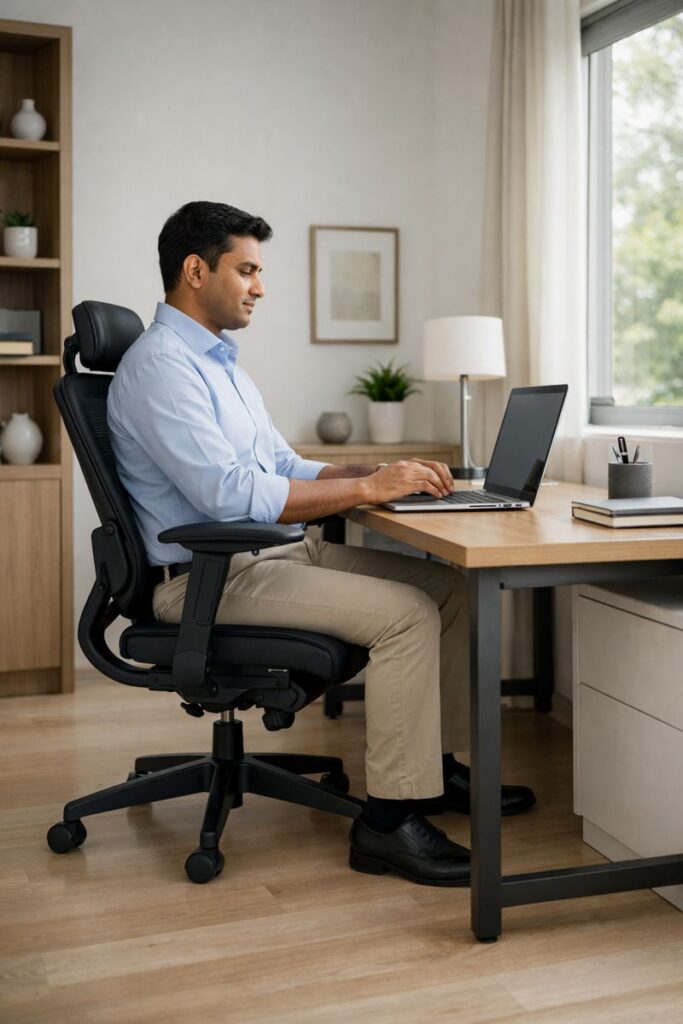
Key takeaways
- Exercise snacks are short bouts of purposeful movement spread through the day. They make a crowded workday easier to move through.
- A small stair-climbing trial found a modest fitness improvement. An easy corridor walk is useful movement, but is not the same exercise as the trial.
- Start with repeatable, comfortable breaks. You do not need a walking pad, a heart-rate target or an all-out stair sprint.
- Keep longer aerobic activity and strength work in the week. A few tiny breaks do not automatically meet the whole activity recommendation.
The Meeting That Ate the Walk
The lunch-hour walk was in your calendar. Then a meeting moved. A call ran over. Lunch became a sandwich beside the keyboard.
By six o’clock, the gym feels like another appointment you have failed to attend.
There is a smaller question worth asking: could some movement have fitted between those appointments?
Here is the short answer: exercise snacks can help you build movement into a busy day. Think of a few deliberate minutes between tasks, rather than waiting for one perfect hour. The research is promising, but the benefit depends on what you actually do. Standing beside a printer and vigorously climbing stairs are different doses.
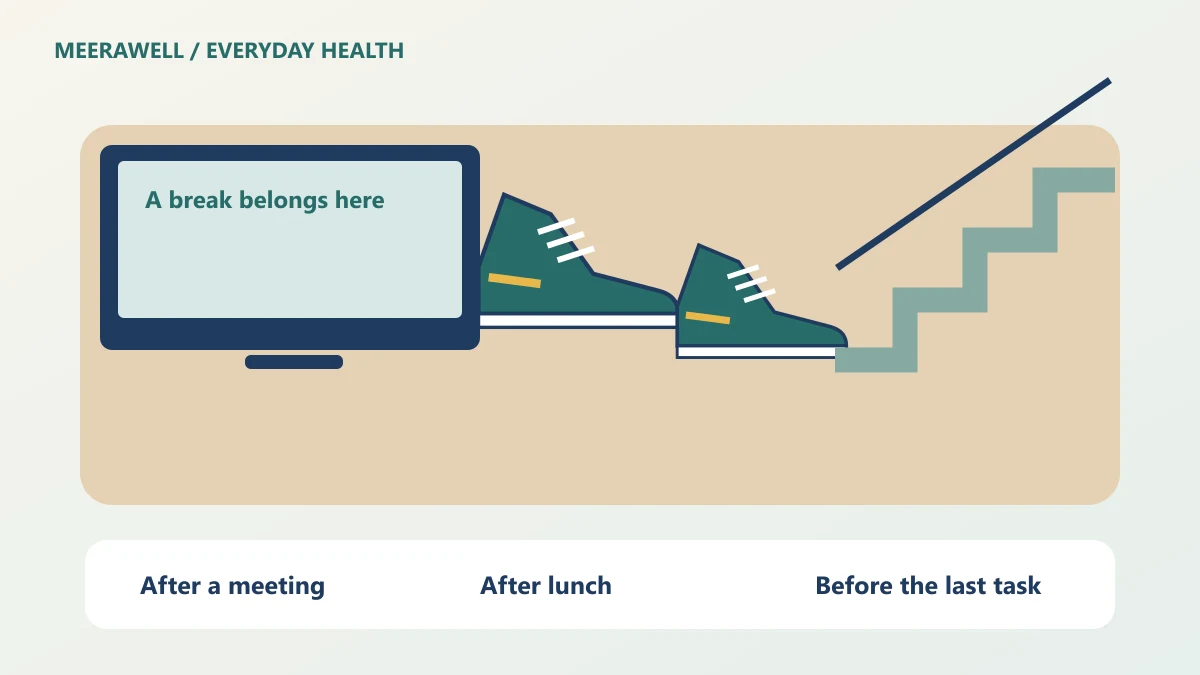
1. What Counts as an Exercise Snack?
An exercise snack is a brief bout of exercise, usually repeated across the day. There is no single recipe shared by every study or every fitness app.
A short brisk walk, a few controlled sit-to-stands, or a manageable staircase can be practical options. The movement should suit your ability and surroundings.
The snack analogy helps with scheduling: small opportunities can add up. It does not mean a minute of anything produces the same training effect as a workout.
For a desk worker, there are two separate goals. One is to interrupt long stretches of sitting. The other is to give the muscles, heart and lungs a meaningful exercise stimulus. A break may serve both goals, but its intensity matters.
2. What the Stair Study Actually Found
In a 2019 randomized trial, 24 sedentary young adults were allocated to stair climbing or a nontraining control group. The climbing group vigorously ascended a three-flight stairwell, about 60 steps, three times a day. Bouts were separated by one to four hours, on three days a week for six weeks.
Peak oxygen uptake improved compared with the control group. The researchers described the absolute increase as modest.
That is a useful result, with a clear boundary. It was a small study in young adults, using vigorous stairs. It does not establish that gentle desk stretches prevent diabetes, that every age group should copy the protocol, or that three minutes replaces a full exercise programme.
Use the study as evidence that brief exercise can matter. Use your own starting point to decide how to begin.
3. Choose the Break Your Office Can Accommodate
| Option | What makes it practical | What to check |
|---|---|---|
| Corridor walk | No equipment; easy to shorten | Clear route, comfortable shoes, no phone scrolling |
| Sit-to-stands | A small space and a stable chair | Chair cannot roll; movement is comfortable |
| Stairs | A stronger challenge in little space | Handrail, clear landing, no rushing or slippery steps |
| Seated movement | An option when standing is difficult | Choose movements suited to your mobility or rehabilitation advice |
You do not need to make every break vigorous. A staircase is also a fall environment. Carrying a laptop and answering a message while climbing quickly turns a sensible idea into a poor one.
If your office staircase is hot, crowded or used for storage, choose another movement. A convenient route you actually use beats a dramatic routine you keep avoiding.
4. A Workday Experiment You Can Repeat
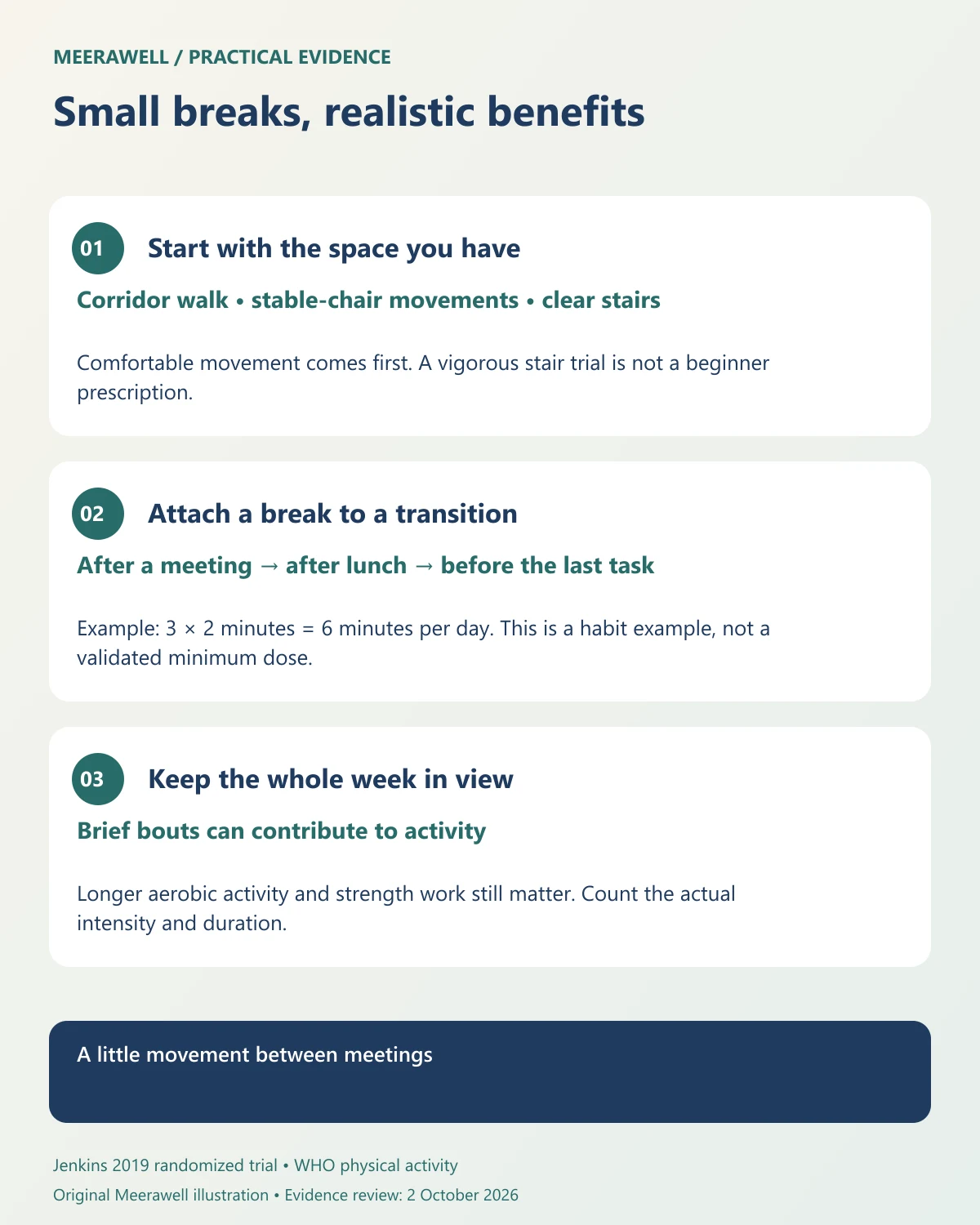
Start with three predictable transitions: after the first long meeting, after lunch, and before the last block of work. At each transition, try roughly two minutes of comfortable movement. This is an illustrative starting routine, not a researched minimum dose.
For the first week, keep the test simple:
- Put the break beside an event that already happens. A vague reminder to “move more” is easy to dismiss.
- Choose one movement before the day starts. Avoid spending the whole break deciding what to do.
- Begin gently and finish feeling in control. Increase duration or challenge gradually if it remains comfortable.
- Record whether the break happened. You are testing a habit before measuring fitness.
Three two-minute breaks make six minutes a day. Across five workdays, that is 30 minutes. Only activity at the relevant intensity contributes to the corresponding aerobic target; six minutes of slow pottering is not six minutes of vigorous training.
The arithmetic makes progress visible without inflating it. If a short break gets you out of your chair, keep it. If you want more fitness, build the exercise deliberately.
5. Where Exercise Snacks Fit in the Week
WHO guidance says all physical activity counts, some is better than none, and sedentary time should be limited. Its adult guidance includes at least 150 minutes of moderate-intensity activity per week, alongside muscle strengthening.
Exercise snacks can contribute. They do not automatically cover strength training, balance needs or the total aerobic amount.
Keep the longer walk you enjoy. Keep a planned strength session. On a crowded Tuesday, use short breaks to preserve some movement instead of writing off the day.
For an indoor walking setup, our walking pad vs treadmill guide explains the equipment trade-offs. For outdoor breaks during pollution season, check the India AQI exercise guide. Buying a device is optional; finding a repeatable opportunity comes first.
6. Make Progress Without Turning the Break into a Test
After a week, ask which transition worked best. Perhaps the post-lunch walk happened every day, while the morning break disappeared into calls. Keep the reliable one and adjust the other.
Progress can mean a slightly longer route, a little more pace, or more consistent attendance. Change one thing at a time. You should not need to race a colleague or finish breathless to justify leaving the desk.
Skip the break if the route is unsafe. Reschedule it if a meeting genuinely needs your attention. The point is a routine that survives ordinary work, including interruptions.
When to pause the experiment
Stop exercise for chest pain, faintness or unusual breathlessness; severe or persistent symptoms need urgent assessment. If you have a heart condition, significant balance problems, a recent injury or specific activity restrictions, get guidance before adding vigorous stair bouts. Painful joints deserve an adapted movement, not a challenge to push through.
Frequently asked questions
Are exercise snacks enough to replace the gym?
They can contribute to activity and may improve fitness when the exercise is sufficiently challenging. A few easy breaks do not cover every aerobic and strength need. Choose the combination that fits your goals.
How many exercise snacks should I do?
There is no universal number. The stair trial used three daily bouts on three days a week. The three gentle breaks here are a habit-building example, not a prescription copied from that trial.
Do I need stairs?
No. Walking or another comfortable movement may be easier to maintain. The specific stair-study results should not be transferred unchanged to every alternative.
Can I do them in formal work clothes?
Choose a movement and pace that suit your clothes, footwear and space. A safe corridor walk is more useful than attempting fast stairs in unstable shoes.
Next step
Choose one reliable break tomorrow. Add equipment only if it solves a practical problem in keeping that habit.
Sources and evidence
Evidence checked on 2 October 2026. This is general education; the sample routine is an editorial example, not an individualized exercise plan.