
In the 1600s, the philosopher René Descartes believed the mind and body worked separately. If the body was resting, the mind must be resting too. For centuries, this idea shaped how we thought about sleep.
Modern science now tells us why so many people feel sleep but still tired, even after a full night in bed.
You can lie down for seven or eight hours, sleep through the night, and still wake up feeling heavy and slow. That happens because your body may be resting, but your brain may never truly recover.
This is not laziness.
This is not weakness.
And it is not always a sleep problem.
It is often a brain recovery problem caused by screens.
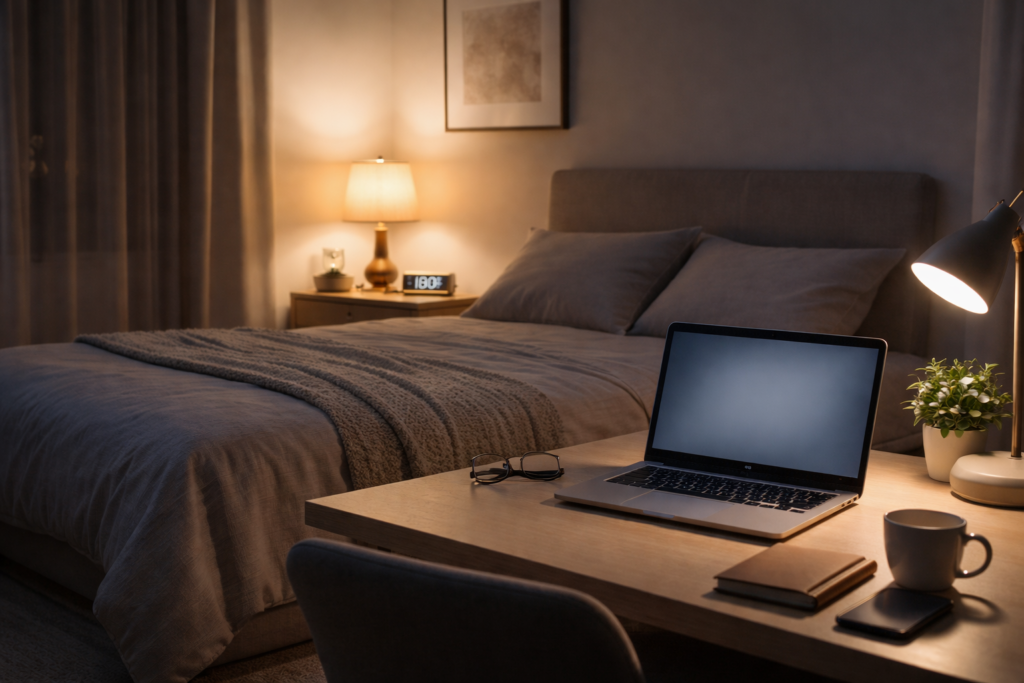
Why Sleep Does Not Always Feel Refreshing
Sleep has one main purpose. It allows the brain to recover.
During good quality sleep, brain activity slows down, stress hormones fall, and mental circuits reset. That is why proper sleep makes you feel clear and fresh the next day.
Research from the National Institutes of Health explains how the brain clears waste during sleep and why deep sleep is essential for recovery: https://www.nih.gov/news-events/news-releases/brain-may-flush-out-toxins-during-sleep
Screens interfere with this process.
This is why many people complain of sleep but still tired, even when their sleep duration looks perfect.
When you spend long hours on phones, laptops, or monitors, the brain stays in an alert state even after you lie down. You fall asleep, but the brain continues working quietly in the background.
The Hidden Stress Your Brain Carries from Screens
Screens do not only affect the eyes. They directly affect the brain’s stress system.
Every notification, email, chart, message, or scrolling session trains the brain to stay watchful. Over time, this creates constant mental tension, and the brain slowly forgets how to relax.
When this happens:
- Sleep becomes shallow
- Dreams feel restless
- Morning tiredness increases
- Focus drops despite enough sleep
This is why people often say their brain is not recovering after sleep.
Sleep Duration vs Sleep Recovery
This distinction is important.
Sleeping longer does not always mean recovering better. This explains why chasing more hours does not fix the problem of sleep but still tired.
Many people chase eight hours of sleep and still feel exhausted. The reason is simple. The brain needs low-stress sleep, not just long sleep.
If stress hormones stay high at night, the brain never enters deep recovery mode. This leads to tiredness even when sleep duration looks perfect on paper.
How Screen Stress Blocks Brain Recovery
Late night screen use sends one clear message to the brain. Stay alert.
News, social media, work messages, charts, and videos activate thinking centers in the brain. This keeps the stress system switched on when it should be slowing down.
As a result:
- Stress hormones do not fall properly
- Brain cooling remains incomplete
- Mental circuits stay active
- Sleep feels light and broken
This is why screen stress and sleep quality are closely linked.
Signs Your Brain Is Not Recovering During Sleep
Common signs include:
- Mental fatigue after sleep
- Slow thinking in the morning
- Heavy head sensation
- Poor concentration
- Emotional irritability
- Eye strain along with tiredness
Many people mistake this for low motivation or poor stamina. In reality, this is screen-driven brain fatigue.
If eye strain is present, it often overlaps with computer vision syndrome, which is explained in detail in our detailed article about Computer Vision Syndrome
Why Night Mode and Blue Filters Do Not Fully Solve This
Night mode and blue light filters help slightly, but they do not solve the main issue.
The problem is not only light.
The problem is mental stimulation.
Even with warm screens, the brain continues processing information and making decisions. That is why night mode alone does not fix why sleep does not feel refreshing.
For a deeper explanation, read more about Blue light sleep
The Nervous System Angle Most People Miss
Your body works in two modes:
- Work mode
- Recovery mode
Screens push the body into work mode.
When work mode stays active at night, recovery mode cannot fully begin. Over time, this leads to:
- Chronic tiredness
- Mental burnout
- Sleep that does not heal
This is also why sleep deprivation effects can appear even when sleep duration looks normal.
What Actually Helps the Brain Recover
The solution is not sleeping pills or forcing sleep.
The solution is lowering mental load before bedtime.
Simple changes that help:
- Stop active screen work at least one hour before sleep
- Avoid decision-heavy tasks late at night
- Reduce scrolling and news consumption
- Keep lighting calm and steady
- Allow the brain to feel bored before sleep
Boredom is not a problem. It signals safety to the brain. That is when recovery begins.
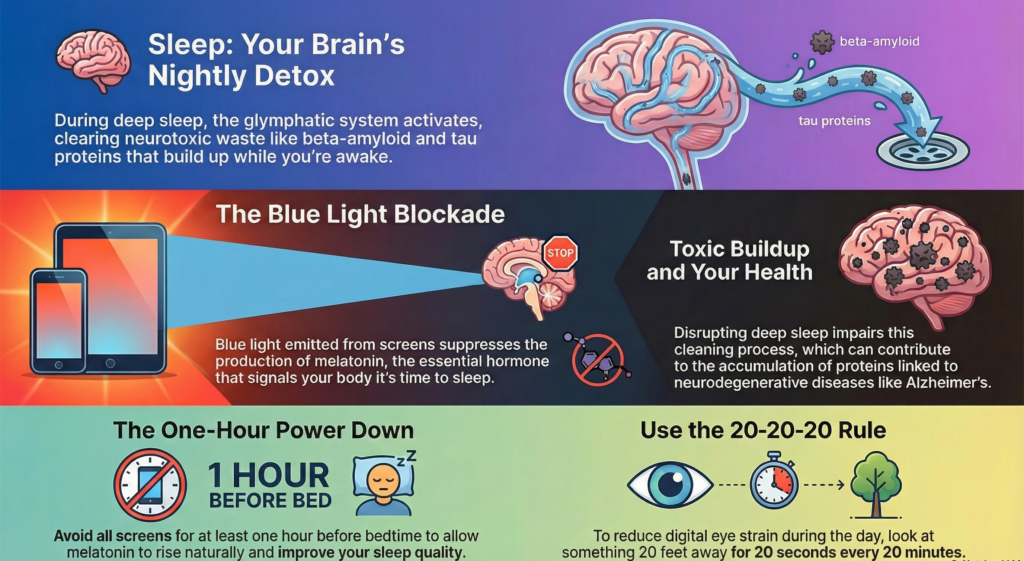
Where Eye Strain Fits Into This Problem
Eyes are an extension of the brain.
When eyes remain strained throughout the day, brain recovery at night suffers. That is why people with digital eye strain often report:
- Poor sleep quality
- Heavy head sensation
- Morning tiredness
The Calm Takeaway
If you are sleep but still tired, do not blame discipline or effort.
Your brain may simply be overstimulated.
Modern screens keep the brain alert long after the body lies down. Until that stress reduces, sleep cannot fully restore you.
Fixing brain recovery is not about sleeping more.
It is about letting the mind slow down.
That is where real rest begins.
Pingback: Best Ergonomic Chair in India (2026) for Long Sitting Hours