In my medical practice, I see executives and traders burning out not because of workload, but because of glucose spikes. They eat the wrong lunch, crash at 2 PM, and lose focus.
The problem isn’t knowing what to eat; it’s the mental load of planning it. After a 12-hour day, deciding on macros or Googling recipes is the last thing you want to do.
As a doctor, I recommend AI meal planning to automate this decision. You don’t need a nutrition coach for this. You need a system.
This guide explains how to use AI meal planning tools (like ChatGPT, Gemini, or Claude) to build a High-Performance Nutrition Protocol that fits your busy schedule, optimizes your energy, and removes decision fatigue.
Why AI Meal Planning Works Better Than Generic Diets
Most diets fail because they are rigid. AI adapts to your reality. A personalized AI meal planning protocol is dynamic and helps with:
- Precision: Calculating macros instantly based on your biometrics.
- Adaptability: Swapping ingredients based on what’s in your fridge.
- Speed: Tracking calories via photos instead of manual entry.
- Resilience: Adjusting for travel, festivals, or high-stress trading days.
AI does the thinking. You just follow the structure. The beauty of AI meal planning is that it adapts to your schedule.
How to Build Your AI Meal Planning Protocol
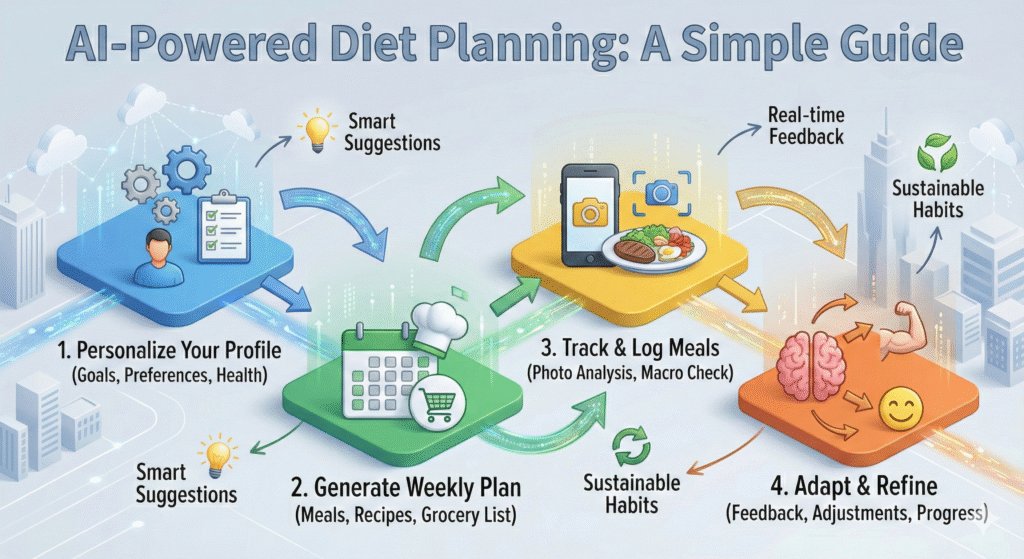
Step 1: Give AI Your Clinical Profile
AI cannot guess your biology. The more specific you are, the better the output. Copy and paste this template into your chatbot:
Age:
Gender:
Height and Weight:
Goal: (e.g., Sustain energy for 12-hour shifts, Fat loss, Muscle gain)
Diet Style: (e.g., Vegetarian, High-Protein, Keto, Intermittent Fasting)
Food Dislikes/Allergies:
Cooking Time: (e.g., Max 20 mins per meal)
Activity Level: (e.g., Sedentary desk job + Gym 3x/week)
Medical Context: (e.g., Pre-diabetic, High BP – Consult your doctor first)
Step 2: Establish Your Baseline
Before you start, you need data. Do this once:
- Take one front photo and one side photo (for visual tracking).
- Record your starting weight.
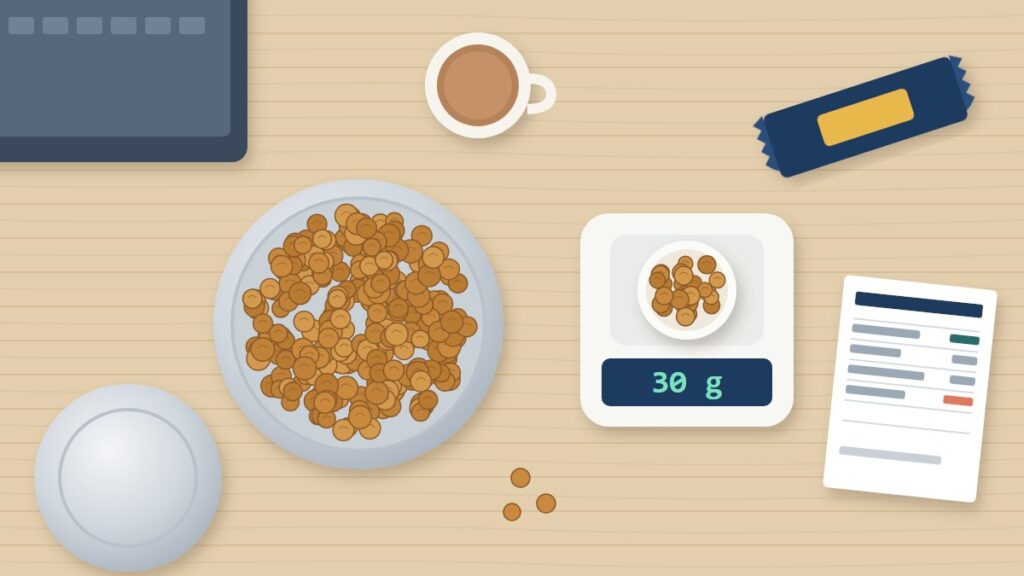
- Optional: Use a kitchen scale for the first week to learn what “100g of protein” actually looks like.
Step 3: Generate the Weekly AI Meal Planning Protocol
Use this prompt to generate a plan that is actionable, not just theoretical:
“Create a 7-day high-performance meal plan based on my profile.
- Requirement: Keep meals affordable and realistic for a busy professional in [Your City].
- Structure: Breakfast, Lunch, Dinner, and one Focus-Boosting Snack.
- Data: List calories and macros for every meal.
- Output: Simple recipes (max 15 mins prep) and a consolidated grocery list.”
Pro Tip for Intermittent Fasting: Add this line: “Fit all meals into a 16:8 schedule, eating only between 12 PM and 8 PM.”
Step 4: The “Photo-Log” Method
Stop typing calories into apps. It takes too long. Before you eat, snap a photo and upload it to the AI.
Prompt:
“Estimate the calories and macros in this photo. Does it fit my daily goal? If not, what should I adjust for dinner?”
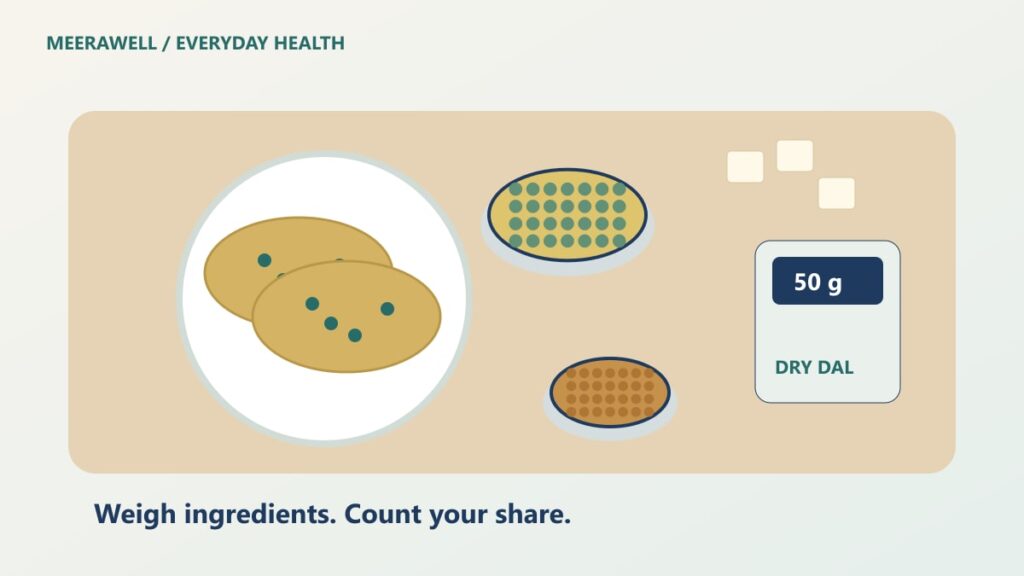
This is incredibly effective for Indian meals like Dal-Chawal or Thalis where portion sizes are hard to guess.
⚠️ Doctor’s Note: Are You Actually Burning Fat?
AI can plan your food, but it can’t tell you how your body is responding physiologically. I see many patients eating “healthy” foods that still spike their insulin and kill their deep work focus.
To make this AI meal planning protocol effective, I recommend tracking your Biomarkers, not just your calories.
1. For Metabolic Focus (The Trader’s Choice)
If you need stable energy for deep work, you must track your glucose response.
- My Recommendation: Ultrahuman Ring Air
- Why: It tracks your sleep, recovery, and movement index. It tells you exactly which foods cause your afternoon crash so you can eliminate them.
2. For Body Composition
Don’t rely on a simple weighing scale. You need to know if you are losing fat or losing muscle mass.
- My Recommendation: HealthSense Smart Scale
- Why: It tracks Body Fat % and Muscle Mass. As you age, preserving muscle is the #1 factor for longevity.
Step 5: The Weekly Feedback Loop
No protocol is perfect from Day 1. On Sundays, send this prompt to your AI:
“Here is what I actually ate this week. I struggled with sugar cravings on Wednesday and felt tired on Friday. Adjust next week’s plan to be more sustainable. Include one ‘cheat meal’ on Saturday.”
How AI Adapts to Your Diet Style
Whether you are strictly Keto or just trying to eat clean, AI acts as your specialized nutritionist.
| Diet Style | How AI Optimization Helps |
| High-Protein | Suggests vegetarian protein sources (Paneer/Tofu/Lentils) to hit targets. |
| Keto / Low-Carb | Finds “crunchy” swaps for Roti/Rice/Chips to prevent carb withdrawal. |
| Intermittent Fasting | Calculates nutrient density to ensure you don’t undereat during your window. |
| Diabetic-Friendly | Balances the Glycemic Load of your meals to prevent spikes. |
Emergency Protocols: When Life Gets Crazy
Food is emotional, and work is stressful. Instead of breaking your diet, ask for a “Damage Control” option.
- The Sweet Tooth: “I need something sweet. Give me 3 options under 200 calories that are high in protein.”
- The Tired Executive: “I have zero energy to cook. Suggest the healthiest delivery order from [Restaurant Name] that fits my macros.”
Final Medical Disclaimer
AI is a tool for structure and habit building. It does not replace a doctor or clinical dietitian. If you have Diabetes, Kidney Disease, Thyroid conditions, or are Pregnant, do not follow an AI plan without medical supervision. Use this technology to support your health, not to replace professional care.
Your “Reset” Prompt
If you fall off the wagon, paste this:
“Based on everything we’ve discussed—generate a new, simplified plan for this week that prioritizes consistency over perfection.”
Q: Is an AI diet plan safe?
A: Yes, for general wellness. However, it should be used for guidance, not medical treatment. People with chronic conditions must consult a doctor.
Q: Can AI create a plan specifically for weight loss?
A: Absolutely. AI is excellent at calculating a caloric deficit while ensuring you still get enough volume of food so you don’t feel hungry.
Q: Which AI tool is best for this?
A: ChatGPT (Plus), Google Gemini, and Claude are currently the best accessible tools for personalized nutrition planning.